

Daily Dose Of Jazz…
David Black, born January 23, 1928 in Philadelphia, Pennsylvania, started out as the drummer in the house band at the Philadelphia Blue Note Jazz Club where he played with the likes of Charlie Parker, Buddy DeFranco and Zoot Sims.
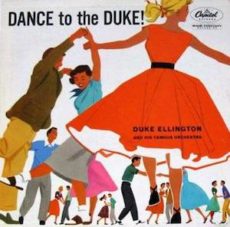
From 1953 to 1955 Black was a part of Duke Ellington’s Orchestra until he contracted polio, forcing him to leave the band. After recovering, he moved to the San Francisco Bay Area and partnered with Bob Scobey until the latter’s death in 1963.
Continuing to perform with Bay Area and various international jazz musicians, drummer Dave Black, most notable for his work with Duke Ellington, transitioned on December 4, 2006

More Posts: bandleader,drums,history,instrumental,jazz,music
Three Wishes
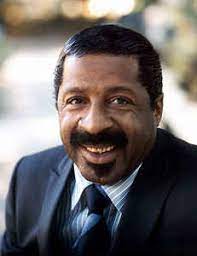
Erroll Garner was puzzled by the question asked of the Baroness he said to her this:
- “I don’t know! I feel as though I’m limited with only three wishes. I feel as though I’m limited.”
*Excerpt from Three Wishes: An Intimate Look at Jazz Greats ~ Compiled and Photographed by Pannonica de Koenigswarter
More Posts: baroness,history,instrumental,jazz,music,pannonica,piano,three,wishes
Daily Dose Of Jazz…
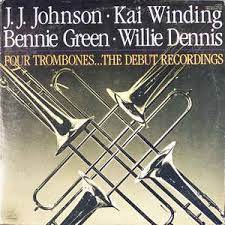
Willie Dennis wsa born William DeBerardinis on January 10, 1926 in Philadelphia, Pennsylvania. After working with Elliot Lawrence, Claude Thornhill, and Sam Donahue, he went to work with Charles Mingus, appearing on two of Mingus’s albums in 1959, Blues & Roots and Mingus Ah Um. In 1953, due to his relationship with Mingus he recorded Four Trombones (on the bassist’s Debut Records label and was released in 1957. The other three trombones were J. J. Johnson, Kai Winding and Bennie Green.
In 1951, Dennis began studying with Lennie Tristano. To make ends meet, he worked as an attendant at the Museum of Modern Art. The fullest recorded example of Dennis’s solo work is on a little-known 1956 Savoy disc by English pianist Ronnie Ball, who was also a Tristano student. The album was titled All About Ronnie, and included Ted Brown and Kenny Clarke.
He toured with Mingus in 1956, published an essay, The History of the Trombone, in Metronome. By the late 1950s Willie had returned to his big band roots and joined Buddy Rich in 1959 after stints with Benny Goodman and Woody Herman. During the 1960s, he often performed with Gerry Mulligan.
He had an extremely fast articulation on the trombone, which he obtained by means of varying the natural harmonics of the instrument with minimal recourse to the slide, a technique known as crossing the grain. He recorded with Cannonball Adderley, Manny Albam, Al Cohn, Mundell Lowe, Gary McFarland, Gerry Mulligan, Oliver Nelson, Anita O’Day, Shirley Scott, Zoot Sims and Phil Woods.
Known for his big band musicianship but who could also execute as an excellent bebop soloist, trombonist Willie Dennis, who was married to Morgana King in 1961, transitioned due to an automobile accident in Central Park on July 8, 1965 in New York City.
More Posts: bandleader,history,instrumental,jazz,music,trombone
Daily Dose Of Jazz…
Dave Schildkraut was born on January 7, 1925 in New York, New York and started playing professionally in 1941, first with Louis Prima. He followed this five year residency with Buddy Rich and Anita O’Day through the end of the decade and into the Fifties.
He moved on to hone his craft further by working with Stan Kenton, Pete Rugolo, Oscar Pettiford, Miles Davis, George Handy, Tony Aless, Ralph Burns, Tito Puente, Johnny Richards, and Kenton again in 1959. During the 1960s, Dave freelanced around New York City, appearing regularly with Eddie Bert at the West End Cafe. Later in his life he went into semi-retirement.
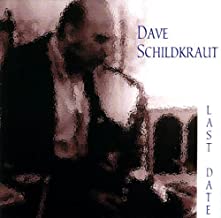
His playing was fluid and brilliant in pure bebop style but Schildkraut only recorded one album as a leader, in 1979. However, the album wasn’t released until 2000 by Endgame Records as Last Date. As a sideman he recorded sixteen albums.
Alto saxophonist Dave Schildkraut, whose style mimicked Charlie Parker but later showed influences of John Coltrane, Warne Marsh and Lee Konitz, transitioned on January 1, 1998 in Darien, Connecticut.
More Posts: bandleader,history,instrumental,jazz,music,saxophone
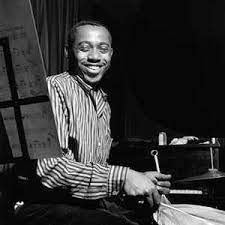
Three Wishes
The question was posed to Charlie Persip by Pannonica and he gave a response to his three wishes as:
- “Money, money, money.”
*Excerpt from Three Wishes: An Intimate Look at Jazz Greats ~ Compiled and Photographed by Pannonica de Koenigswarter

More Posts: baroness,drums,history,instrumental,jazz,music,pannonica,three,wishes