


Daily Dose Of Jazz…
Elliott Lawrence was born Elliott Lawrence Broza on February 14, 1925 in Philadelphia, Pennsylvania. His parents were radio and television variety show pioneers who created and produced the long running Horn and Hardart Children’s Hour.
Growing up in this show business environment, Lawrence began studying piano at the age of three. His first public performance was at age four conducting the orchestra on the Children’s Hour stage show. At six he wrote his first composition, Falling Down Stairs, and was stricken with polio, from which he recovered. By the age of 12, he had formed his first band, a 15-piece unit called The Band Busters, and began doing club dates on the weekends. Finishing high school at age 16 he entered the University of Pennsylvania. During his junior year his band, now named The Elliot Broza Orchestra, began playing college proms around the state. At Penn, majoring in symphonic conducting under Harl McDonald, he was offered the position as assistant conductor of the Philadelphia Orchestra upon graduation.
Changing his name to Elliot Lawrence when he became the music director of WCAU’S House Band in 1945, they premiered on the radio as The Elliot Lawrence Orchestra. From 1946 to 1954, the band toured around the United States year round, while recording for Decca, Columbia, RCA, Fantasy, and Vik records. In 1949, the band performed a three-week stint with the Nat King Cole Trio at the Paramount Theater in New York City, during which time it recorded Gerry Mulligan’s Elevation, later named “one of the top 50 best jazz recordings of the 20th century” by the Smithsonian Institution.
Landing in New York City in 1955 as the big band era came to a close, he began to do radio shows such as The Red Buttons show, the Jack Sterling Show and hosted Melody Street. He went to the Soviet Union with Ed Sullivan, met Gower Champion and became his musical director on his Bye Bye Birdie, which garnered him a Tony nomination. After 1960, Lawrence gave up jazz and began composing and arranging for television, film, and stage. He won the Tony Award for his second show, How to Succeed in Business Without Really Trying in 1962. This led to a 16-year career as a Broadway Conductor and musical director and later to his almost 50-year career as the “go to” conductor for big television events and specials.
As a composer, he scored the movies Network and The French Connection, won nine Emmy awards for musical direction, and was music director for the TonyAwards. Pianist, bandleader and conductor Elliott Lawrence transitioned on July 2, 2021 at the age of 96 in Manhattan, New York.

Daily Dose Of Jazz…
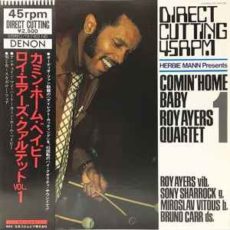
Edward “Bruno” Carr was born on February 9, 1928 in The Bronx, New York. Growing up he lived around many different ethnic groups, including neighborhoods with German and Italian residents. Listening to the radio as a youth, he heard different styles of music while developing his ear and his memory. By the time he started playing professionally he had anarsenal of songs that he surprised band leaders he already knew and had no need for charts when they handed them to him.
As a timbale player in Latin bands, one can hear the inflection in the way he plays his small tom-toms at times. Though not a household name, his playing with a lot of fire and conviction made him a sought after drummer among the jazz elite. Kenny Burrell, Billie Holiday, Ray Charles, John Coltrane, Charlie Parker, Michael Franks, Aretha Franklin, Monte Alexander, Stanley Turrentine, Roy Ayers, King Curtis and Harry “Sweets” Edison have all had him on their bandstand.
Here recorded several single albums, each with Aretha, Curtis Amy, Walter Davis Jr., Lou Donaldson, and Eddie “Cleanhead” Vinson, however, his largest body of work was with Herbie Mann, recording eighteen albums with the flutist from 1964 to 1970.
Drummer Bruno Carr, who was a frequent collaborator with Ray Charles, transitioned from lung cancer on October 25, 1993 in Denver Colorado at the age of 65.
More Posts: drums,history,instrumental,jazz,music
Three Wishes
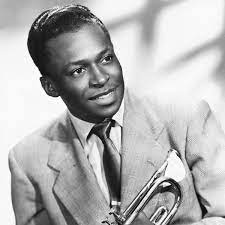
Pannonica asked Miles Davis if he had three wishes bestowed upon him what would his answers be and he replied simply with:
- “To be white.”
*Excerpt from Three Wishes: An Intimate Look at Jazz Greats ~ Compiled and Photographed by Pannonica de Koenigswarter
More Posts: baroness,history,instrumental,jazz,music,pannonica,three,trumpet,wishes
Daily Dose Of Jazz…
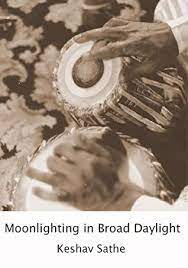
Keshav Sathe was born on January 31, 1928 in Bombay, India and began his professional career in 1951, working with a local Indian vocalist Kelkar. Moving to the United Kingdom in 1956 he joined the Asian Music Circle, a pool of London-based Indian musicians run by former political activist Ayana Deva Angadi. His first contact with jazz was in 1961 while working with Indian sitarist Bhaskar Chandavarkar and harmonica virtuoso Larry Adler.
In 1965 Sathe began his Indo Jazz Fusion performances and recordings with John Mayer and Joe Harriott, a musical relationship that lasted until 1970. In 1967 he was invited with his trio to join the trio of jazz pianist Irène Schweizer together with Barney Willen, Mani Neumeier, Uli Trepte and Manfred Schoof.
From 1970~73 he worked and toured with Julie Felix and Danny Thompson. Through Danny, in 1974, he joined the John Renbourn Group touring UK, Europe and the United States. They produced records, including A Maid in Bedlam, Enchanted Garden and Live in America.
In the 1980s, Sathe formed a group with Tony Roberts and dancer Shobhana Jeyasingh, touring the UK and Northern Ireland. With the singer Alisha Sufit and the group, he made the record Magic Carpet. From 1965 to 1993 he regularly accompanied the late singer/dancer Surya Kumari in recitals and teaching workshops. He appears on Suns of Arqa’s live album Musical Revue which was recorded in Manchester in 1982.
In addition, he has made numerous incidental recordings, worked for television, radio, and taught tabla until 2003. Tablaist Keshav Sathe, best known for his contributions to the Indo-jazz fusion genre, transitioned on January 18, 2012.
More Posts: bandleader,history,instrumental,jazz,music,tabla
Three Wishes
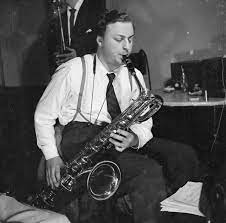
When the Baroness inquired of Benny Green if given what three things would he wish for he told her:
- “The first thing I would think of would be to have a little money bestowed upon me. Well, really, if that happened, that would be all. The rest I’d be able to bestow upon myself.”
*Excerpt from Three Wishes: An Intimate Look at Jazz Greats ~ Compiled and Photographed by Pannonica de Koenigswarter
More Posts: baroness,history,instrumental,jazz,music,pannonica,saxophone,three,wishes