

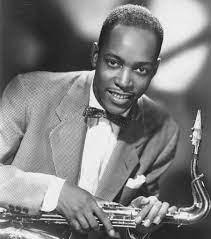
Three Wishes
Sonny Stitt replied to the inquiry made by Nica as to his three wishes:
-
- “Peace among men.”
- “To play my music, and please everyone.”
- “And I want happiness. And nothing bad to happen to anyone – that’s my fourth and dearest wish.”

More Posts: baroness,history,instrumental,jazz,music,pannonica,saxophone,three,wishes
Daily Dose Of Jazz…
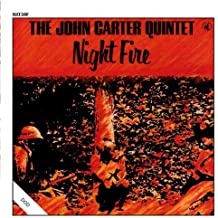
John Wallace Carter was born on September 24, 1929 in Fort Worth, Texas and attended I.M. Terrell High School, and played music with schoolmates Ornette Coleman and Charles Moffett in the 1940s. Earning a Bachelor of Arts from Lincoln University in Jefferson, Missouri in 1949 and a Master of Arts from the University of Colorado in 1956. He also studied at the North Texas State and University of California at Los Angeles, California.
From 1961, Carter was based mainly on the West Coast. There he met Bobby Bradford in 1965, with whom he subsequently worked on a number of projects, notably the New Jazz Art Ensemble. He also played with Hampton Hawes and Harold Land. In the 1970s Carter became well known on the basis of his solo concerts.
At the New Jazz Festival Moers in 1979, he and the German clarinet player Theo Jörgensmann performed for three days. Carter received complimentary reviews and wide recognition from around the world. He and Jörgensmann met again in 1984, and played the Berlin JazzFest, both as a soloist and in duo.
Between 1982 and 1990, John composed and recorded Roots and Folklore: Episodes in the Development of American Folk Music. It was a five album set that focused on African Americans and their history, and was acclaimed by jazz critics as containing some of the best releases of the 1980s.
He recorded seventeen albums as a leader and thirteen albums with Tim Berne, Clarinet Summit, Vinny Golia, Richard Grossman, John Lindberg, James Newton and Horace Tapscott. Carter planned a clarinet quartet with Perry Robinson, Jörgensmann and Eckard Koltermann was planned for 1991, but it never came to fruition.
Clarinetist, saxophonist, and flutist John Carter passed away from a non-malignant tumor on March 31, 1991. Later that year he was inducted into the Down Beat Jazz Hall of Fame.

More Posts: clarinet,flute,history,instrumental,jazz,music,saxophone
Daily Dose Of Jazz…
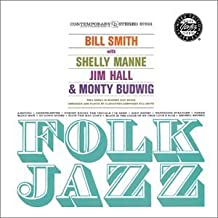
William Overton Smith was born on September 22, 1926 in Sacramento, California. He grew up in Oakland, California where he began playing clarinet at the age of ten. At 13 he put together a jazz group to play for dances and at the age of 15 he joined the Oakland Symphony. After high school, a brief cross-country tour with a dance band led to his giving two weeks notice for the best education he could, and he headed to New York City.
Studying at the Juilliard School of Music by day, he played in the city’s jazz clubs at night. The Juilliard faculty doing nothing for him, Bill returned home and attended Mills College in Oakland where he met pianist Dave Brubeck. He went on to study composition with Roger Sessions at the University of California, Berkeley, where he graduated with a bachelor’s and a master’s degree.
A win of the Prix de Paris gave Bill two years of study at the Paris Conservatory, and in 1957, he was awarded the prestigious Prix de Rome and spent six years in that city. After teaching at the University of Southern California, he then spent thirty years teaching at the University of Washington School of Music in Seattle, Washington, and co-led the Contemporary Group.
Smith investigated and cataloged a wide range of extended techniques on the clarinet, including the use of two clarinets simultaneously by a single performer, and compiled the first comprehensive catalogue of fingerings for clarinet multiphonics. He was among the early composers interested in electronic music, and as a performer he continued to experiment with amplified clarinet and electronic delays.
He remained active nationally, internationally, and on the local Seattle music scene until well into his 90s. Clarinetist and composer Bill Smith, who played in various Brubeck groups and who composed, recorded and premiered his jazz opera Space in the Heart, passed away at age 93 in his home from complications of prostate cancer on February 29, 2020.
More Posts: bandleader,clarinet,history,instrumental,jazz,music
Daily Dose Of Jazz…
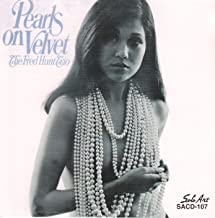
Herbert Frederick Hunt was born September 21, 1923 in London, England to musician parents. A self taught pianist, he started playing at the age of 13 and played local gigs before joining the Royal Air Force.
After demobilization, he began his musical career playing semi-professionally with Mike Daniels and the Cy Laurie Four in 1951. He then became professional and went on to join the Alex Welsh Band from 1954 to 1962 and again from 1964 to 1974.
As Welsh’s primary pianist and a featured soloist, he became one of Britain’s leading trad jazz musicians. He recorded with Eddie Davis, Bud Freeman, Eddie Miller, and Ben Webster in 1967. His work with Alex Welsh did not stop him from accompanying visiting Americans, including recording with the four-tenor group, Tenor Of Jazz, featuring Ben Webster and Eddie “Lockjaw” Davis, which toured in the late 60s.
After leaving Welsh in 1974, he played in Copenhagen, Denmark and South Africa, then after 1976 split his time between Britain, Denmark and Germany. He led a trio featuring drummer Lennie Hastings from 1978 although Hastings died that year. In 1979 the German label Erus Records released a live recording titled Yesterdays, featuring the Fred Hunt Trio, with Hunt on piano, bassit Brian Mursell and drummer Roger Nobes.
In the late Seventies Hunt toured with Wild Bill Davison and played with Welsh once more in the early 1980s. He retired due to failing health after being incapacitated and confined to wheelchair, though he worked frequently at London’s PizzaExpress Jazz Club until his death. Pianist Fred Hunt, who played in both modern and trad jazz musical settings, passed away in Weybridge, Surrey, England at the age of 62 on April 25, 1986.
More Posts: bandleader,history,instrumental,jazz,music,piano
Daily Dose Of Jazz…
Teddi King was born Theodora King on September 18, 1929 in Boston, Massachusetts. She won a singing competition hosted by Dinah Shore at Boston’s Tributary Theatre, which led to her beginning to work in a touring revue involved with “cheering up the military in the lull between World War II and the Korean conflict. Improving her vocal and piano technique during this time, she first recorded with Nat Pierce in 1949, later recording with the Beryl Booker Trio as well as with several other small groups from 1954–1955. These recordings were available on three albums for Storyville.
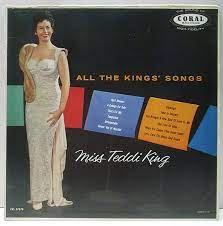
She went on to tour with George Shearing for two years beginning in the summer of 1952, and for a time was managed by the famed George Wein. For a time she was a Las Vegas performer. Teddi ultimately signed with RCA, recorded three albums for the label, beginning with 1956’s Bidin’ My Time. She also had some minor chart success with the singles Mr. Wonderful, Married I Can Always Get and Say It Isn’t So. Her critically praised 1959 album All the Kings’ Songs found her interpreting the signature songs of contemporary male singers like Frank Sinatra and Nat King Cole, the “kings” of the title.
In the Sixties she opened the Playboy Club, where she often performed. After developing lupus, she managed to make a brief comeback with a 1977 album featuring Dave McKenna, and with two more albums recorded for Audiophile released posthumously.
Vocalist Teddi King, who was influenced by Lee Wiley, Mildred Bailey and Mabel Mercer, recorded twelve albums as a leader, passed away from lupus on November 18, 1977.
More Posts: bandleader,history,instrumental,jazz,music,vocal