

Daily Dose Of Jazz…
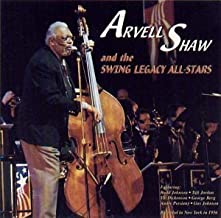
Arvell Shaw was born on September 15, 1923 in St. Louis, Missouri and learned to play tuba in high school, but switched to bass soon after. In 1942 he worked with Fate Marable on the Mississippi riverboats before serving in the Navy from 1942 to 1945. After his discharge he played with Louis Armstrong in his last big band, from 1945 to 1947. He and Sid Catlett then joined the Louis Armstrong All-Stars until 1950, then he broke off to study music. Returning to play with Armstrong in 1952, he performed with vocalist Velma Middleton, and in the 1956 musical, High Society.
He then worked at CBS with Russ Case, did sometime in Teddy Wilson’s trio, and played with Benny Goodman at the 1958 Brussels World’s Fair. After a few years in Europe, he played again with Goodman on a tour of Central America in 1962. From 1962–64 Arvell again joined Armstrong, and occasionally accompanied him through the end of the decade. The Seventies saw him mostly freelancing in New York City.
Bassist Arvell Shaw, who recorded only once as a leader, a live 1991 concert of his Satchmo Legacy Band, kept playing until he passed away on December 5, 2002 in Roosevelt, New York.

More Posts: bandleader,bass,history,instrumental,jazz,music
Three Wishes
When Pannonica inquired about three wishes if given to Art Simmons he answered with his the following:
-
- “Sex.”
- “Music. I can’t think of anything else but those two!Well, there really isn’t anything else but those two. What else is there?”
- “Music takes more than just music: to me it’s God! What is God? All the beauty there is in the world. All the love. God is music, and sex, too! I don’t mean sex the way Americans mean it _ not the rabbit kind. The Americans don’t understand about sex, not the way they do in France. I very soon found that out. Sex and music, and everything that is beautiful, it is all the same thing, really.And that is all that matters.”

More Posts: baroness,history,instrumental,jazz,music,pannonica,piano,three,wishes

Daily Dose Of Jazz…
William Richard Berry was born on September 14, 1930 in Benton Harbor, Michigan. The son of a bass player in a touring dance band, he spent his early years traveling with his parents sleeping in the bass case under the bandstand when he was only a few months old. From the age of five, he took piano lessons at home in South Bend, Indiana. In high school in Cincinnati, Ohio he switched to trumpet, and played in a Midwest band led by Don Strickland, after which he served four years in the Air Force.
He studied at the Cincinnati College of Music and Berklee College of Music in Boston, Massachusetts then played trumpet with the Woody Herman and Maynard Ferguson orchestra. In 1961, he became one of the Duke Ellington orchestra’s first white members. After his working with Ellington, he played with the Thad Jones-Mel Lewis Jazz Orchestra and led his own big band in New York.
In 1965 he joined The Merv Griffin Show, where he remained for fifteen years, moving to Los Angeles, California with Griffin and reforming his group as the L.A. Big Band in 1971. Among the most successful of his own 1978 recording Shortcake, an album of jazz for small groups in the Ellington style. He appeared on many albums by other musicians, including Rosemary Clooney, Scott Hamilton, Jake Hanna, and Coleman Hawkins.
He recorded four albums as a leader and fifty-five as a sideman with Frank Capp, Duke Ellington, Maynard Ferguson, Thad Jones/Mel Lewis, Ruth Brown, Benny Carter, Ray Charles, Chris Connor, Randy Crawford, Bing Crosby, Dave Frishberg, Woody Herman, Earl Hines, Johnny Hodges, Milt Jackson, Irene Kral, Trini Lopez, Johnny Mathis, Gary McFarland, Dave Pell, Herb Pomeroy, Jimmy Rowles, Jack Sheldon, Patty Weaver, and Joe Williams.
Trumpeter Bill Berry passed away on November 13, 2002.
More Posts: bandleader,history,instrumental,jazz,music,trumpet
Daily Dose Of Jazz…
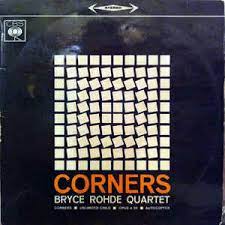
Bryce Benno Rohde was born on September 12, 1923 in Hobart, Tasmania, an island state of Australia. His early influences were Art Tatum and Nat King Cole but eventually leaned towards George Russell’s Lydian Concept.
He played jazz in Adelaide, Australia early in his career before a 1953 move to Canada. In 1954 he and two other expats plus an American formed the Australian Jazz Quartet/Quintet. The group recorded several albums and toured widely in the United States, but broke up in 1958 following a tour of Australia.
Rohde led his own quartets in Australia until 1964, then moved to California in 1965. After then he based himself out of San Francisco, leading his own ensembles at times. Among those Australian musicians with whom he worked extensively are Bruce Cale and Charlie Munro.
The pianist played New York City and Chicago, and recorded for Bethlehem Records. He also published a book combining original jazz compositions and his other passion, black and white photography. It shares the title of one of his seven recordings as a leader, Turn Right At New South Wales.
Over a career in jazz spanning more than 50 years he performed with Count Basie, Miles Davis, Billie Holiday, and John Coltrane among others. He eventually settled in San Francisco, California where he continued to perform and record until his death. Pianist, composer and bandleader Bryce Rohde passed away on January 26, 2016.
More Posts: bandleader,composer,history,instrumental,jazz,music,piano
Daily Dose Of Jazz…
Bob Bates was born on September 1, 1923 in Pocatello, Idaho. His mother was an organist and his brothers Norman and Jim were also bassists. As a youth he played tuba, trumpet, and trombone. From 1944 to 1948 he studied classical bass and played with Sonny Dunham around 1946–47 and with Jack Fina in the late Forties.
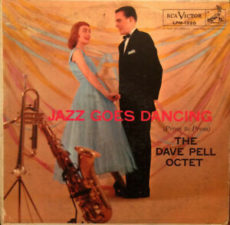
The 1950s saw Bob playing in the Two Beaux & a Peep Trio before becoming the bassist in the Dave Brubeck Quartet between 1953 and 1955. In addition, he recorded with Paul Desmond in 1954, and Dave Pell in 1956. It was during this time that he stopped playing and performing. Bassist Bob Bates passed away on September 13, 1981 in San Francisco, California at the age of 58.
More Posts: bass,history,instrumental,jazz,music