

Daily Dose Of Jazz…
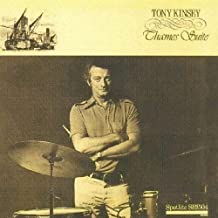
Tony Kinsey was born Cyril Anthony Kinsey on October 11, 1927 in Sutton Coldfield, Birmingham, England. Holding down jobs on trans-Atlantic ships during his youth, he studied while at port with Bill West in New York City and Birmingham with Tommy Webster. He had a close association with Ronnie Ball early in his life.
Kinsey led his own ensemble at the Flamingo Club in London, England through the 1950s, and recorded on more than 80 sessions between 1950 and 1977, including with Tubby Hayes, Bill Le Sage, Ronnie Scott, Johnny Dankworth, Tommy Whittle, Joe Harriott, Lena Horne, Frank Holder, Ella Fitzgerald, Ben Webster, Clark Terry, Harry Edison, Buddy DeFranco, Billie Holiday, Oscar Peterson, and Sarah Vaughan.
He performed at European jazz festivals both as a drummer and as a poet. He did some work as a session musician in the 1950s and 1960s, playing on records by Eddie Calvert, Cliff Richard, and Ronnie Aldrich. Kinsey was also a founder member of the group, The John Dankworth Seven in 1950.
He was a resident at the Florida Club, Leicester Square, in the 1950s and had his own trio in the mid~Sixties. By the mid 1980s Tony performed regularly with vibraphone player Lennie Best at venues in the London area including the South Hill Park Cellar Bar in Bracknell.
Kinsey also branched into composition; a string quartet composition of his is used in the short film On the Bridge, and he wrote arrangements for big bands in addition to music for over 100 commercials. Later in his life he wrote music for a musical based on the life of George Eliot.
In 2012, he appeared in the documentary film, No One But Me, discussing jazz vocalist Annie Ross. Drummer and composer Tony Kinsey continues to remain active as drummer.
More Posts: bandleader,drums,history,instrumental,jazz,music
Daily Dose Of Jazz…
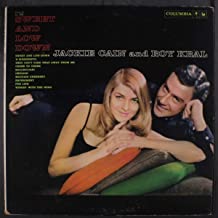
Roy Kral was born on October 10, 1921 in Cicero, Illinois. His sister was the renowned vocalist Irene Kral. Urged by his mother, he took classical piano lessons as a young boy but by the 1930s abandoned them to teach himself to play jazz piano by mimicking what he heard while listening to the radio under his blanket after bedtime.
During World War II, Kral served in the Army as an arranger for the Army band. After service he moved to Chicago, Illinois and joined the George Davis Quartet. As a pianist and singer for Charlie Ventura’s band, Bop for the People, in 1948 ç Kral agreed to write a new arrangement of the 1919 pop song I’m Forever Blowing Bubbles. He added a bebop sensibility and scat singing to a rather insipid pop standard, transforming it into a cool, jazzy tune and their first hit.
Meeting Jackie Cain at eighteen and just out of high school and his initial impression was not her singing until he heard her. Their voices were an octave apart and their partnership was cemented when they married in 1949 and became the duo Jackie and Roy, recording nearly 40 albums in 56 years. Coming to prominence during the bebop era they combined bebop singing with cabaret creating a very polished sound of pop, jazz and Latin music, all inflected with a jazz sensibility. The duo produced hits like Spring Can Really Hang You Up the Most, You Inspire Me, and It’s A Lovely Day Today.
Pianist and vocalist Roy Kral, one half of one of the most important vocal groups in jazz, passed away at 80 of congestive heart failure on August 2, 2002 in Montclair, New Jersey.
More Posts: bandleader,history,instrumental,jazz,music,piano,vocal
Daily Dose Of Jazz…
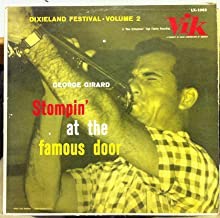
George Girard was born October 7, 1930 in Jefferson Parish, Louisiana and in high school he studied music under Johnny Wiggs and immediately after graduating in 1946 he became a professional musician. He played and toured with the bands of Johnny Archer and Phil Zito before co~founding the band The Basin Street Six, made up mostly of friends he had grown up with, including clarinetist Pete Fountain.
The band got a regular gig at L’Enfant’s Restaurant in New Orleans, as well as regular television broadcasts over WWL. The band started receiving favorable national attention, but being dissatisfied with it, broke up the band in 1954 and founded his own band, George Girard & the New Orleans Five. Landing a residency at the Famous Door in the French Quarter, he recorded for several labels, and got a weekly broadcast on CBS’s affiliated local radio station WWL.
His ambitions to make a national name for himself were thwarted when he became ill and had to give up playing in 1956. Trumpeter George Girard, known for his great technical ability, passed away from colon cancer in New Orleans, Louisiana on January 18, 1957. He was twenty-six.
More Posts: bandleader,history,instrumental,jazz,music,trumpet
Daily Dose Of Jazz…
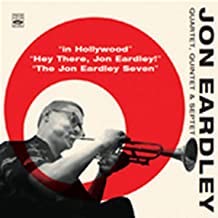
Jon Eardley was born on September 30, 1928 in Altoona, Pennsylvania and first started on trumpet at the age of 11. His father played in Paul Whiteman’s orchestra. From 1946 to 1949 he played in an Air Force band in Washington, D.C., then led with his own quartet in D.C. from 1950 to 1953.
Moving to New York City in 1953 and the following year saw him playing with Phil Woods, then with Gerry Mulligan for three years, and with Hal McIntyre (1956). Following this he returned to his hometown and played there until 1963, when he moved to Belgium.
In 1969 he moved to Cologne, Germany, playing there with Harald Banter and Chet Baker. Working through the 1980s, the last years before death he played in the WDR Big Band Cologne, Germany.
He recorded with Gerry Mulligan, Teo Macero, J. R. Monterose, Airto Moreira, Charlie Parker, Manfred Schoof, and Zoot Sims. Trumpeter Jon Eardley, who recorded four albums as a leader and ten albums as a sideman, passed away on April 1, 1991 in Lambermont, near Verviers, Belgium.

More Posts: bandleader,history,instrumental,jazz,music,trumpet
Daily Dose Of Jazz…
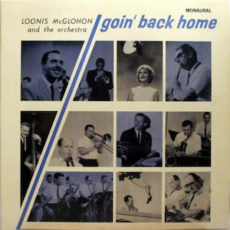
Loonis McGlohon was born on September 29, 1921 in Ayden, North Carolina, and graduated from East Carolina University. After a spell in the Air Force during World War II, he played with the Jimmy Dorsey and Jack Teagarden orchestras and became involved with broadcasting in Charlotte, North Carolina, working as music director for radio and television.
An accompanist to many well-known singers that included Judy Garland, Mabel Mercer and Eileen Farrell. He co-hosted the Peabody Award-winning NPR radio series American Popular Song with his friend and collaborator, Alec Wilder. He also composed and wrote lyrics for several songs with Wilder.
For his hometown of Charlotte he wrote the music for The Hornet’s Nest, and in 1980, Frank Sinatra recorded two of his songs with Alec Wilder, South to a Warmer Place and A Long Night on the album She Shot Me Down. He received a commission to write a piece in celebration of North Carolina’s 400th birthday, which resulted in North Carolina Is My Home. a symphonic work. McGlohon was inducted into the North Carolina Music Hall of Fame in 1999.
NationsBank Performance Place in Charlotte’s Spirit Square was named Loonis McGlohon Theatre in 1998, and the following year he was inducted into the North CArolina Music Hall of Fame. A 2004 biography, Loonis! Celebrating a Lyrical Life by Jerry Shinn was published posthumously by the East Carolina University Foundation in 2004. Pianist and songwriter Loonis McGlohon passed away at the age of 80 following a long-term battle with lymphoma on January 26, 2002.
More Posts: bandleader,history,instrumental,jazz,music,piano,songwriter