

Daily Dose Of Jazz…
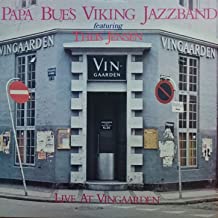
Arne Bue Jensen, known as Papa Bue, was born May 8, 1930 in Copenhagen, Denmark and at an early age became fascinated with jazz, prompted by a pile of records from his brother. The collection included Harry James, Artie Shaw, Tommy Dorsey, Glenn Miller, Bert Ambrose. Bunk Johnson and George Lewis made a strong impression.
After World War II, Jensen became a sailor, visiting ports around the world. It was around this time that he started to play jazz, buying a slide trombone with money he borrowed. Learning the basics from a musician from the Royal Danish Orchestra, he was mostly self-taught, he went on to play in clubs around Copenhagen with other young musicians and bands, including the Royal Jazzman, Henrik Johansen’s Jazz Band, and the Saint Peter Street Stompers, participating as a sideman in several recordings.
In the 1950s, Papa Bue worked with the Bonanza Jazz Band, Chris Barber, Adrian Bentzon, and Henrik Johansen. During the decade In the mid 1950s, he was part of the entertainment district in Nyhavn. With six musicians he founded the New Orleans Jazz Band in 1956, after a jam session at Cap Horn. Since Jensen was the eldest, he became the bandleader and as the only band member who was a father, was given the nickname Papa Bue.
By late 1957 he renamed the ensemble the Viking Jazz Band. The name came from American journalist and vocalist Shel Silverstein, who attended one of their concerts at Cap Horn during a stay in Copenhagen. He subsequently wrote an article about them, calling them the Danish Vikings, and adopting the new name, they released their first album as the Viking Jazz Band in 1958. In 1960 their Schlafe Mein Prinzchen sold over one million copies, and was awarded a gold disc.
At a time when many jazz musicians worked in the Bebop idiom, Bue’s style remained based on the Dixieland tradition but also with influences from early swing music. He is considered one of the most significant proponents of his genre.
The group remained active into the 1990s, and recorded with musicians such as George Lewis, Champion Jack Dupree, Art Hodes, Wild Bill Davison, Wingy Manone, Edmond Hall, Albert Nicholas. Earl Hines, Stuff Smith, and Ben Webster. In 1969, Papa Bue’s Viking Jazz Band was the only non-American band to participate in the New Orleans Jazz Festival.
While in New Orleans, he was honored with the Golden Keys to the City. In 1989 he received the Ben Webster’s Prize of Honour. Trombonist and bandleader Papa Bue, chiefly associated with the Dixieland jazz revival style, passed away on November 2, 2011 at the age of 81.

More Posts: bandleader,history,instrumental,jazz,music,trombone
Daily Dose Of Jazz…
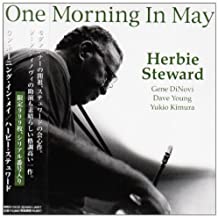
Herbert Bickford Steward was born May 7, 1926 in Los Angeles, California.
He recorded six albums as a leader and worked as a sideman with Serge Chaloff, Zoot SimsAl Cohn and Stan Kenton.
Saxophonist Herbie Steward, widely known for being one of the tenor saxophone players in Four Brothers, part of Woody Herman’s Second Herd, passed away on August 9, 2003 in Clearlake, California.
More Posts: bandleader,history,instrumental,jazz,music,saxophone
Daily Dose Of Jazz…
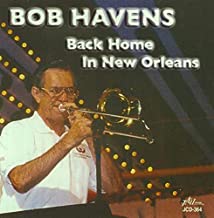
Robert Havens was born May 3, 1930 to a musical family in Quincy, Illinois and began studying violin and trombone at age seven and played both instruments throughout his school years. Landing his first professional job with a local dance band at age 12, by 16 his talent as a trombonist was recognized earning him a scholarship from the Interlochen Music Camp in Michigan and he held the first trombone chair in the school’s 250 piece concert band. He later held the first trombone chair in the Quincy Symphony while also playing in many popular dance groups in Illinois.
Leaving Quincy in 1955 after serving in the Illinois National Guard as a bandsman during the Korean War, Bob toured with the Ralph Flanagan Orchestra. In 1956, he joined George Girard’s Dixieland Band at the Famous Door in New Orleans, Louisiana where he met his idol, Jack Teagarden.
In 1957, Bob joined Al Hirt at Dan’s Pier 600 on Bourbon Street when Hirt formed his very first band. The front line consisted of Hirt, Havens and Pete Fountain. During his time in New Orleans, he recorded albums for Good Times Jazz and Vic labels with the Girard band, and on Verve and Audio Fidelity with Hirt. He also recorded about a dozen albums for the Southland label with many other New Orleans musicians.
Bob stayed with this group until 1960 when he was persuaded to move to the West Coast and join the Lawrence Welk Orchestra as a featured soloist on their weekly TV series. His tenure with this show lasted for 23 years until the show ended in 1982.
Following Welk, he continued as a freelance professional, working often with the Bob Crosby Bob Cats and the Benny Goodman Orchestra, then led by clarinetist Peanuts Hucko. From 1985 to 1995, Havens played with the Great Pacific Jazz Band along with Bob Ringwald (lead vocals/piano), Don Nelson (saxophone), and Zeke Zarchy (trumpet).
In 2005, he performed with the North Carolina Pops Orchestra at Campbell University with fellow Welk star Ava Barber in a benefit concert raising money for victims of Hurricane Katrina. Trombonist Bob Havens returned home to Quincy, and continued to record and appear at jazz festivals and concerts throughout the world.
More Posts: bandleader,history,instrumental,jazz,music,trombone

Daily Dose Of Jazz…
Floyd “Candy” Johnson was born on May 1, 1922 in Madison, Illinois and started on drums before moving to saxophone, with Ben Webster being his biggest influence. His professional career began in St. Louis, Missouri where he was a member of a group led by Chuck Finney. He attended Wilberforce University until the draft intervened but after his service, he played in bands led by Ernie Fields, Tiny Bradshaw, and Andy Kirk. With the Kirk orchestra he recorded for Decca Records.
Johnson preferred candy to alcohol, so a band member started calling him Candy, and the moniker stuck. In Detroit he started a band called the Peppermint Sticks. One musician recalled that the band dressed in candy-striped suits, and sometimes Johnson tossed peppermint sticks to the crowd.
1951 saw him as a member of the Count Basie Orchestra, recording with Basie for Clef Records before working in more of a rhythm and blues vein with Bill Doggett. The band had hits with Blip Blop, Honky Tonk, and Night Train. Leaving Doggett in the 1960s he went on to study music at Bowling Green State University.
By 1974, Candy was playing with the Duke Ellington Orchestra, the Count Basie Orchestra, and his friend Clark Terry. During a visit to New York City, he recorded with Helen Humes and Roy Eldridge. A year later, he accompanied the New McKinney’s Cotton Pickers at the Bix Beiderbecke Festival in Iowa.
Saxophonist Candy Johnson, who retired from performing, moved to Toledo, Ohio and taught at local schools, passed away on June 28, 1981 in Framingham, Massachusetts.

Daily Dose Of Jazz…
Raymond Fol was born in Paris, France on April 28, 1928 and along with his brother Hubert was raised in a musical household. He began playing piano at five years of age, and both he and his brother played in Claude Abadie’s ensemble after the end of World War II.
The Fol brothers then formed their own group, the Be Bop Minstrels, however, Raymond worked around this time with musicians such as Pierre Braslavsky, Jean-Claude Fohrenbach, Django Reinhardt, Roy Eldridge, and Johnny Hodges. In 1952, he did a European tour in Dizzy Gillespie’s band, and for several years in the middle of the decade was a regular at Paris’s Club Saint-Germain. He also worked in the 1950s with Sidney Bechet, Claude Luter, Guy Lafitte, and Stephane Grappelli.
He worked briefly in Rome, Italy in 1958, then returned to Paris, playing both piano and celesta at the Club Saint-Germain. In the 1960s and 1970s he worked with Kenny Clarke, Duke Ellington, Paul Gonsalves, Cat Anderson, and Gerard Badini. Raymond also recorded a few times on solo piano in the first half of the 1970s.
Pianist Raymond Fol passed away in the City of Lights on May 1, 1979.
More Posts: bandleader,history,instrumental,jazz,music,piano