

Daily Dose Of Jazz…
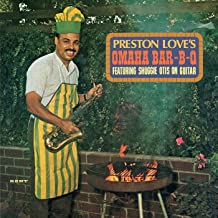
Preston Haynes Love was born on April 26, 1921 in Omaha, Nebraska, grew up in North Omaha and graduated from North High.
He became renowned as a professional sideman and saxophone balladeer in the big band heyday, being a member of the bands of Nat Towles, Lloyd Hunter, Snub Mosley, Lucky Millinder and Fats Waller before getting his big break with the Count Basie Orchestra at age 22. Love played and recorded with the Count Basie band from 1945–1947 and played on Basie’s only #1 hit record, Open The Door Richard.
He eventually became a bandleader himself, playing with Lena Horne, Billie Holiday, his friends Johnny Otis and Wynonie Harris, with whom he had several hits. In 1952, he launched the short-lived Spin Records, as a joint effort with songwriter Otis René (When It’s Sleepy Time Down South). The label released material by the Preston Love Orchestra, among others.
By the early 1960s he was working with Ray Charles in California and Aretha Franklin, eventually becoming Motown’s West Coast house bandleader. He played and toured with The Four Tops, The Temptations, Tammi Terrell, Marvin Gaye, Gladys Knight and others. Preston also recorded with Nichelle Nichols, Janis Joplin, Frank Zappa, Shuggie Otis, T-Bone Walker, Charles Brown, Ruth Brown, Smokey Robinson, Diana Ross and Stevie Wonder, among numerous others.
Love continued touring the U.S. and Europe into the 2000s, additionally lecturing and writing about the history he was part of. In his later years he returned to Omaha, wrote a book, led bands, the last of which featured his daughter vocalist Portia Love, drummer Gary E. Foster, pianist Orville Johnson, and bassist Nate Mickels. He also held down the position of advertising agent for the city’s local newspaper, Omaha Star, a local newspaper serving the city’s Black community. He appeared in the Clint Eastwood film Play Misty For Me with the Johnny Otis band.
Saxophonist, bandleader, and songwriter Preston Love, who was inducted into the Omaha Black Music Hall of Fame, passed away on February 12, 2004 after a battle with prostate cancer.
More Posts: bandleader,history,instrumental,jazz,music,saxophone,songwriter
Daily Dose Of Jazz…
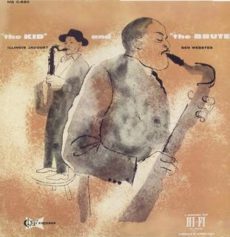
Rick Henderson was born on April 25, 1928 in Washington, D.C. and studied composition as a high schooler and played locally in the late 1940s. He served in the Army from 1951 to 1953, then joined Duke Ellington’s Orchestra after being recommended by Clark Terry.
He played with Ellington during his years on Capitol Records, doing arrangements in addition to his duties as a player. He also composed tunes such as Carney for the Ellington band. After leaving Ellington’s employ in 1956, Rick returned to D.C. where he led the Howard Theatre’s house band until 1964.
Following this he worked as an arranger and composer for jazz orchestras, military bands and school ensembles. Among those who used his charts, in addition to Ellington, were Count Basie, Illinois Jacquet, and Billy Taylor. Henderson continued to lead bands into the 1990s, including the University of Maryland Jazz Ensemble from 1977 to 1978.
Saxophonist and arranger Rick Henderson passed away from arteriosclerotic cardiovascular disease on May 21, 2004.
More Posts: arranger,bandleader,history,instrumental,jazz,music,saxophone
Daily Dose Of Jazz…
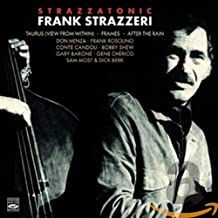
Frank Strazzeri was born on April 24, 1930 in Rochester, New York and he began on tenor saxophone and clarinet at age 12, then switched to piano soon after. He attended the Eastman School of Music, then took a job as a house pianist in a Rochester nightclub in 1952. While there he accompanied visiting musicians such as Roy Eldridge and Billie Holiday.
Moving to New Orleans, Louisiana in 1954, he played with Sharkey Bonano and Al Hirt in a Dixieland jazz setting, but his focus since then was on bebop. He played with Charlie Ventura in 1957–58 and Woody Herman in 1959 before moving to Los Angeles, California in 1960.
During his time there Frank worked extensively as a studio musician on the West Coast jazz scene, and toured with Joe Williams, Maynard Ferguson, Les Brown and Elvis Presley.
He went on to work with Terry Gibbs, Herb Ellis, the Lighthouse All-Stars, Art Pepper, Bud Shank, Cal Tjader, Louie Bellson, Curtis Amy, Harold Land and Chet Baker. In addition he recorded eighteen as a leader.
Pianist Frank Strazzeri passed away on May 9, 2014 at the age of 84.
More Posts: bandleader,history,instrumental,jazz,music,piano
Daily Dose Of Jazz…
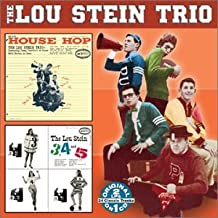
Lou Stein was born on April 22, 1922 in Philadelphia, Pennsylvania and joined Ray McKinley’s band in 1942. He played with Glenn Miller when the latter was stateside during World War II.
After the war he worked with Charlie Ventura from 1946 to 1947 and became a session musician. He performed with the Lawson-Haggart Band, Benny Goodman, Sarah Vaughan, the Sauter-Finegan Orchestra, Louie Bellson, Red Allen, Coleman Hawkins, and Lester Young.
Recording as a bandleader, in 1957 he had a U.S. Top 40 hit with Almost Paradise, as well as a Top 60 hit with his cover version of Got a Match the following year. From 1969 to 1972 he played with Joe Venuti.
Pianist Lou Stein passed away on December 11, 2002.
More Posts: bandleader,history,instrumental,jazz,music,piano
Daily Dose Of Jaz…
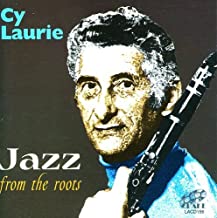
Cyril Laurie was born on April 20, 1926 in London, England of Latvian/Jewish immigrant stock. A self-taught clarinetist he put together a band in 1947. George Melly debuted in this ensemble in 1948. He played with Mike Daniels in 1949-50 and led the Cy Laurie Four in 1950 with Fred Hunt and Les Jowett.
He ran his own club in Windmill Street, Soho, London from 1951 and headed a seven-member ensemble with Chris Barber, Alan Elsdon, Al Fairweather, Graham Stewart and Colin Smith. Cy Laurie’s Club was in a basement in Ham Yard in Great Windmill Street, opposite the Windmill Theatre.
Quitting music from 1960 to 1968, he travelled to India to study meditation with the Maharishi Mahesh Yogi. Returning in 1968 to lead another ensemble at the end of the decade his career saw a resurgence late in the 1970s. He toured in ensembles as a soloist and sometimes led his own groups. Cy played with Eggy Ley and Max Collie in the 1980s. He continued performing into the 1990s. In 1996 to celebrate his 70th birthday he put together a celebratory reunion gig at London’s 100 Club.
Clarinetist Cy Laurie, who was a leading figure in the post 1945 Trad Jazz boom in the UK, passed away on April 18, 2002 at the age of 75 in Stapleford Abbotts, Essex, England.
More Posts: bandleader,clarinet,history,instrumental,jazz,music