

Daily Dose Of Jazz…
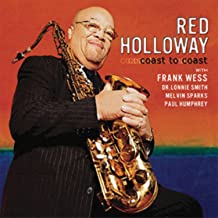
Red Holloway was born James Wesley Holloway on May 31, 1927 in Helena, Arkansas, and started playing banjo and harmonica before switching to tenor saxophone when he was 12 years old. Graduating from DuSable High School, where he had played in the school big band with Johnny Griffin and Eugene Wright, and attended the Conservatory of Music, Chicago, Illinois.
Joining the Army when he was 19, Red became bandmaster for the U.S. Fifth Army Band, and after completing his military service returned to Chicago and played with Yusef Lateef and Dexter Gordon, among others. In 1948, he joined blues vocalist Roosevelt Sykes, and later played with other rhythm & blues musicians such as Willie Dixon, Junior Parker, and Lloyd Price.
In the 1950s, he played in the Chicago area with Billie Holiday, Muddy Waters, Chuck Berry, Ben Webster, Jimmy Rushing, Arthur Prysock, Dakota Staton, Eddie “Cleanhead” Vinson, Wardell Gray, Sonny Rollins, Red Rodney, Lester Young, Joe Williams, Redd Foxx, B.B. King, Bobby Bland, and Aretha Franklin. During this period, he also toured with Sonny Stitt, Memphis Slim and Lionel Hampton. He became a member of the house band for Chance Records in 1952. He subsequently appeared on many recording sessions for the Chicago-based independents Parrot, United, States, and Vee-Jay.
From 1963 to 1966, he was in organist Brother Jack McDuff’s band, which also featured guitarist George Benson, who was then at the start of his career. In 1974, Holloway recorded The Latest Edition with John Mayall and toured Europe, Japan, Australia and New Zealand. From 1977 to 1982, he worked with Sonny Stitt, recording two albums together. Following Stitt’s death, he played and recorded with Clark Terry.
Tenor saxophonist Red Holloway passed away in Morro Bay, California, aged 84 of a stroke and kidney failure on February 25, 2012, one month after Etta James, with whom he had worked extensively.

More Posts: bandleader,composer,history,jazz,music,saxophone
Daily Dose Of Jazz…
Sandy Mosse was born on May 29, 1929 in Detroit, Michigan and learned clarinet and alto saxophone early in life, but switched to tenor saxophone at the beginning of the 1950s. Based out of Chicago, Illinois during the decade, he made several forays abroad, playing in Paris with Wallace Bishop in 1951. On his 1953 tour of Europe he performed with Django Reinhardt and Woody Herman.
Upon returning to Chicago in 1955 he played with Bill Russo, Chubby Jackson, James Moody, and Cy Touff. Mosse and Touff also co-led an octet called Pieces of Eight late in the 1950s into the early 1960s, featuring trumpeter John Howell. He received awards from Down Beat and Playboy late in the 1950s.
The 1960s saw him playing with Buddy Rich, Maynard Ferguson, and Dave Remington. During this time Sandy formed a band with flugelhornist Warren Kime called Pieces of Eight. Unfortunately, that same decade he was diagnosed with cancer.
Marrying a Dutch woman Clara, he moved to Amsterdam in the 1970s, playing on national radio and teaching at the Royal Dutch Conservatory. Recording less, he occasionally toured the U.S. with Zoot Sims and Al Cohn. In the Netherlands, he played with an ensemble called Volume Two, with Irvin Rochlin, Klaus Flenter, Evert Hekkema, Ben Gerritsen, and Lex Cohen.
Tenor saxophonist Sandy Mosse, influenced by Lester Young, passed away on July 1, 1983 in Amsterdam, Netherlands.
More Posts: bandleader,history,instrumental,jazz,music,saxophone
Three Wishes
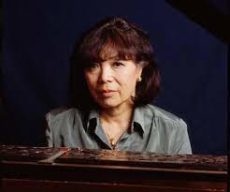
Nica spoke with Toshiko Akiyoshi and made the inquiry of her three wishes were she blessed with them and she replied with the following:
- “I want to be a pianist who can play everything in my mind. If I had this wish, I think two and three… I know they will come.”
*Excerpt from Three Wishes: An Intimate Look at Jazz Greats ~ Compiled and Photographed by Pannonica de Koenigswarter
More Posts: baroness,history,instrumental,jazz,music,pannonica,piano,three,wishes
Daily Dose Of Jazz…
Kitty Kallen, born Katie Kallen on May 25, 1921 in Philadelphia, Pennsylvania, was one of seven children. As a child, she won an amateur contest by imitating popular singers. Returning home with her prize camera, her father punished her for stealing it. Only when neighbors subsequently visited to congratulate her did her father realize she had actually won it.
As a young girl, she sang on The Children’s Hour, a radio program sponsored by Horn & Hardart, an automat chain. As a preteen, Kallen had a radio program on Philadelphia’s WCAU and sang with the big bands of Jan Savitt in 1936, Artie Shaw in 1938, and Jack Teagarden in 1939. At twenty she sang the vocals for Moonlight Becomes You with Bobby Sherwood and His Orchestra at the second ever session for what was then still called Liberty Records but would soon be renamed Capitol Records. It was her only session for the label.
She joined the Jimmy Dorsey band when she was twenty-one replacing Helen O’Connell. Her recording with Dorsey, They’re Either Too Young or Too Old, was a favorite of American servicemen. She followed this with Dorsey’s #1 hit Besame Mucho. Singing duets with Bob Eberly, when he left to go into the service in 1943, she joined Harry James’s band.
With James she went on to have many hits in the top twenty with two hitting #1. In 1954 she was voted the most popular female singer in Billboard and Variety polls. She followed up with the song, In the Chapel in the Moonlight, which was another million seller. Kittty performed live at numerous prominent venues, as well as popular television shows like the Tonight Show, American Banstand and The Big Beat.
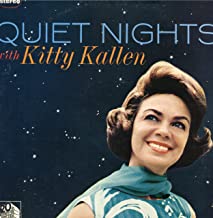
Her final album was Quiet Nights, a bossa nova–flavored release for 20th Century Fox Records. Subsequently, she retired owing to a lung ailment. On February 8, 1960, Kallen received a star on the Hollywood Walk of Fame A compilation of her hits on various labels remains available on the Sony CD set The Kitty Kallen Story. Vocalist Kitty Kallen passed away on January 7, 2016.
More Posts: history,instrumental,jazz,music,vocal
Daily Dose Of Jazz…
Bonnie Wetzel was born Bonnie Jean Addleman on May 15, 1926 in Vancouver, Washington. She learned violin as a child, and was an autodidact on bass. She played with Ada Leonard in an all-female ensemble, and soon after worked in a trio with Marian Grange.
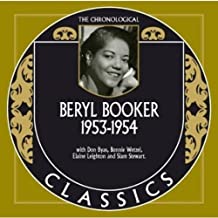
Marrying trumpeter Ray Wetzel in 1949, the pair worked in the Tommy Dorsey Orchestra in 1951. She went on to play in Beryl Booker’s trio with Elaine Leighton in 1953, touring Europe in 1953-54 and recorded for Discovery Records.
She also played with Herb Ellis, Charlie Shavers, Roy Eldridge, and Don Byas. Later in the 1950s she freelanced in New York City. Double bassist Bonnie Wetzel passed away on February 12, 1965 at the age of 38.
More Posts: bass,history,instrumental,jazz,music