

Daily Dose Of Jazz…
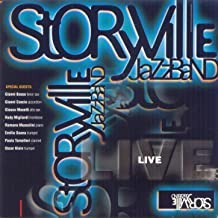
Glauco Masetti was born on April 19, 1922 in Milan, Italy and was classically trained on violin, attending the Milan and Turin conservatories. An autodidact on reed instruments, in the late 1940s he worked with Gil Cuppini for the first time, an association that would continue into the 1960s.
Masetti often worked as a session musician in the first half of the 1950s with Gianni Basso and Oscar Valdambrini among others. He led his own ensemble from 1955, and played with Eraldo Volonté and Chet Baker. In addition to working with Cuppini again for most of the 1960s, he also played with Giorgio Gaslini during that decade.
Reedist Glauco Masetti passed away on May 27, 2001 in Milan.
More Posts: bandleader,history,instrumental,jazz,music,reeds
Daily Dose Of Jazz…
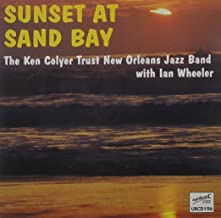
Kenneth Colyer was born on April 18, 1928 in Great Yarmouth, Norfolk, England, but grew up in Soho, London, and served as a member of his church choir. Listening to his elder brother’s jazz records which influenced him. He joined the Merchant Navy at 17, travelled around the world and heard famous jazz musicians in New Orleans, Louisiana.
In the UK, Colyer played with various bands and joined the Crane River Jazz Band in 1949 with Ben Marshall, Sonny Morris, Pat Hawes, John R. T. Davies, Julian Davies, Ron Bowden and Monty Sunshine. Rejoining the Merchant Navy, and jumping ship in Mobile, Alabama, he travelled to New Orleans, where he played with his idols in George Lewis’ band. Though offered the job of lead trumpeter on a tour, he was caught by the authorities, detained and deported.
Ken went on to join the Chris Barber Band and made their first recordings on the Storyville in 1953. Parting company the following year, then briefly joined a band in the mid-1950s with clarinetist Acker Bilk and trombonist Ed O’Donnell.
Then he put together his own band with Mac Duncan, Ian Wheeler, Johnny Bastable, Ron Ward, Colin Bowden and Ray Foxley. This band played together until the early 1960s before incorporating a new lineup.
After a bout with stomach cancer in 1972 he stopped being a bandleader but continued to work, occasionally associated with Chris Blount’s New Orleans Jazz Band. A biography, Goin’ Home, was compiled by Mike Pointon and Ray Smith. Trumpeter and cornetist Ken Colyer, who was known for skiffle interludes and devoted to New Orleans jazz, passed away on March 8, 1988.
More Posts: bandleader,cornet,history,instrumental,jazz,music,trumpet
Daily Dose Of Jazz…
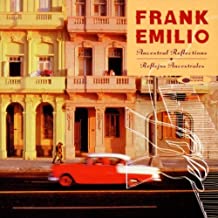
Frank Emilio was born Francisco Emilio Flynn Rodríguez on April 13, 1921 in Havana, Cuba to an American father and Cuban mother. Despite being blinded at birth due to damage to his eyes by the doctor’s forceps, unable to distinguish shapes as a child he became totally blind by his late teens. Orphaned at age five he was raised by his aunt and uncle. At 13 years old, he won an amateur music contest and shortly after began to play danzones by Antonio María Romeu. In 1938 he interrupted his career to complete his studies at a school run by Cuba’s National Association for the Blind.
During the 1940s, Flynn became part of the filin music scene which comprised jazz-influenced bolero composers. He accompanied singer Miguel de Gonzalo. In 1946 he founded the Loquibambia ensemble together with guitarist and composer José Antonio Méndez, and they started to work for the Mil Diez radio station. By 1949 they accompanied the famous Conjunto Casino in the recording of their song Átomo. Two years later he founded Los Modernistas, and played at Radio Cadena Habana, toured the island before disbanding. Flynn then joined a son ensemble, Alejandro y sus Muchachos, and in 1955 he recorded four songs with Arcaño y sus Maravillas.
By the late Fifties he would go on to pioneer small-ensemble Cuban jazz. After the Cuban Revolution, the members of the Quinteto Instrumental remained in Havana, playing and recording. In the late 1970s and 1980s, his band expanded and recorded their debut album. During the 1990s Flynn recorded several albums including Barbarísimo, Tribute to Ernesto Lecuona and A Tiempo de Danzón for Milan/RCA Records, and Ancestral Reflections for Blue Note. In 1998 he made his American debut, with Los Amigos, in a Jazz at Lincoln Center gig and the following year he reunited with his American relatives.
Between 2000 and 2001 he spent much of his time with his relatives in California, where he played live occasionally and gave lectures at California State University, Los Angeles. Pianist Frank Emilio, who played danzas, danzones, filin, descarga, and Afro-Cuban jazz, passed away on August 23, 2001 in Havana.
More Posts: bandleader,history,instrumental,jazz,music,piano
Daily Dose Of Jazz…
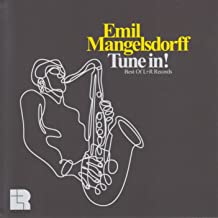
Emil Mangelsdorff was born April 11, 1925, in Frankfurt am Main, Germany. In 1942 and 1943, he studied clarinet at the Hoch Conservatory in Frankfurt, Germany.
As a member of the Frankfurt Hot Club, his performance of jazz with Hans Otto Jung among others, led to his being imprisoned by the Gestapo. He was forced into the German army and was a Russian prisoner of war for four years. In 1949 he returned to Frankfurt and decided to become a professional jazz musician. Emil played in the combos of Joe Klimm and Jutta Hipp, and was also a member of the Frankfurt All Stars and the Jazz-Ensemble des Hessischen Rundfunks from 1958.
Since the 1960s he has directed his own quartet. In 1964 Mangelsdorff wrote an instruction manual for jazz saxophone. In 2006 he was awarded the Goethe-Plakette des Landes Hessen and in 2008 he received the Bundesverdienstkreuz.
Alto saxophonist Emil Mangelsdorff, who also played soprano saxophone, clarinet and flute, has retired from music at 96.
More Posts: bandleader,clarinet,flute,history,instrumental,jazz,music,saxophone
Daily Dose Of Jazz…
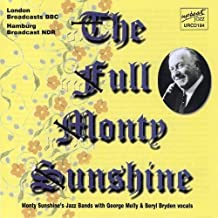
Monty Sunshine was born on April 9, 1928 in Stepney, London, England. Along with Lonnie Donegan, Jim Bray and Ron Bowden, he formed the back line of what was the embryo Chris Barber Band. First trumpet Ken Colyer and the original 1953 band took the Colyer name until he left. Pat Halcox took over the spot and the band formally adopted the Chris Barber Jazz Band as its title.
The band quickly made an international reputation following their inaugural tour of Denmark, before their professional debut in the United Kingdom. Sunshine stayed with the band for several years, until he left in 1960, to be replaced by Ian Wheeler. He formed his own band, staying true to the original six-man line up, whilst Barber expanded his band membership to seven, then eight and finally to eleven.
Sunshine returned to play a reunion concert with the original Chris Barber Band at the Fairfield Halls, Croydon in 1975. Well received, the band reformed for an international reunion tour in 1994 and he retired from music around 2001. His discography is extensive, and compact discs have been issued of recordings with Colyer and Barber, as well as with his own band.
Clarinetist Monty Sunshine, known for his clarinet solo on the track Petite Fleur, passed away on November 30, 2010 at the age of 82.
More Posts: bandleader,clarinet,history,instrumental,jazz,music