

Daily Dose Of Jazz…
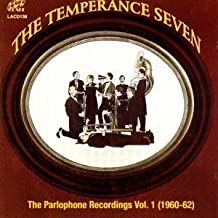
John R. T. Davies was born John Ross Twiston Davies on March 20, 1927 in Wivelsfield, Sussex, England. A trombonist, trumpeter and alto saxophonist, in the early 1950s he was a member of the Crane River Jazz Band led by Ken Colyer which spearheaded interest in the original New Orleans jazz style. Later he achieved chart success with the 1960s jazz revival band The Temperance Seven. The group’s recording of You’re Driving Me Crazy reached the top of the charts in 1961.
Considered by many as the world’s leading specialist in the art of sound restoration, he specifically focused on jazz and blues existing on pre-magnetic tape media such as shellac 78s. He was particularly interested in recordings from 1917 to 1940. Davies developed many methods for restoring old recordings and disliked modern techniques for removing surface noise.
While he appreciated attempts to clean up recordings and to create new versions of old recordings for modern audiences (e.g. the stereophonic remastered recordings by Robert Parker), in general he said he preferred remasterings which “keep everything and do as little as possible” to the original recording, and thought the remastering engineer should “Add nothing, take nothing away”. The presence of his name on the credit of a reissue is generally considered the mark of a quality product. He started his own record label called Ristic in the late 1940s which produced reissued recordings from 1949 to 1972.
Davies was always generous with his time and his collection and wanted it to be available for other people to use for research and reissues after his death. The Borthwick Archive at York University have accepted the entire collection and are housing it in ideal conditions, and making a transfer suite available so that his wish can be carried out. Information about the collection collated from the collection catalogue is also now available online from the University of York Digital Library and a small selection of the tracks have been made available to listen online.
Alto saxophonist and audio engineer John R. T. Davies, who specialized in restoring classic jazz records, passed away on May 25, 2004.

More Posts: audio engineer,history,instrumental,jazz,music,saxophone
Three Wishes
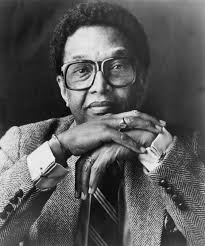
When asked what his three wishes would be, Billy Taylor told Nica he would wish for:
- “Wish I had the time to do all the things that I’m interested in.”
- “Wish I had the time to spend with all the people and things I care about.”
- “I wish I had the time.”
*Excerpt from Three Wishes: An Intimate Look at Jazz Greats ~ Compiled and Photographed by Pannonica de Koenigswarter

More Posts: baroness,history,instrumental,jazz,music,pannonica,piano,three,wishes
Daily Dose Of Jazz…
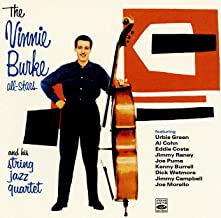
Vinnie Burke, born Vincenzo Bucci on March 15, 1921 in Newark, New Jersey, played violin and guitar early in life, but he lost the use of his little finger in a munitions factory accident and switched to double bass.
In the second half of the 1940s he played with Joe Mooney, Tony Scott, and Cy Coleman. He would go on to play with the Sauter-Finegan Orchestra, Tal Farlow, Marian McPartland, Don Elliott, Vic Dickenson, Gil Mellé, Bucky Pizzarelli, John Mehegan, Chris Connor, Eddie Costa, and Bobby Hackett.
From 1956 into the 1980s he led his own band and led small combos. Bassist Vinnie Burke, who recorded four albums as a leader, passed away on February 1, 2001.
More Posts: bandleader,bass,history,instrumental,jazz,music
Daily Dose Of Jazz…
Stuff Combe was born Etienne Stephen Jean Gustave Combe in Bern, Switzerland on March 12, 1924 and initially pursued schooling in art during World War II, but ultimately decided on a career in music instead.
During the 1940s Combe played in Switzerland in the 1940s with Philippe Brun, Eddie Brunner, Ernst Hollerhagen, and Hazy Osterwald. In the 1950s he traveled extensively throughout Europe and played frequently with visiting American musicians. Near the end of the decade he recorded with Paul Kuhn and Fats Sadi. In 1957 he began playing with Kurt Edelhagen, an association that would continue into the mid-1960s.
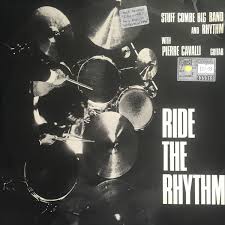
Stuff formed his own large ensemble in Geneva, Switzerland in 1966, and the following year worked with the Radio Suisse Romande jazz band. He was Lucky Thompson’s drummer during Thompson’s 1969 Swiss tour. In the 1970s he worked with Francy Boland and Benny Bailey, and played in the western United States with Groupe Instrumental Romand.
Drummer Stuff Combe, who wrote a treatise on percussion improvisation, passed away on December 27, 1986 in Morges, Switzerland.
More Posts: bandleader,drums,history,instrumental,jazz,music

Daily Dose Of Jazz…
Victor Ash was born in East London, England on March 9, 1930, of Jewish ancestry and began playing professionally in 1951 when, with Tubby Hayes, he joined the band of Kenny Baker, with whom he played until 1953. Following this association, Ash played with Vic Lewis from 1953–56, then accompanied Hoagy Carmichael and Cab Calloway on their English tours.
Leading his own group, he became a favourite in the Melody Maker fan polls of the 1950s. Concurrently he had a radio program called Sunday Break, which discussed jazz and religion. In 1954, the Vic Ash Quartet recorded with US singer Maxine Sullivan in London. Ash toured the U.S. in 1957 and returned to play with Lewis in 1959. That same year his ensemble was the only one representing British jazz at the Newport Jazz Festival.
Ash remained a mainstay on the British jazz scene for decades, playing in small and large ensembles including the BBC Big Band. He accompanied Frank Sinatra on his tours in Europe and the Middle East, from 1970 until Sinatra’s death.
He released many albums for Pye, Nixa and MGM, mostly in the mainstream jazz tradition. Saxophonist and clarinetist Vic Ash, who co-authored his autobiography I Blew It My Way in 2006, passed away on October 24, 2014.
More Posts: bandleader,clarinet,history,instrumental,jazz,music,saxophone