


Daily Dose Of Jazz…
Christiaan Herbert “Chris” Hinze was born June 30, 1938 in Hilversum, Netherlands. He initially performed publicly as a pianist until the mid-Sixtiess, when he began studying flute at the Royal Conservatory of The Hague and then came to America and Berklee College of Music.
As a pianist, he played with Boy Edgar until 1966, but by 1967 was playing flute professionally with the bassist Dick van der Capellen. His first releases as a leader were issued in 1969, and in 1970, and was awarded the Best Soloist prize at the Montreux Jazz Festival.
The 1970s saw him forming his own ensemble, the Chris Hinze Combination, which included Gerry Brown and John Lee, which produced some success with arrangements of Baroque music in a jazz setting. He founded the record label Keytone Records in the mid-1970s.
In the 1980s, Hinze played for several years in a duo with Sigi Schwab and continued touring with a new version of his Combination. He began studying the music of Tibet and South Asia in the middle of the decade, forming a world music ensemble which shifted toward more new age and electronic music styles rather than jazz.
Flautist Chris Hinze continues to compose and perform.

More Posts: bandleader,flute,history,instrumental,jazz,music
Daily Dose Of Jazz…
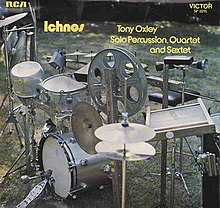
Tony Oxley was born on June 15, 1938 in Sheffield, West Riding of Yorkshire, England. A self-taught pianist by the age of eight, he first began playing the drums at seventeen and was taught by Haydon Cook. While playing evening gigs with local dance bands at night, he was sacked from his regular job, at a cutlery-making company, for falling asleep.
During his National Service from 1957 to 1960 with the Black Watch military band he studied music theory and improved his drumming technique. After leaving the army he became a member of a dance band playing for passengers on the Queen Mary and made several trips to New York. When on shore leave Tony visited clubs and heard Philly Joe Jones, Horace Silver, Art Blakey. From 1960 to 1964 he led a quartet which performed locally back home.
1963 saw Oxley playing Saturday afternoon gigs with other aspiring young jazz musicians and working with Gavin Bryars and guitarist Derek Bailey, in a trio known as Joseph Holbrooke. Moving to London, England in 1966 he became house drummer at Ronnie Scott’s, where he accompanied visiting musicians such as Joe Henderson, Lee Konitz, Charlie Mariano, Stan Getz, Sonny Rollins, and Bill Evans until the early 1970s. He was a member of bands led by Gordon Beck and Mike Pyne.
As a sideman he appeared on the John McLaughlin 1969 album Extrapolation and formed a quintet with Bailey, Jeff Clyne, Evan Parker, and Kenny Wheeler, releasing the album The Baptised Traveller. Tony helped found Incus Records with Bailey and others and Musicians Cooperative. The label would go on to release more than 50 albums, received a three-month artist-in-residence job at the Sydney Conservatorium in Australia and joined the London Jazz Composers Orchestra and collaborated with Howard Riley.
Oxley wwent on to join saxophonist Alan Skidmore’s quintet, tutor at the Jazz Summer School in Barry, South Wales, and form the band Angular Apron, and start the Celebration Orchestra He toured and recorded with Anthony Braxton, and began a working relationship with Cecil Taylor. Over the next few decades he joined several bands, recorded a series of albums and ventured into electronic and acoustic percussion music.
Free improvising drummer and electronic musician Tony Oxley died on December 26, 2023.
Daily Dose Of Jazz…
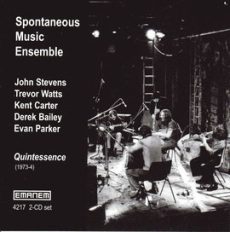
John William Stevens was born on June 10, 1940 in Brentford, Middlesex, England, the son of a tap dancer. He listened to jazz as a child but was more interested in drawing and painting, through which he expressed himself throughout his life. He studied at the Ealing Art College and then started work in a design studio, but left at 19 to join the Royal Air Force. It was here that he studied the drums at its School of Music in Uxbridge, England and where he met Trevor Watts and Paul Rutherford, two musicians who became close collaborators.
In the mid-1960s, Stevens began to play in London jazz groups with Tubby Hayes and Ronnie Scott, and in 1965 he led a quartet. He moved away from mainstream jazz when he heard free jazz from the U.S. by musicians like Ornette Coleman and Albert Ayler. By 1966, he formed the Spontaneous Music Ensemble (SME) with Watts and Rutherford. The band moved into the Little Theatre Club at Garrick Yard, St Martin’s Lane, London, England. In 1967, they released their debut album, Challenge, however, his interest turned to quiet music, non-Western music and improvisation.
Stevens would go on to play with free improvisors Derek Bailey, Peter Kowald, Julie Tippetts and Robert Calvert, until the mid-1970s when the SME settled down to regulars Stevens, Nigel Coombes on violin, and Roger Smith on guitar. During the same period he consistently played with guitarist and songwriter John Martyn as part of a trio that included bassist Danny Thompson, recording Martyn’s 1976 Live at Leeds.
The Eighties saw John becoming an educator involved with Community Music, an organisation through which he took his form of music making to youth clubs, mental health institutions, the Lewisham Academy of Music, and other unusual places. Notes taken during these sessions were later turned into a book for the Open University called Search and Reflect.
Drummer John Stevens died at the age of 54 from a heart attack on September 13, 1994.
More Posts: bandleader,drums,educator,history,instrumental,jazz,music

Daily Dose Of Jazz…
Alan Branscombe was born on June 4, 1936 in Wallasey, Cheshire, England into a family of musicians. His father and grandfather were professional musicians and began on alto sax at age six. As a child he played drums with Victor Feldman in a talent show as a child.
During his time in the Army he played with Jeff Clyne in 1954–56. He toured and recorded with Vic Ash in 1958, recorded with Tony Kinsey the following year, and toured Japan with Stanley Black at the turn of the new decade. Alan worked with John Dankworth as pianist and vibraphonist intermittently between 1960 and 1972, including in the 1963 film The Servant.
Joining Harry South’s band at Ronnie Scott’s club in the mid-1960s, Branscombe went on to play as a sideman with Tubby Hayes, Stan Tracey, and Paul Gonsalves through the decade. He played with Ben Webster in 1965 and again in 1970, and in the Seventies he was with Albert Nicholas, toured in Europe with Stan Getz, and played with the Lamb-Premru group around 1971.
As a leader Branscombe recorded with Tony Kinsey and Tony Coe as sidemen on the album The Day I Met the Blues in 1977. As a session musician, he played tenor saxophone on The Beatles song Got To Get You Into My Life.
Pianist, vibraphonist, and alto saxophonist Alan Branscombe died on October 27, 1986.
More Posts: bandleader,history,instrumental,jazz,music,piano,saxophone,vibraphone
Daily Dose Of Jazz…
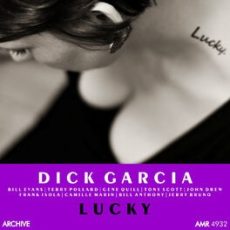
Dick Garcia was born Richard Joseph Garcia on May 31, 1931 in New York City. He began to play the guitar aged nine.
In 1950, he was a member of Tony Scott’s quartet. From 1952, he worked with George Shearing, Charlie Parker, Joe Roland, Milt Buckner, Johnny Glasel, Lenny Hambro, Aaron Sachs, and Bobby Scott.
He recorded again with Shearing in the late 1950s and early 1960s, then with Kai Winding, Milt Buckner, Nat King Cole, Johnny Glasel, Lenny Hambro, Joe Roland, Bobby Scott, Tony Scott, and Nancy Wilson.
Guitarist Dick Garcia, who recorded as a leader and sideman, still plays occasionally at age 93.
