

Daily Dose Of Jazz…
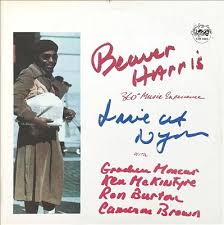
Beaver Harris was born William Godvin Harris on April 20, 1936 in Pittsburgh, Pennsylvania. Coming from an athletic family, he played baseball as a teenager for the Kansas City Monarchs, which was part of the Negro American League, and was scouted by the Brooklyn Dodgers and New York Giants.
After his Army service, Beaver began playing drums. Moving in 1963 to New York City and was encouraged to pursue a musical career by Max Roach. The city did him quite well as he worked and/or toured with Marion Brown, Dexter Gordon, Albert Ayler, Joe Henderson, Freddie Hubbard, Clifford Jordan, Howard Johnson, Sheila Jordan, Lee Konitz, Thelonious Monk, Roswell Rudd, Sonny Rollins, McCoy Tyner, Sonny Stitt, Clark Terry, Chet Baker, Doc Cheatham and Larry Coryell among other musicians.
Harris founded a world music band calling it the 360 Degree Music Experience. The band included Buster Williams, Hamiet Bluiett, Don Pullen, Jimmy Garrison, Ron Carter, Ricky Ford, and many others.
Drummer Beaver Harris, who worked extensively with Archie Shepp, died of prostate cancer in New York City at the age of 55 on December 22, 1991.
More Posts: bandleader,drums,history,instrumental,jazz,music
Daily Dose Of Jazz…
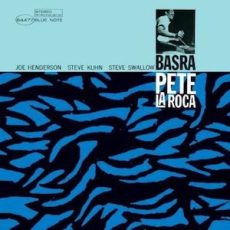
Pete La Roca was born Peter Sims on April 7, 1938 in Harlem, New York to a pianist mother and a stepfather who played trumpet. He was introduced to jazz by his uncle Kenneth Bright, a major shareholder in Circle Records and the manager of rehearsal spaces above the Lafayette Theater. He studied percussion at the High School of Music and Art and at the City College of New York, where he played tympani in the CCNY Orchestra. He adopted the name La Roca early in his musical career, when he played timbales for six years in Latin bands.
During the 1970s, after a hiatus from jazz performance, he resumed using his original surname. When he returned to jazz in the late 1970s, he usually inserted La Roca into his name in quotation marks to help audiences familiar with his early work identify him. In 1957, Max Roach became aware of him while jamming at Birdland and recommended him to Sonny Rollins. On the afternoon set at the Village Vanguard he became part of the important record A Night at the Village Vanguard. In 1959 he recorded with Jackie McLean and in a quartet with Tony Scott, Bill Evans and Jimmy Garrison.
Between the end of the 1950s and 1968, he also played and/or recorded with Slide Hampton, the John Coltrane Quartet, Marian McPartland, Art Farmer, Freddie Hubbard, Mose Allison, and Charles Lloyd, among numerous others. During this period, he led his own group and worked as the house drummer at the Jazz Workshop in Boston, Massachusetts.
In 1968 he enrolled in law school and drove a New York City taxi cab to supplement his income. He returned to jazz part-time in 1979, and recorded one new album as a leader, Swing Time in 1997.
Drummer and attorney Pete La Roca died in New York of lung cancer at the age of 74 on November 20, 2012.
More Posts: bandleader,drums,history,instrumental,jazz,music
Daily Dose Of Jazz…
Alfred Winters was born March 24, 1931 and raised in New York City, New York. He completed his Bachelors and Masters degrees from Hofstra University and began working professionly since 1957.
He studied with the Metropolitan Opera Orchestra principal trombonist Roger Smith. He went on to play with Bobby Hackett, Gene Krupa, Phil Napolean, Wild Bill Davison, Benny Goodman. Recorded with numerous artists including Gene Krupa and Bobby Hackett.
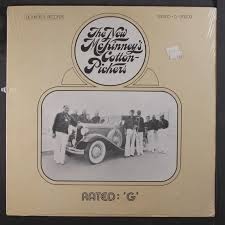
Relocating in 1966 to the Detroit, Michigan area he performed and recorded with the Austin-Moro Big Band and the New Mckinney’s Cottonpickers as well as local artists like Tom Saunders.
He led his own band beginning in 1988 and performed at numerous jazz festivals including Newport Jazz Festival, Montreaux Jazz Festival and the Sacramento Jazz Jubilee.

More Posts: bandleader,history,instrumental,jazz,music,trombone
Daily Dose Of Jazz…
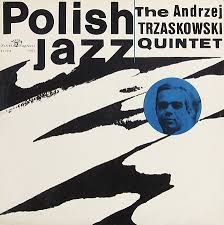
Andrzej Trzaskowski was born on March 23, 1933 in Kraków, Poland. He began playing piano at age four and founded his first jazz band, Rhythm Quartet. He attended Jan III Sobieski High School, passed his final exams cum laude, and eventually was admitted to Jagiellonian University where he earned his masters degree with his thesis being on Charlie Parker. Prior to his admittance he earned his living by playing in Kraków, Łódź and Zakopane night clubs.
By 1956 he was performing at jazz festivals and being recognized as the best jazz pianist by a Przekrój poll. From 1958, he played together with Jan Ptaszyn Wróblewski in the band Jazz Believers. The following year Trzaskowski moved permanently to Warsaw, established his own hard bop band, The Wreckers, that drew inspiration from the music of Charlie Parker, Dizzy Gillespie, and Horace Silver. In 1960, the Trzaskowski’s Trio accompanied saxophonist Stan Getz, and they recorded together the album Stan Getz & Andrzej Trzaskowski Trio.
At the end of the 1950s he began working with Polish cinema, arranging and recording music for the film Night Train, composed or created soundtracks for films and appeared on the screen, playing piano in Innocent Sorcerers in 1960 and Feliks Falk’s Był jazz in 1981. Andrzej moved to the United States in 1961 with a new configuration of The Wreckers and toured the country.
The Andrzej Trzaskowski Quintet would go on to perform with Don Ellis, Ted Curson, and in 1963 the Quintet gave concerts in Germany, Italy, Switzerland, Yugoslavia, East Germany and Belgium over the next year. By 1963, he began to move away from bop music towards free jazz.
In the Seventies he performed and recorded at the Polskie Radio Jazz Studio, and became the head of Polish Radio Symphony Orchestra Studio S-1. From 1992 he lectured at the Jazz Department of the State Music School of Warsaw and during the last years of his life he composed almost exclusively for cinema and television. In 1995, he was awarded the Cross of Merit for his artistic career.
Pianist, composer and musicologist Andrzej Trzaskowski, who from the mid-1950s onward was regarded as an authority on syncopated music, died in Warsaw on September 16, 1998, aged 65.
More Posts: bandleader,composer,history,instrumental,jazz,music,piano
Daily Dose Of Jazz…
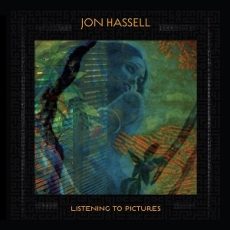
Jon Hassell was born March 22, 1937 in Memphis, Tennessee and received his master’s degree from the Eastman School of Music in Rochester, New York. During this time he became involved in European serial music, especially the work of Karlheinz Stockhausen. After finishing Eastman he enrolled in the Cologne Course for New Music where he met avant-guardists Irmin Schmidt and Holger Czukay.
Returning to the States in 1967 he met Terry Riley in Buffalo, New York, and performed on the first recording of Riley’s seminal work In C in 1968. He pursued his Ph.D. in musicology in Buffalo and performed in La Monte Young’s Theatre of Eternal Music in New York City, contributing to the 1974 LP Dream House 78′ 17″.
Back in Buffalo in the early Seventies, Hassell was introduced to the music of Indian Pandit Pran Nath, His work with Nath awoke his appetite for traditional music of the world. He collaborated with Brian Eno, worked with David Sylvian, Peter Gabriel, contributed to Tears For Fears album The Seeds of Love, and composed for film and television.
Trumpeter Jon Hassell, who coined the term Fourth World, utilized circular breathing and electronic processing, died from natural causes on June 26, 2021, at the age of 84.
More Posts: history,instrumental,jazz,music,trumpet