

Three Wishes
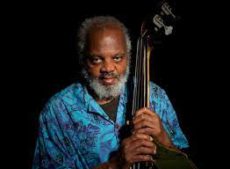
When Henry Grimes was asked what he would wish for if he had three wishes by Pannonica, he told her:
- “Health. If I had the health, I could do anything else.”
- “The second would be money. Not a large sum of money, but just a constant flow of money to keep me in comfort the rest of my life.”
- “Everlasting peace and everlasting good will amongst everyone. So there’ll be no wars, and no excuse to drop that H~bomb, and all that sh*t. So I’ll live in peace, and spend all that money in peace.”
*Excerpt from Three Wishes: An Intimate Look at Jazz Greats ~ Compiled and Photographed by Pannonica de Koenigswarter

More Posts: baroness,bass,history,instrumental,jazz,music,pannonica,three,wishes
Daily Dose Of Jazz…
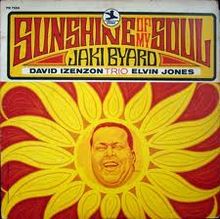
David Izenzon was born on May 17, 1932 in Pittsburgh, Pennsylvania. Graduating from the Carnegie Institute of Technology, he later received a master’s degree from the Manhattan School of Music.
Izenzon began playing double bass at the age of twenty-four and played in his hometown before moving to New York City in 1961. There he played with Paul Bley, Archie Shepp, Sonny Rollins, and Bill Dixon, but he is best known for his association with Ornette Coleman, which began in October 1961. He played in Coleman’s 1962 Town Hall concert and played with him frequently from 1965 to 1968, often in a trio format with Charles Moffett.
During this time Izenzon also recorded with Harold McNair and Yoko Ono. He taught music history at Bronx Community College from 1968 to 1971 and played with Perry Robinson and Paul Motian, but reduced his time in music in 1972 when his son became ill. In 1973 Izenzon received a Ph.D. in psychotherapy from Northwestern University. The following year, he co-founded Potsmokers Anonymous with his wife, Pearl.
In 1975 he composed a jazz opera titled How Music Can Save The World, dedicated to those who helped his son recover. From 1977 he worked again with Coleman and Motian up until his death. Double bassist David Izenzon passed away on October 8, 1979 of a heart attack, arriving dead on arrival at Bellevue Hospital in New York City.

More Posts: bass,history,instrumental,jazz,music
Daily Dose Of Jazz…
Warren Smith was born on May 14, 1934 in Chicago, Illinois, to a musical family. His father played saxophone and clarinet with Noble Sissle and Jimmie Noone, and his mother was a harpist and pianist. At the age of four he studied clarinet with his father. He graduated from the University of Illinois in 1957, then received a master’s degree in percussion from the Manhattan School of Music in 1958.
One of his earliest major recording dates was with Miles Davis as a vibraphonist in 1957. In 1958 Warren found work in Broadway pit bands and also played with Gil Evans. In 1961 he co-founded the Composers Workshop Ensemble. In the 1960s Smith accompanied Aretha Franklin, Nina Simone, Lloyd Price, and Nat King Cole; he worked with Sam Rivers from 1964–76 and with Gil Evans again from 1968 to 1976.
In 1969 he played with Janis Joplin and in 1971 with King Curtis and Tony Williams. He was also a founding member of Max Roach’s percussion ensemble, M’Boom, in 1970.
In the 1970s and 1980s Smith had a loft called Studio Wis that acted as a performing and recording space for many young New York jazz musicians, such as Wadada Leo Smith and Oliver Lake. Through the 1970s Smith played with Andrew White, Julius Hemphill, Muhal Richard Abrams, Nancy Wilson, Quincy Jones, Count Basie, and Carmen McRae. Other credits include extensive work with rock and pop musicians and time spent with Anthony Braxton, Charles Mingus, Henry Threadgill, Van Morrison, and Joe Zawinul.
He continued to work on Broadway well into the 1990s, and has performed with a number of classical ensembles. Smith taught in the New York City public school system from 1958 to 1968, at Third Street Settlement from 1960 to 1967, at Adelphi University in 1970–71, and at SUNY-Old Westbury from 1971. He remains connected to the music at 87.
More Posts: bandleader,history,instrumental,jazz,music,percussion
Daily Dose Of Jazz…
Frederick Roach was born on May 11, 1931 in The Bronx, New York. He made his record debut in 1960 with saxophonist Ike Quebec on the albums Heavy Soul and It Might as Well Be Spring and played with Willis Jackson.
>From 1962-64 he recorded five albums as a leader for the Blue Note Records label. He also recorded with Donald Byrd on the album I’m Tryin’ to Get Home. His original writing, steady basslines, and highly musical fleet-fingered right hand set him apart.
1966-67 saw Freddie recording three more albums as a leader for Prestige Records, which are in a more commercial vein than his Blue Note dates. He left the music business in 1970 and became involved in theater, playwriting and film.
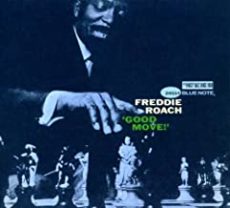
Roach was a soulful organist, certainly influenced by Jimmy Smith, but with a distinct sound and a quite original concept, which was perhaps best heard on “Good Move” for Blue Note. His Blue Note albums are critically acclaimed
Soul jazz Hammond B3 organist Freddie Roach, who moved to California for the film industry, suffered a heart attack and passed away on October 3, 1980.
More Posts: bandleader,composer,history,instrumental,jazz,music,organ
Daily Dose Of Jazz…
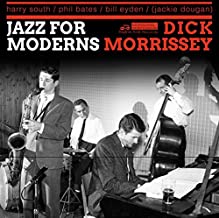
Richard Edwin Morrissey was born on May 9, 1940 in Horley, Surrey, England. Self-taught, he started playing clarinet in his school band, The Delta City Jazzmen, at the age of sixteen with fellow pupils. He then joined the Original Climax Jazz Band before going on to join trumpeter Gus Galbraith’s Septet, where alto saxophonist Peter King introduced him to Charlie Parker’s recordings, Shortly afterward he began specializing on tenor saxophone.
Making his name as a hard bop player, Morrissey appeared regularly at the Marquee Club in 1960, and recorded his first solo album It’s Morrissey, Man! in 1961 at the age of 21 for Fontana Records. Spending most of 1962 in Calcutta, India as part of the Ashley Kozak Quartet, they played three 2-hour sessions seven days a week. Upon returning to the UK he formed his quartet and recorded three LPs, Have You Heard?, Storm Warning!, and Here and Now & Sounding Good!.
He went on to play regular gigs in London and during this time Dick also played extensively in bands led by Ian Hamer and Harry South, including The Six Sounds. He also played briefly in Ted Heath’s Big Band, Johnny Dankworth and his Orchestra, the Harry South Big Band. and Eric Burdon and The Animals’ Big Band.
The mid-1960s, saw Dick played with Brother Jack McDuff, Jimmy Witherspoon, J. J. Jackson and Sonny Stitt together with guitarist Ernest Ranglin recorded with him during the Sixties and early Seventies.
In 1969, Morrissey by thenwas a many-time winner and runner-up of the Melody Maker Jazz Poll, and teaming up with another Melody Maker award-winner, guitarist Terry Smith, with whom he had worked in J. J. Jackson’s Band, to form an early jazz-rock group, If.
When If disbanded in 1975, he toured Germany and the United States, recording with the Average White Band, before meeting up with Glaswegian guitarist, Jim Mullen. With some of the members of AWB, together they formed Morrissey–Mullen, recording their first album, Up in 1976) in New York. On returning to Great Britain, Morrissey–Mullen formed another band which rapidly became Britain’s most highly acclaimed jazz-fusion band of the day. They ultimately recorded seven albums over the 16 years they were together, with Morrissey and Mullen collaborating on each other’s solo albums.
He went on to have numerous collaborations with Tubby Hayes, Bill Le Sage, Roy Budd, Ian Hamer, Ian Carr, Tony Lee, Tony Archer, Michael Garrick, Spike Robinson, Allan Ganley, Peter King, Ray Warleigh, and Hoagy Carmichael among others. Tenor and soprano saxophonist, flautist, and composer Dick Morrissey passed away on November 8, 2000.
More Posts: bandleader,flute,history,instrumental,jazz,music,saxophone