

Hollywood On 52nd Street
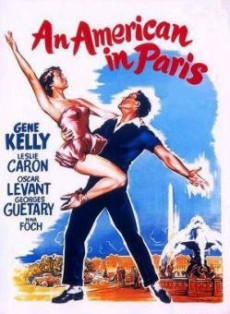
Stairway To Paradise was a tune composed by George Gershwin with lyrics by Ira Gershwin for the 1951 musical film An American in Paris. Gene Kelly, Leslie Caron, Oscar Levant, Georges Guétary and Nina Foch.
The Story: American World War II veteran Jerry Mulligan is now an exuberant expatriate in Paris trying to make a reputation as a painter. His friend and neighbor, Adam Cook s a struggling concert pianist who is a longtime associate of a French singer, Henri Baurel At the ground-floor bar, Henri tells Adam about his cultured girlfriend. A lonely society woman and heiress, Milo Roberts, finds Jerry displaying his art on the street and takes in an interest in him and his art. And the fun begins with dancing and singing.
Sponsored By

www.whatissuitetabu.com
Daily Dose Of Jazz…
Bill Anschell was born on March 12, 1959 in Seattle, Washington and after leaving high school he went on to study for two years at Oberlin College, then transferring to Wesleyan University in Connecticut, where he graduated Phi Beta Kappa with a degree in Music. At Wesleyan, he worked closely with saxophonist Bill Barron and studied semi-privately with South Indian mridangum master T Ranganathan, kindling a passion for rhythmic experimentation that has driven his music ever since.
After leading the life of a jazz vagabond for several years, Bill settled in Atlanta in 1989. He was initially drawn there by the opportunity to serve as Jazz Coordinator for the Southern Arts Federation (SAF), that he fired up virtually from scratch. He launched a host of high-profile programs, published a book on grant writing, and created “JazzSouth,” an internationally syndicated radio show. At night he dove headlong into the city’s thriving jazz scene, working as a sideman with various groups and leading his own trio.
By 1992, Anschell’s left SAF, continuing to produce “JazzSouth” out of his home while focusing on playing and composing. Ascended the jazz ranks he led his trio at major festivals, became a first-call accompanist for visiting jazz greats and enjoyed a lengthy association with vocalist Nnenna Freelon, serving as her pianist, arranger and musical director. His piano work and arrangements were featured throughout Freelon’s 1996 Concord release “Shaking Free,” nominated for a Grammy as the year’s best jazz vocal recording.
Bill has played and/or recorded with a host of jazz greats including Richard Davis, Ron Carter, Benny Golsen and Russell Malone. In 2001, he was selected by the American Composers Forum for its “Composer-in-the-Schools” program; his residency included a commissioned piece for chamber orchestra. Since 2003, his original compositions have been heard on NBC’s “The West Wing,” CBS’s “The Defenders” and “NCIS: LA,” and HBO’s “The Wire.”
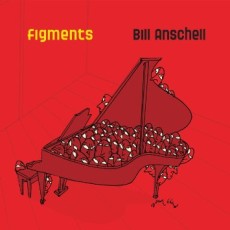
He has performed with the symphony, ventured into electronica, is well-known as a jazz humorist, writing jazz vignettes and a monthly jazz etiquette column. His satirical essay, “Careers in Jazz,” is the all-time most-read piece on leading jazz website allaboutjazz.com, and was prominently featured in a Wall Street Journal story on jazz audiences. He has won numerous awards such as 2005 Northwest Jazz Instrumentalist of the Year 2006 & 2001; Northwest Acoustic Jazz Ensemble of the Year (Bill Anschell Trio) 2010 and Northwest Jazz Recording of the Year for his 2011 “Figments”. He continues to perform, tour and record.

Inspire A Young Mind
More Posts: piano
Daily Dose Of Jazz…
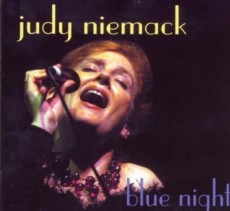
Judy Niemack was born on March 11, 1954 in Pasadena, California and started singing in a church choir from age seven. She decided to turn professional at age 17, and soon after met Warne Marsh who encouraged her to explore jazz.
Judy studied at Pasadena City College and later at the New England Conservatory of Music followed by her matriculating through the Cleveland Institute of Music.
Niemack released her debut album By Heart in 1977 and has since recorded eleven albums under her own name. She has toured Europe and has worked with Toots Thielemans, James Moody, Lee Konitz, Clark Terry, Kenny Barron, Fred Hersch, Kenny Werner, Joe Lovano, Eddie Gomez and the Widespread Depression Jazz Orchestra.
As an educator vocalist Judy Niemack teaches music has authored two books titled “Jazz Vocal Standards”, an introduction to singing and vocal improvisation and “Hear It, Sing It” that explores modal jazz. She continues performing and recording.
Give A Gift Of Jazz – Share
More Posts: vocal
Daily Dose Of Jazz…
Orbert Davis was born on March 8, 1960 in Chicago and raised in Momence, Illinois. He began playing trumpet around the age of ten, but was not formally instructed until Charles Danish, an elementary school teacher, found him a trumpet teacher and drove him to lessons. He eventually graduated with a degree in trumpet performance from DePaul University and then received a master’s degree in jazz pedagogy from Northwestern University.
Davis has recorded over 3000 television and radio commercials, released three studio albums, very active in music education, particularly with at-risk students, is co-founder and director of MusicAlive!, an initiative associated with the Chicago Jazz Philharmonic, which he also founded and directs.
Winner of the 1995 Cognac Hennessy National Jazz Search, Orbert was chosen as one of Chicago Tribune’s “1995 Arts People of the Year” and Chicago Magazine named him “Y2k Best Trumpeter in Chicago”.
One of Chicago’s busiest and most sought after musician, the jazz trumpeter has performed and/or recorded many projects for such notable artists as Ramsey Lewis, Charles Earland, Kurt Elling, Bob Mamet and William Russo’s Chicago Jazz Ensemble, Wynton Marsalis, TS Monk, Stevie Wonder, Dr. John, Kurt Elling, Ernie Watts, Ramsey Lewis, Grover Washington Jr. and The Smithsonian Masterworks Jazz Orchestra. Davis performs regularly with various groups under his own name, including his critically acclaimed ensemble “Orbert Davis with Strings Attached”.
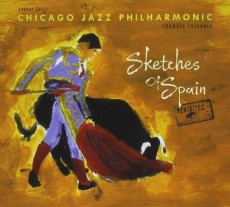
He was featured soloist at the 1996 Chicago Jazz Festival, performing Miles Davis and Gil Evans’ “Sketches of Spain”. In October 1999, along with Jon Faddis and Lester Bowie, Orbert was a featured performer for the Jazz Institute of Chicago’s “Tribute to Louis Armstrong: Legacy for the Millennium” where he performed compositions from Armstrong’s Hot 5 and Hot 7 recordings.
Along with his partner/manager Mark Ingram, Davis owns and operates Orbark Productions, whose credits include projects for Atlantic, Capitol, CBS, Epic, MCA and the Warner Brothers record labels. He has scored and performed on and off camera for such films as A League Of Their Own, The Babe and Road To Perdition. Trumpeter, composer, bandleader and educator Orbert Davis is currently an Associate Professor of music at the University of Illinois at Chicago and conducts and records the Chicago Jazz Philharmonic in between recording as a leader.
Put A Dose In Your Pocket
More Posts: trumpet
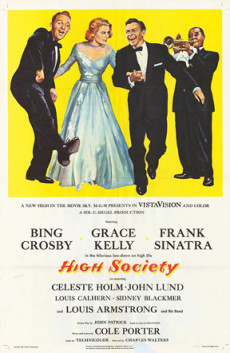
Hollywood On 52nd Street
You’re Sensational was a tune written by Cole Porter for the 1956 film High Society starring Bing Crosby, Grace Kelly and Frank Sinatra, who introduced the song.
The Story: The highly successful jazz musician C.K. Dexter Haven (Crosby) was divorced from wealthy Newport, Rhode Island socialite Tracy Samantha Lord (Kelly) but remains in love with her. She, however, is about to get married to a bland gentleman of good standing, George Kittredge.
Spy Magazine, a fictional tabloid newspaper in possession of embarrassing information about Tracy’s father, sends reporter Mike Connor (Sinatra) and photographer Liz Imbrie to cover the nuptials. Tracy begins an elaborate charade as a private means of revenge, pretending that her Uncle Willy is her father Seth Lord and vice versa. Connor falls in love with Tracy. She must choose between three very different men in a course of self-discovery.
Sponsored By
www.whatissuitetabu.com