

Daily Dose Of Jazz…
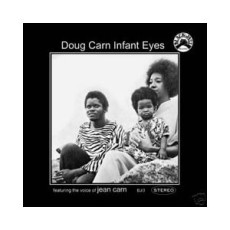
Doug Carn was born on July 14, 1948 in New York City but was raised in St. Augustine, Florida, where his mother, Gwendolyn Seniors Carn, taught music in the St. Johns County Public School System. Her unique and special teaching abilities provided a fertile ground for his future development, and he started piano lessons at the age of five but switched to the alto sax at eight.
Doug was introduced to all of the jazz of the late Forties and early Fifties by his a jazz aficionado and deejay uncle, Bill Seniors. By his early teens, Doug had formed his first group, The NuTones, that played a variety of jazz, R&B and Rock ‘n Roll hits for dances, proms and club dates all over Florida and southeast Georgia. In addition, he held down a post as organist for the A.M.E. church in its 11th Episcopal District.
During his sophomore year in high school, Doug started to play the oboe that would eventually earn him a full scholarship to Jacksonville University. Graduating valedictorian of his high school class, Carn turned down a full scholarship to the U.S. Air Force Academy to pursue his music.
After college Carn settled in Los Angeles where his creative writing abilities and spiritual ideology began to bear fruit. He was leading an organ trio and studying with Larry Young, Jr. when the word started to get around about Doug’s multi-faceted talents. He was soon discovered by Gene Russell who had heard about Doug’s innovative lyric adaptation of contemporary jazz classic, i.e., Wayne Shorter’s “Infant Eyes” Coltrane’s “A Love Supreme,” Bobby Hutcherson’s “Little B’s Poem” and Horace Silver’s “Peace.”
He garnered critical acclaim as a “jazz spatialist” for his “deft orchestrations” and horn arrangements. They were inspired by a natural ability to speak the be-bop language and a solid foundation in the classical tradition. He produced several landmark albums on the Black Jazz label such as “Adam’s Apple” and with his wife Jean “Infant Eyes” and “Search for a New Land”. He has worked with many great jazz musicians over the years, a list to numerous to name but included Lou Donaldson, Stanley Turrentine and Irene Reid and continues to record, perform and tour.
More Posts: piano
From Broadway To 52nd Street
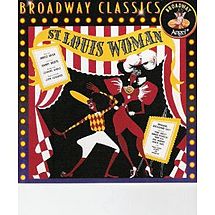
St. Louis Woman opened on March 30, 1946 on the stage of the Martin Beck Theatre and ran for 113 performances. Harold Arlen composed the music and Johnny Mercer wrote the lyrics for the musical with one tune standing the test of time to become a jazz standard – Come Rain Or Come Shine. The original cast included Robert Pope, Harold Nicholas, Fayard Nicholas, June Hawkins, Pearl Bailey, Ruby Hill, Rex Ingram and Milton J. Williams.
The Story: Set in St. Louis in 1898, Little Augie, a jockey who is on a winning streak, is enamored with Della Green, the belle of St Louis. Della, however, is the girlfriend of abusive Bigelow Brown, the proprietor of the local bar. Decides to leave him, Brown’s previous mistress, Lila, is still around which produces complications.
It’s cakewalking time and Augie attracts the attention and admiration of Della with his virtuoso performance of the cakewalk. Things go so well between them that they agree to set up home together and prepare plans to marry. While Augie is off at the racetrack, Della gets an unwelcome visit from Biglow Brown who beats. Lila enters, begs for a reconciliation, Augie returns, shot is fired, curse is casted on Augie for the shot that in fact was fired by Lila.
At Brown’s funeral suspected Augie is exonerated by Lila’s confession but the curse seems to be working. His horses no longer win and Della blames herself for the troubles. Della leaves feigning no love for Augie but her new friend tells him her true feelings. Believing the curse to be so much mumbo-jumbo, he’ll win his next race and he and Della get back together again.
Jazz History: Charlie Parker began rising in prominence in the early 1940s, and he played frequently with bands led by Jay McShann, Earl Hines, and Billy Eckstine. In 1945, a young Miles Davis Miles Davis moved to New York and became intrigued with Parker and the emerging bebop style. He studied at Juilliard, but had trouble earning respect among jazz musicians because of his unrefined sound. Soon he would work his way into Parker’s quintet. In 1945, the term ‘moldy fig’ was coined to refer to swing musicians who were reluctant to accept that bebop was the new path of jazz development.
In the mid 1940s Charlie Parker began to deteriorate from drug use. He was admitted to Camarillo State Hospital after a breakdown in 1946. His stay there inspired the song “Relaxin’ at Camarillo”.
In 1947, tenor saxophonist Dexter Gordon achieved fame for recordings of “duels” with saxophonist Wardell Gray. Gordon’s virtuosity and aggressive tone attracted the attention of young alto saxophonist John Coltrane, who would shortly thereafter switch to tenor saxophone.
In 1948, Miles Davis and drummer Max Roach, fed up with Charlie Parker’s reckless lifestyle, left his band. Davis formed his own nonet. In 1949 recorded the unconventional ensemble. Some of the arrangements were by a young Gil Evans, and the restrained style of the music came to be known as cool jazz. The record, released almost a decade later, in 1957, was called Birth of the Cool.
By the end of the 1940s, bebop was the ideal among young jazz musicians. Unlike swing, bebop was untethered to popular demands. Its primary concern was musical advancement.
Sponsored By

www.whatissuitetabu.com
From Broadway To 52nd Street
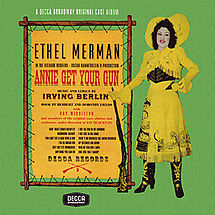
Annie Get Your Gun rose its curtain for the first time at the Imperial Theatre on May 16, 1946. Irving Berlin composed the music for its stars Ethel Merman and Ray Middleton. The show set a record with a run of one thousand, one hundred and forty-seven performances. From the musical came three tunes that entered into the jazz lexicon – Anything You Can Do, There’s No Business Like Show Business and They Say It’s Wonderful.
The Story: Annie Oakley is poor but happy country girl and an infallible shot. This sharpshooting lands her in Buffalo Bill’s Wild West Show. She falls in love with rival sharpshooter Frank Butler, who tells her the girl that he marries must be a dainty thing, which Annie is not. It seems the only thing they can agree on is that when folks talk about love it’s wonderful. A shooting match is arranged between the two, Sitting Bull tells her that to win her man she must lose the match. Although Annie boast anything you can do I can do better, she loses the match anyway and the man.
Broadway History: Though Broadway was becoming less of an industry and more of a loose array of individuals, in the next four years this would have positive aspects. America would soon fall prey to increasing intolerance and political persecution but Broadway would continue to express unorthodox opinions without fear of government retaliation. Broadway would lose some of its scope but retain its liveliness and joyfulness in an increasing corporate environment. In a country that now required conformity, Broadway preserved a sense of freedom of speech and action, ideals on which this nation was founded. This was no less rewarded with the establishment of the private club of the “blockbuster musical” has offered entry to only a chosen few that have had more than a thousand performances. The first to join this esteemed club is this weeks feature Annie Get Your Gun.
Sponsored By
www.whatissuitetabu.com
Daily Dose Of Jazz…
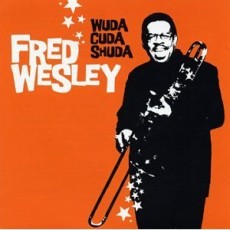
Fred Wesley was born July 4, 1943 in Columbus, Georgia and raised in Mobile, Alabama. The son of a high school teacher and big band leader as a child he took piano and later trumpet lessons. At around the age of twelve his father brought a trombone home, whereupon he switched.
During the 1960s and 1970s Wesley went to R&B as many jazz musicians did to earn a living and became a pivotal member of James Brown’s bands, playing on many hit recordings including “Say It Loud – I’m Black and I’m Proud”, “Mother Popcorn” and co-writing tunes such as “Hot Pants”. His slippery riffs and pungent, precise solos, complementing those of saxophonist Maceo Parker, gave Brown’s R&B, soul, and funk tunes their instrumental punch.
In the 1970s he also served as bandleader and musical director of Brown’s band The J.B.’s and did much of the composing and arranging for the group. His name was credited on ‘Fred Wesley & the J.B.’s’ recording of “Doing It To Death” which sold over one million copies, and was awarded a gold record 1973. Leaving Brown’s band in 1975, Wesley spent several years playing with George Clinton’s Parliament-Funkadelic projects, even recording a couple of albums as the leader of a spin-off group, The Horny Horns.
Wesley became a force in jazz in 1978 when he joined the Count Basie Orchestra. He released his first jazz album as a leader, “To Someone” in 1988, followed by “New Friends”, Comme Ci Comme Ca, and the live album “Swing and Be Funky” and “Amalgamation”.
In the early nineties Fred toured with former JB colleagues Pee Wee Ellis and Maceo Parker, as the JB Horns. When Ellis left, the band became The Maceo Parker Band with Wesley as the featured trombonist until 1996 when he formed his own band, The Fred Wesley Group, now known as Fred Wesley and the New JBs.
Wesley’s 35-year career includes playing with and arranging for a wide variety of other artist such as Ray Charles, Lionel Hampton, Randy Crawford, Vanessa Williams, The SOS Band, Cameo, Van Morrison, Socalled and rappers De La Soul, to name a few, while many other artists have sampled his work.
He has written an autobiography “Hit Me, Fred: Recollections of a Sideman”. Wesley served as an adjunct professor in the Jazz Studies department of the School of Music at the University of North Carolina at Greensboro from 2004 to 2006, and now works with students as a visiting artist at numerous other schools including Berklee College of Music and Columbia College of Chicago.
More Posts: trombone
From Broadway To 52nd Street
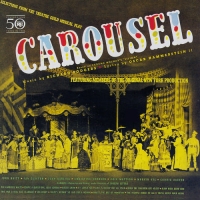
The Majestic Theatre opened the curtain for Carousel for the first time on April 19, 1945. With music composed by Richard Rodgers and Oscar Hammerstein, the musical ran for eight hundred and ninety performances. John Raitt and Jan Clayton had the title roles in this play adapted from the famous Molnar story of Liliom, from which came two songs that would endear themselves for years as jazz standards – What’s The Use Of Won’drin’ and If I Loved You.
The Story: Billy Bigelow, a shy New England carnival barker falls in love with Julie Jordan. Eventually winning Julie’s heart, he later discovers she is pregnant. Jobless, Billy decides he must provide for his son, or daughter, he agrees to join his criminal friend Jigger Craig in a robbery to earn extra money. The plan misfires and Billy kills himself rather than being caught. Before a heavenly judge he pleads for another chance to return to earth to earn his redemption and see his daughter. When his daughter refuses his gift of a star he has stolen from the sky, he slaps her and returns to purgatory. The widowed Julie and child are left to continue to live starkly. The story is set in Maine where majestic backdrops add emotional emphasis.
Jazz History: It was known simply as The Street and as historian Arnold Shaw stated in his book 52nd Street, “If you flagged a taxi in NYC and asked to be taken to The Street, you would be driven, without giving a number or an avenue, to Fifty-Second Street between Fifth and Sixth Avenues” By the late 1940s, as the jazz clubs turned into strip joints, many bemoaned the death of The Street. They considered this era to be the block’s decline.
In 1948, Time magazine decried the change from jazz to bump-n-grind: “where nightclubs in sorry brownstones crowd each other like bums on a breadline”, an era was all but over. Swing was still there, but it was more hips than horns. Barrelhouse had declined and burlesque was back. There was little jazz left on 52nd Street and even the customers had changed. There were fewer crew haircuts, pipes and sports jackets and more bald spots, cigars and paunches.
Sponsored By
www.whatissuitetabu.com