

Daily Dose Of Jazz…
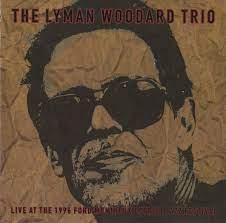
Lyman Woodard was born on March 3, 1942 in Owosso, Michigan. He started his musical career with a trio with drummer Melvin Davis and guitarist Dennis Coffey. They recorded the album Hair And Thangs that was released under Coffey’s name, however a single with It’s Your Thing and River Rouge was released under the name of Dennis Coffey and the Lyman Woodard Trio.
From the late 1960s, Woodard recorded with Motown acts, and served as musical director for Martha and the Vandellas. Establishing the jazz~funk band, the Lyman Woodard Organization in 1975 recorded Saturday Night Special, and in 1979, he recorded Don’t Stop The Groove, for the Corridor label. His 1987 recording, Dedicacion, featured violinist Regina Carter.
In March 2009, Wax Poetics Records reissued a limited pressing of his Saturday Night Special as a double LP on 180-gram vinyl.
Organist Lyman Woodard, who was based in Detroit, Michigan and was known for his ability to fuse Latin and Afro~Cuban inspired rhythms, transitioned on February 25, 2009 in his hometown of Owosso.

More Posts: bandleader,history,instrumental,jazz,music,organ,piano
Daily Dose Of Jazz…
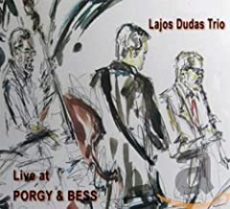
Lajos Dudas was born February 18, 1941 in Budapest, Hungary and studied at the Béla Bartók Conservatory and the Franz Liszt Academy of Music in his home city. He then appeared on concert tours throughout in Europe, not only as a jazz and rock musician but also as a soloist in works such as Carl Maria von Weber’s Clarinet Quintet, Igor Stravinsky’s Solo Pieces for Clarinet and Alexander Glazunov’s Concerto for Alto Saxophone. He won international recognition with his successful composition Urban Blues at the 11th International Jazz Competition in Monaco in 1982.
In the 1980s he was ranked high year after year in the Top People Poll of the International Jazz Forum. After his period as a freelance musician from 1963 to 1973, Dudas has been a lecturer at the School of Music in Neuss/GER and also taught from 1975 to 1985 at the Rheinland College of Education. In addition, since 1976, after a spell concentrating on classical music, he was recorded, worked radio productions and tours with Karl Berger, Gerd Dudek, Albert Mangelsdorff, Tom van der Geld, Charles Tolliver, Howard Johnson, Attila Zoller, Philipp van Endert, Leonard Jones, Theo Jörgensmann, Tommy Vig…
Over the course of his career Lajos has composed works commissioned by among several others, Frankfurt Radio Jazz Group, West German Radio & Television/Cologne, and Bavarian Radio Munich, and has performed at major European festivals.
Between 1996 and 2006 he was Artistic Director for the Concert Series in Neuss/GER. He also composed works for clarinet, woodwind chamber music and a Clarinet Method in 2 volumes. Clarinetist Lajos Dudas continues to explore jazz and other genres of music.

More Posts: bandleader,clarinet,composer,history,instrumental,jazz,music

Daily Dose Of Jazz…
Ferdinand Povel was born on February 13, 1947 in Haarlem, Netherlands. Coming from an artistic family, his father was a cineaste (filmmaker) and his mother a pianist. At an early age, he developed a taste for jazz, when first introduced to as a gift on his twelfth birthday, he received a ticket to a late-night concert by the Duke Ellington Orchestra at the Amsterdam Concertgebouw.
In 1961 he began studying clarinet with Theo Loevendie and teaching himself saxophone because jazz was not yet taught formally in the Netherlands. Ferdinand learned by playing with experienced musicians, such as pianists Rob Madna and Frans Elsen, picking up knowledge of harmony and arrangement as a young member of the orchestras of Kurt Edelhagen and Peter Herbolzheimer, and of the Skymasters.
In 1964 at 17, Povel won the Loosdrecht Jazz Concours with the Martin Haak Quartet. This was the start of his career as a professional musician. 1966 saw him playing with The New Sound Incorporated, giving school concerts and radio and TV broadcasts for Tros and Avro broadcasting companies. He went on to be a finalist at the 1966 International Modern Jazz Festival in Vienna, Austria where the judges included Cannonball Adderley and Mel Lewis.
In the same year, the Netherlands Jazz Orchestra invited Povel to join them as a saxophonist and flutist. Three years later he was in Munich, Germany playing with trumpet player Dusko Goykovich in his Summit Quintet, starring drummer Philly Joe Jones and touring Europe several times.
Ferdinand would go on to play with the Kenny Clarke/Francy Boland Big Band, the Kurt Edelhagen Orchestra, tour the United States of America with the Maynard Ferguson Big Band, and the Peter Herbolzheimer’s Rhythm Combination and Brass from 1971 to 1985. He was a member of George Grunz’s band, Jiggs Whigham Sextet, and the bands of Rob Madna, Frans Elsen, and Cees Slinger. He has played in the front line with jazz icons such as Art Farmer, Bennie Bailey, Woody Shaw, and Jimmy Knepper.
Throughout his career he was never far from playing in various occasional orchestras for radio and television. As an educator he taught jazz improvisation at the Rotterdam Conservatory and at conservatoriums in Zwolle, Hilversum and The Hague. Since 1990 he has taught exclusively at the Hilversum Music Academy, now named the Conservatory of Amsterdam, as part of Amsterdam School of the Arts.
Saxophonist Ferdinand Povel has a discography that includes over one hundred record and CD albums to which he has contributed as a soloist. He has received several honors and continues to perform and educate.
More Posts: bandleader,educator,flute,history,instrumental,jazz,music,saxophone
Daily Dose Of Jazz…
Martin Drew was born on February 11, 1944 in Northampton, England and started to play the drums when he was six years old. Studying with drummer George Fierstone gave him a solid musical and technical background. He played his first professional engagement at the age of 13.
He was also a member of a trio led by Eddie Thompson. Martin was often heard playing on BBC Radio 2’s Sounds of Jazz program in the 1970s, which was introduced by Peter Clayton on Sunday evenings.
During the 1980s, Drew played simultaneously with the Ronnie Scott Quartet and with the jazz group Morrissey–Mullen, until they disbanded in 1988. He then led a quintet called Our Band with saxophonist Dick Morrissey, guitarist Jim Mullen who replaced original member Louis Stewart, pianist John Critchinson, and bassist Ron Mathewson.
Between 1997 and 2000, he led a quartet with Mornington Lockett on tenor saxophone, Gareth Williams on piano, and Laurence Cottle on electric bass. 2000 saw Martin forming the Celebrating The Jazz Couriers quintet with Mornington Lockett, playing the music of the original Jazz Couriers. They won the 2002 British Jazz Award for Best Small Group.
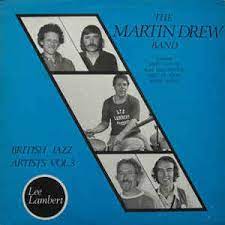
The New Couriers band reformed in 2003 with Paul Morgan on double-bass and Jim Hart on vibraphone. Lockett and Steve Melling on tenor saxophone and piano. He recorded one album in 1978 titled The Martin Drew Band, British Jazz Artists Vol. 3.
Drummer Martin Drew, who worked with over one hundred musicians from both sides of the Atlantic, transitioned following a heart attack on July 29, 2010, at the age of 66 in Harefield, Hillingdon, England.
More Posts: bandleader,drums,history,instrumental,jazz,music
Daily Dose Of Jazz…
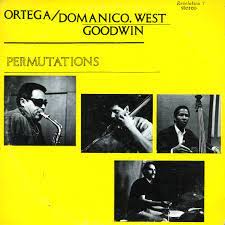
Charles Louis Domanico, better known professionally as Chuck Domanico, was born on January 20, 1944 in Chicago, Illinois. Settling in Los Angeles, California in the mid-1960s, for nearly forty years, he was a central jazz figure in Hollywood who contributed to many movies and TV programs.
Domanico worked with Frank Sinatra, Barbra Streisand, Carmen McRae, Joni Mitchell, Taj Mahal, Diane Schuur, Natalie Cole, and The Manhattan Transfer. He participated in instrumental jazz performances by Chet Baker, Henry Mancini, Shelly Manne, Oliver Nelson, John Klemmer, Roger Kellaway, Barney Kessel, and Art Pepper.
His bass can be heard in themes for television shows like M*A*S*H, Cheers and Frasier, and he contributed to the soundtracks of more than two thousand films.
Double bassist and bass guitarist Chuck Domanico, who played on the West Coast jazz scene, transitioned from lung cancer on October 17, 2002 at the age of 58.
More Posts: bass,bass guitar,history,instrumental,jazz,music