

Daily Dose Of Jazz…
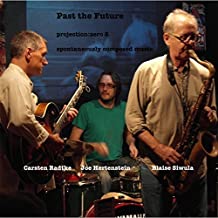
Blaise Siwula was born in Detroit, Michigan on February 19, 1950. Growing up in a working/middle-class black neighborhood. His next-door neighbor practiced saxophone in the afternoon and occasionally allowed him inside to watch him play. He began studying the alto sax at the age of 14, playing in the middle school concert band.
Hearing the John Coltrane album Om in 1969 compelled him to take up the tenor saxophone. He was also influenced by hearing Art Pepper in San Francisco, as well as Ornette Coleman, Sonny Stitt, Archie Shepp, Pharoah Sanders, Sun Ra, Blue Mitchell, Elvin Jones, and Miles Davis in live performances in Detroit in the 1970s. Cecil Taylor’s recordings with Jimmy Lyons were inspirational in a later period along with Ravi Shankar and the Detroit Symphony Orchestra in the Seventies.
At college on and off for an extended period from 1968 to 1980, he studied theory and composition at Wayne State University, and earned a BFA. His first personal encounter with jazz musicians came around 1971 while living in a hotel near the downtown campus like drummer Doc Watson. Moving to San Francisco, he started playing free improvised music in coffeehouses and writing poetry. After four years in Northern California, he returned to Detroit before heading for Europe in 1989. Working and traveling as a street musician for three months, then returning to the States and settling in New York City.
After periodic explorations of drama, poetry, architecture, and visual art, and quite unable to secure a recording contract initially, he recorded independently produced cassette tapes. He played with Amica Bunker, the Improvisers Collective, and the Citizens Ontological Music Agenda (COMA) series.
During the decade of the 2000s, Blaise composed music scores, played a number of saxophones, clarinets, flutes, percussion and string instruments, and computer-altered sound files as background for improvisation. His many collaborators have included Doug Walker’s Alien Planetscapes, Cecil Taylor’s Ptonagas, William Hooker’s ensembles, Judy Dunaway’s Balloon Trio, Dialing Privileges with Dom Minasi and John Bollinger, Ken Simon, Karen Borca, Jackson Krall, Tatsuya Nakatani, and William Parker, among others.
Avant-garde alto saxophonist, composer and bandleader Blaise Siwula, who has been a part of New York City’s underground jazz scene, continues to performa and record.

More Posts: clarinets,flutes,percussion,saxophones,strings
Daily Dose Of Jazz…
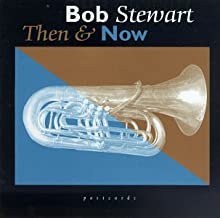
Bob Stewart was born in Sioux Falls, South Dakota on February 3, 1945. He received his Bachelor of Music Education degree from the Philadelphia College of the Performing Arts and his master’s degree in education from Lehman College Graduate School.
Stewart taught music in Pennsylvania public schools and at the Fiorello H. LaGuardia High School of Music & Art and Performing Arts in New York City. He is now a professor at the Juilliard School and is a distinguished lecturer at Lehman College.
Stewart has toured and recorded with such artists as Charles Mingus, Gil Evans, Carla Bley, Muhal Richard Abrams, David Murray, Taj Mahal, Dizzy Gillespie, McCoy Tyner, Freddie Hubbard, Don Cherry, Nicholas Payton, Wynton Marsalis, Charlie Haden, Lester Bowie, Bill Frisell and many others in the United States, Europe, and Eastern Asia.
He was a frequent collaborator with saxophonist Arthur Blythe from the 1970s into the early 2000s, often taking the place of the string bass that traditionally supports a jazz ensemble. In their review of Blythe’s album Lenox Avenue Breakdown, the editors of The Penguin Guide to Jazz called Stewart’s title track solo “one of the few genuinely important tuba statements in jazz. Tubist Bob Stewart continues to be a part of the jazz scene.
More Posts: bandleader,history,instrumental,jazz,music,tuba
Daily Dose Of Jazz…
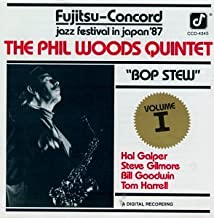
Steven Dirk Gilmore was born January 21, 1943 in Trenton, New Jersey and picked up bass when he was twelve years old, playing locally in Philadelphia, Pennsylvania as a teenager. At age 17 he enrolled at the Advanced School of Contemporary Music, run by Oscar Peterson.
Later in the 1960s Steve played with Ira Sullivan and the Baker’s Dozen Big Band. In 1967 he joined Flip Phillips’s group and remained until 1971, after which he worked with Al Cohn and Zoot Sims, Mose Allison, The Thad Jones/Mel Lewis Orchestra, Phil Woods, Richie Cole, and the National Jazz Ensemble.
The 1980s saw him performing with John Coates, Meredith D’Ambrosio, Dave Frishberg, Hal Galper, Tom Harrell, and Toshiko Akiyoshi, as well as with Woods. Gilmore and Woods would remain collaborators well into the 1990s.
In 1988 he began working with Dave Liebman, with whom he would work intermittently through the late 1990s. Other performing and recording associations included Carol Sloane, Susannah McCorkle, Bill Charlap, and Jim Hall, Tony Bennett, Michele LeGrand, Tom Waits, Susannah McCorkle, and Eddie Jefferson.
An experienced clinician, he has recorded eight jazz Play-along teaching recordings with Jamey Aebersold. In addition he has produced two transcribed bass line books and has received three Best Of The Year Grammy Group Awards in 1977, 1982, 1983 as part of the Phil Woods Quartet. Bassist Steve Gilmore continues to perform and record.
More Posts: bass,instrumental,jazz,music
Daily Dose Of Jazz…
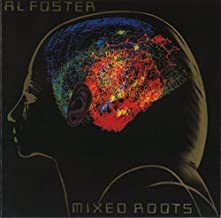
Al Foster was born on January 18, 1943 in Richmond, Virginia and grew up in New York City. He began playing drums at the age of 13 and made his recording debut on Blue Mitchell’s The Thing to Do at age 20.
He joined Miles Davis’s group when Jack DeJohnette left in 1972 and stayed with Davis until 1985. Foster began composing in the 1970’s, and has toured with his own band, including musicians such as bassist Doug Weiss, saxophonist Dayna Stephens, and pianist Adam Birnbaum.
He played with Miles Davis during the 1970s and was one of the few people to have contact with Davis during his retirement from 1975 to 1981. Al also played on Davis’s 1981 comeback album The Man with the Horn. He was the only musician to play in Davis’s band both before and after his retirement.
Other artists Foster has performed and recorded with include Joe Henderson, Freddie Hubbard, McCoy Tyner, Wayne Shorter, Bobby Hutcherson, John Scofield, Pat Metheny, Charlie Haden, Randy & Michael Brecker, Bill Evans, George Benson, Kenny Drew, Carmen McRae, Stan Getz, Toots Thielemans, Dexter Gordon and Chick Corea.
Drummer Al Foster, who has toured extensively with Herbie Hancock, Sonny Rollins, and Joe Henderson continues to engage in jazz.
More Posts: bandleader,drums,history,instrumental,jazz,music
Daily Dose Of Jazz…
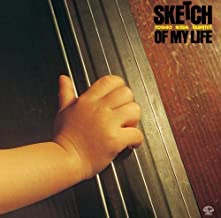
Yoshio Ikeda (池田芳夫) was born on January 1, 1942 in Osaka, Japan. He received formal training in bass before studying jazz with Gary Peacock in the 1960s.
He led his own small groups in the Seventies, and has worked with Terumasa Hino, Masabumi Kikuchi, Steve Lacy, Akira Miyazawa, Yuji Ohno, Allan Praskin, Masahiko Sato, Masahiko Togashi, Kiyoshi Sugimoto, Aki Takase, and Sadao Watanabe. Double bassist Yoshio Ikeda continues to perform and record.
More Posts: bandleader,bass,history,instrumental,jazz,music