

Daily Dose Of Jazz…
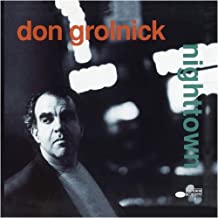
Don Grolnick was born on September 23, 1947 in Brooklyn, New York and grew up in Levittown, New York. Musical life for him started on accordion but later he switched to piano. A childhood Count Basie concert sparked his interest in jazz and soon after they also saw Erroll Garner perform at Carnegie Hall. Attending Tufts University he opted for a major in philosophy rather than music.
After he left Tufts, he formed the jazz-rock band Fire & Ice with guitarist Ken Melville and bassist Stuart Schulman, his friend since childhood. They opened for B.B. King, The Jeff Beck Group, and the Velvet Underground at Boston clubs like the Boston Tea Party and The Ark. This was Grolnick’s first foray into rock and blues as a performer, and began writing within the medium.
Moving back to New York City in 1969 he joined Melville in the jazz fusion band “D”. Pianist Don Grolnick passed away at the age of 48 on June 1, 1996 from non-hodgkin lymphoma.

More Posts: bandleader,composer,history,instrumental,jazz,music,piano
The Quarantined Jazz Voyager
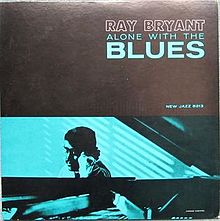
Alone With The Blues is the first solo album by pianist Ray Bryant. Recorded on December 19, 1958 at the Van Gelder Studios in Hackensack, New Jersey, it was released end of May or early June of 1959 for the New Jazz label. The session was produced by Esmond Edwards.
Though he was equally adept with the blues, he was recognized at the time as a modern traditionalist. All compositions by Ray Bryant except Lover Man (Jimmy Davis, Ram Ramirez, Jimmy Sherman) and Rockin’ Chair (Hoagy Carmichael).
Track Listing | 37:49- Blues No. 3 ~ 7:15
- Joy (Blues No. 2) ~ 3:59
- Lover Man ~ 3:52
- Me and the Blues (Blues No. 1) ~ 5:00
- My Blues (Blues No. 5) ~ 7:40
- Rockin’ Chair ~ 5:16
- Stocking Feet ~ 4:47
- Ray Bryant ~ piano

More Posts: adventure,club,genius,jazz,museum,music,preserving,restaurant,travel,voyager
Daily Dose Of Jazz…
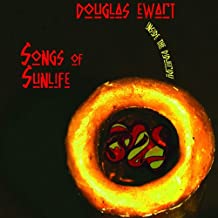
Douglas Ewart was born on September 13, 1946 in Kingston, Jamaica and emigrated to the United States in 1963. Settling in Chicago, Illinois he became associated with the Association for the Advancement of Creative Musicians (AACM) in 1967, studying with Joseph Jarman and Roscoe Mitchell. He served as that organization’s president from 1979 to 1986.
Douglas recorded eight albums as a leader and has performed or recorded fifteen with J. D. Parran, Muhal Richard Abrams, Art Ensemble of Chicago, Anthony Braxton, Alvin Curran, Anthony Davis, Robert Dick, Von Freeman, Joseph Jarman, Amina Claudine Myers, Roscoe Mitchell, James Newton, Rufus Reid, Wadada Leo Smith, Cecil Taylor, Richard Teitelbaum, Henry Threadgill, Hamid Drake, Don Byron, Malachi Favors Maghostut, Muhal Richard Abrams, Spencer Barefield, Tani Tabbal, Jean-Luc Cappozzo, Joëlle Léandre, Bernard Santacruz, Michael Zerang, Chico Freeman, Dennis González, Yusef Lateef, Adam Rudolph,
In 1992 he collaborated with Canadian artist Stan Douglas on the video installation Hors-champs which was featured at Documenta 9 in Kassel, Germany. The installation features Ewart in improvisation of Albert Ayler’s Spirits Rejoice with musicians George Lewis, Kent Carter, and Oliver Johnson.
Douglas Ewart has lived in Minneapolis, Minnesota since 1990 and plays sopranino and alto saxophones, clarinets, bassoon, flute, bamboo flutes, panpipes, and didgeridoo; as well as Rastafarian hand drums.
More Posts: bamboo flute,bassoon,clarinet,didgeridoo,flute,hand drums,history,instrumental,jazz,music,panpipe,saxophone
Daily Dose Of Jazz…
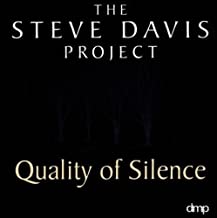
Steve Davis was born on September 10, 1958 in Santa Barbara, California. With Shelly Manne as his godfather, he became interested in the drums at a young age. Following the advice of drum teacher Alan Dawson, he moved to New York City in the early 1980s to begin his career as a jazz drummer.
Once there Steve met jazz educator Jamey Aebersold, and by 1982 joined the Aebersold clinic faculty. Throughout the 1980s while studying privately with Joe Morello he worked in New York City, meeting pianist Lynne Arriale at a jam session soon after she moved to the city in 1991.
As an educator, Davis holds a faculty position at the Jamey Aebersold Jazz Summer Schools in the US and the Jazzwise Summer Schools in the UK. He has taught at Triton College, Webster University, Washington University, Berlin Conservatory of Music, Indiana University, and the University of South Florida.
He has recorded five albums as a leader, and eighteen as a sideman with Arriale, Aebersold, Joe Beck, Ali Ryerson, Manfredo Fest, Monika Herzig, Wolfgang Lackerschmid, and Walt Weiskopf. Drummer Steve Davis, who is a recording engineer, continues to perform and record as a musician.
More Posts: bandleader,drums,engineer,history,instrumental,jazz,music

Daily Dose Of Jazz…
Phillip Sanford Wilson was born on September 8, 1941 in St. Louis, Missouri and was a third-generation musician. His grandfather, Ira Kimball, was a riverboat percussionist on the Mississippi to New Orleans.
His recording debut was with Sam Lazar, noted for having one of the first interracial bands in the St. Louis area. After moving to Chicago, Illinois he became a member of the Association for the Advancement of Creative Musicians (AACM) and performed with the Art Ensemble of Chicago.
He joined up with the Paul Butterfield Blues Band in 1967 at a time when the band membership changed greatly, including an added horn section. He recorded three albums with the group. Wilson’s song Love March, written with Gene Dinwiddie, was performed at Woodstock and released in 1970 on the live album from the festival.
Wilson, along with Dinwiddie and fellow former Butterfield Band member Buzz Feiten, formed the jazz-rock band Full Moon in the early 1970s. They recorded a self-titled album which is considered one of the finest early examples of jazz fusion. He was part of the loft jazz scene in 1970s New York City, worked as a session musician for Stax Records in Memphis, Tennessee and with Jimi Hendrix at the Cafe Au Go Go and Generation Club in 1968. They recorded with The Last Poets, Fontella Bass, Olu Dara, David Murray, Anthony Braxton, and Carla Bley. He worked extensively with Lester Bowie. In 1985, along with Bill Laswell co-produced the album Down by Law under the group name Deadline.
He recorded four albums as a leader and as a sideman recorded twenty-one albums with Hamiet Bluiett, Lester Bowie, Anthony Braxton, Paul Butterfield, Julius Hemphill, Sam Lazar, Frank Lowe, Roscoe Mitchell, and David Murray.
Drummer Phillip Wilson, while pursuing his musical career, was stalked and murdered in New York City on March 25, 1992. As a result of America’s Most Wanted television program, Marvin Slater was convicted for premeditated murder in 1997 and sentenced to 33 1/3 years in state prison. The reason for his murder has never been revealed.
More Posts: bandleader,drums,history,instrumental,jazz,music