

Requisites
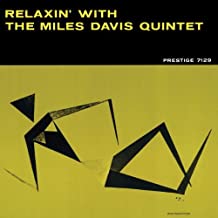
Relaxin’ With The Miles Davis Quintet | By Eddie Carter
It took only two days in 1956 for The Miles Davis Quintet to record four incredible jazz albums that have not only stood the test of time but are considered by many to be perfect examples of Hard-Bop at its best. All four LP’s the ensemble recorded completed Davis’ contractual obligation to Prestige before moving on to Columbia Records where he would make some of the most important music over the next thirty years. The albums are Cookin’, (1957), Workin’ (1959), Steamin’ (1961), and this morning’s title submitted for your approval, Relaxin’ With The Miles Davis Quintet (Prestige PRLP-7129), released in 1958. The personnel is Miles on muted trumpet (tracks: A1 to A3, B1, B2), trumpet (track: B3); John Coltrane on tenor sax; Red Garland on piano; Paul Chambers on bass and Philly Joe Jones on drums. The copy used in this report is the 2013 Mono audiophile reissue (APRJ 7129) by Analogue Productions.
The album opens with If I Were a Bell composed by Frank Loesser from the 1950 Broadway musical Guys and Dolls. It became a jazz standard after Miles’ rendition on Relaxin’ and would become a signature song during the quintet’s live performances. The trumpeter comments the band, then several snaps of his fingers bring the tune to life. The quintet begins the medium melody with Miles leading on the muted horn, then continuing on the first solo cruising along at an easy speed. John steps in next for some smooth sailing and Red ends with an exciting performance that swings masterfully ahead of the leader’s closing chorus into the subtle summation.
You’re My Everything is by Harry Warren, Mort Dixon, and Joe Young. This song debuted in the 1931 Broadway show, The Laugh Parade and after two false starts, the quintet opens with a delicately tender intro and melody by Davis moving into an exceptionally gentle presentation showing off Miles’ sentimental side. Coltrane follows, executing his thoughts intimately with refined grace secured by the tasteful richness of the trio into a pensive ending by the leader.
The tempo moves upward for I Could Write A Book by Richard Rodgers and Lorenz Hart. This show tune comes from the 1940 Broadway musical Pal Joey. The trio makes a brief introduction before the quintet delivers the medium-fast melody collectively. Miles takes off on the lead solo with some fast blowing that sets the tone. John attacks the next reading with formidable energy and Red climaxes the performances with exhilarating agility before Davis’ theme reprise ends abruptly.
Sonny Rollins’ Oleo was written in 1954 and first recorded on the album, Miles Davis With Sonny Rollins. This jazz classic is one of Rollins’ most recorded compositions and the title comes from the butter substitute, Oleomargarine that was first made in France in 1869.
Side Two begins with two false starts and some studio small talk leading to the leader’s quick intro and fast-paced theme treatment with Trane finishing the melody. Miles rips into the lead solo with an expedient performance. John soars high into the sky on the second solo and Red provides a speedy resolution of the interpretations with sprightly notes ahead of the quintet’s reprise and brisk ending. Paul and Philly provide the propulsive power behind each soloist on Oleo, inspiring them to the next plateau.
Up next is the 1943 popular song, It Could Happen To You by Jimmy Van Heusen and Johnny Burke. This standard has been a favorite for musicians and vocalists for over seventy years. Jo Stafford made the first recording with The Paul Weston Orchestra. The group eases the throttle back for this rendition with Miles establishing the relaxing midtempo framework for the group on the melody. He then goes to work with a sweet-toned delivery that’s pitch-perfect. John follows with a compelling statement as cool as the other side of the pillow and Red delivers a very happy melodic interpretation showing great interaction with Paul and Philly into the quiet coda.
The 1943 jazz standard, Woody‘n You aka Woody ‘n’ You by Dizzy Gillespie was written for bandleader and clarinetist Woody Herman ends the album at an uptempo beat. The song starts with a brief introduction by Garland ahead of the quintet’s lively theme. Miles fuels the lead solo with plenty of fire from his open horn, then Trane delivers an aggressively energized performance of strength and virility. The final statement of the album is split between Miles and Philly who deliver passionate phrases flowing into the reprise and soft fade into emptiness followed by a few final words by Miles.
Relaxin’ With The Miles Davis Quintet is part of Analogue Productions’ Prestige Mono Series and the sound quality is crystal clear demonstration class, and spectacular. The mastering is by Kevin Gray of Cohearent Audio and was cut from Rudy’s original analog masters using two-hundred-gram Virgin Vinyl, pressed by QRP (Quality Record Pressings) and features a deluxe high-gloss laminated album cover. The record is very quiet until the music starts, and what’s great about listening to this reissue are the false starts, and Miles’ comments while talking to Rudy. Their brief conversations transport the listener into the studio, making them part of the event. On a good mid-fi or high-end audio system, the tonal balance between the highs, midrange, and the low end will stand out. There’s inspired playing from each member of the group on every track and Relaxin’ With The Miles Davis Quintet is a great album of standards. It’s also a perfect choice to sit back, listen, and enjoy any time of the day, evening, or night!
~ Cookin’ With The Miles Davis Quintet (Prestige PRLP 7094); It Could Happen To You (Capitol Records 158); Miles Davis With Sonny Rollins (Prestige PRLP 187); Steamin’ With The Miles Davis Quintet (Prestige PRLP 7200/PRST 7580); Workin’ With The Miles Davis Quintet (Prestige PRLP 7166/PRST 7166) – Source: Discogs.com
~ Oleo, It Could Happen To You, Woody’n You – Source: JazzStandards.com
~ If I Were A Bell, You’re My Everything, I Could Write A Book, Oleomargarine – Source: Wikipedia.org
© 2020 by Edward Thomas Carter
More Posts: choice,classic,collectible,collector,history,instrumental,jazz,music,trumpet
Daily Dose Of Jazz…
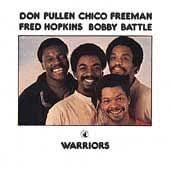
Fred Hopkins was born on October 11, 1947 in Chicago, Illinois and grew up in a musical family, listening to a wide variety of music from an early age. Attending DuSable High School, he studied music under Walter Dyett, who became well-known for mentoring and training musicians. Originally inspired to learn the cello, without one at the school Dyett steered him to the bass. After graduating from high school, while working at a grocery store he was encouraged to pursue music more seriously.
Hopkins soon began playing with the Civic Orchestra of Chicago, where he was the first recipient of the Charles Clark Memorial Scholarship, and studying with Joseph Gustafeste, principal bassist for the Chicago Symphony Orchestra at the time, as well as picking up piano duo gigs. He also began playing with Kalaparusha Maurice McIntyre, with whom he made his debut recording in 1970 Forces and Feelings. At that point he started becoming more serious about improvisation, playing with Muhal Richard Abrams’s Experimental Band and other related groups.
The early 1970s saw him forming a trio called Reflection with saxophonist Henry Threadgill and drummer Steve McCall. In 1975, he left Chicago, moved to New York City, regrouped with Threadgill and McCall, renamed their trio Air, and went on to tour and record extensively. He also joined the AACM, immersed himself in New York’s loft scene. Over the following decades, he increasingly gained recognition, gigging with Roy Haynes.
He performed and recorded with Muhal Richard Abrams, Hamiet Bluiett, Anthony Braxton, Marion Brown, Arthur Blythe, Oliver Lake, David Murray, Diedre Murray, and Don Pullen, as well as with various groups led by Threadgill. Moving back to Chicago in 1997, he continued to perform, tour, and record with a wide variety of musicians. Double bassist Fred Hopkins passed away on January 7, 1999 at age 51 of heart disease at the University of Chicago Hospital.
More Posts: bandleader,bass,history,instrumental,jazz,music
Daily Dose Of Jazz…
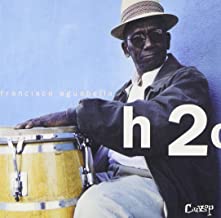
Francisco Aguabella was born on October 10, 1925 in Matanzas, Cuba. Demonstrating a special aptitude for drumming at an early age, he was initiated into several Afro-Cuban drumming traditions, including batá, iyesá, arará, olokún, and abakuá. Aguabella also grew up with rumba.
He is one of a handful of Cuban percussionists who came to the United States in the 1940s and 50s. In the 1950s, he left Cuba to perform with Katherine Dunham in the Shelley Winters film Mambo filmed in Italy. He immigrated to the United States in 1953, performing and touring with Peggy Lee for the next seven years.
During his long career, he performed in Europe, Australia, South America, and throughout the United States, including the White House. Aguabella enjoyed extensive music performing and recording careers, delighted many audiences with his masterful and powerful rhythms.
Francisco performed with many great jazz artists such as Dizzy Gillespie, Tito Puente, Mongo Santamaria, Frank Sinatra, Peggy Lee, Eddie Palmieri, Cachao, Lalo Schifrin, Cal Tjader, Nancy Wilson, Poncho Sanchez, Bebo Valdes, Carlos Santana, and numerous others. He is featured in two documentaries, Sworn to the Drum and Aguabella. He has also appeared with his ensemble on television programs.
During the Seventies, he was a member of the Jorge Santana Latin rock band Malo. Francisco was a widely recognized master conguero and bata artist, a caring and knowledgeable instructor. Aguabella was a faculty member at the annual Explorations in Afro-Cuban Dance and Drum workshop hosted by the Humboldt State University Office of Extended Education in Arcata, California. While living in Los Angeles, California, he taught Afro-Cuban drumming to undergraduate and graduate students at the University of California, Los Angeles.
A prolific session musician and recorded seven albums as a leader, throughout his career, he played congas, bata, quinto, coro, shekere, drums, claves, bongos, timbales, cajon, and other assorted percussion instruments. Percussionist Francisco Aguabella, who received a National Heritage Fellowship from the National Endowment for the Arts, passed away in Los Angeles on May 7, 2010 of a cancer-related illness.
More Posts: bandleader,history,instrumental,jazz,music,percussion
Daily Dose Of Jazz…
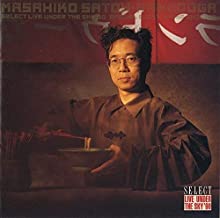
Masahiko Satoh was born on October 6, 1941 in Tokyo, Japan and the family home contained a piano. He started playing at the age of five, and twelve years later he began playing professionally accompanying singers, magicians, and strippers at a cabaret in the Ginza district.
By 1959 Satoh began playing in Georgie Kawaguchi’s band, together with alto saxophonist Sadao Watanabe and tenor saxophonist Akira Miyazawa. After graduating from Keio University, at the age of 26 he moved to the United States to study at the Berklee College of Music. During those two years of study, he read about composing and arranging, earned money working in a food shop, and played the piano in a hotel.
1968 had Masahiko writing and conducting the music for a series of pieces that were combined with dance and performed around New York City. After returning to Japan, he recorded Palladium, his first album as a leader, and appeared on a Helen Merrill album.
In the late 1960s and early 1970s, his career led him to perform in a free, percussive style. Masahiko played at the 1971 Berlin Jazz Festival as part of a trio, using at the time an unusual ring modulator to alter the sound. During that period he recorded with Attila Zoller, Karl Berger, and Albert Mangelsdorff. He wrote the psychedelic music for the 1973 anime film Belladonna of Sadness.
He went on to write arrangements for recordings led by, among others, Helen Merrill, Kimiko Itoh, and Nancy Wilson. He arranged for strings and quartet on Art Farmer’s 1983 album Maiden Voyage, formed a large group, named Rantooga, that combined various forms of folk music from around the world, and composed for film, television, and advertisements. By the early 1990s pianist, composer, and arranger Masahiko Satoh composed music for a choir of 1,000 Buddhist monks and now spends 70% of his time arranging and composing, the rest on playing and recording.
More Posts: arranger,bandleader,composer,history,instrumental,jazz,music,piano
Daily Dose Of Jazz…
Rashid Bakr was born Charles Downs on October 3, 1943 in Chicago, Illinois but grew up in Bronx, New York from the age of four. His decision to become a musician came from the profound influence of John Coltrane had on him, along with his uncle, drummer Papa Jo Jones. As a child surrounded by jazz musicians growing up, he was given his first set of sticks by Art Blakey and was soon sitting in with his uncle in a Dixieland band.
He attended Queens College studying chemistry and psychology and on to Brooklyn College grad school gaining a degree in clinical psychology. While in college he never missed a Coltrane or Miles Davis performance and his father bought him his first drum set.
During the Seventies, after college and a stint in the Army saxophonist Bobby Zankel took him to an auspicious audition for him with Cecil Taylor, becoming part of his big band. He was active in the New York City loft jazz scene, performing at venues such as Rashied Ali’s Ali’s Alley and Sam Rivers’ Studio Rivbea. He was a member of Ensemble Muntu with Jemeel Moondoc, among others.
In 1976, Bakr performed in a production of Adrienne Kennedy’s A Rat’s Mass directed by Cecil Taylor at La MaMa Experimental Theatre Club in the East Village of Manhattan. Also in the production were Jimmy Lyons, Andy Bey, Karen Borca, David S. Ware, and Raphe Malik. Taylor’s production combined the original script with a chorus of orchestrated voices used as instruments. 1981 saw him with Taylor touring Europe for three years before returning to New York City.
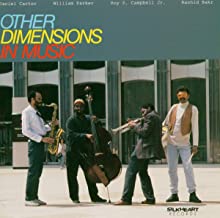
Free jazz drummer Rashid Bakr is a member of Other Dimensions in Music with Roy Campbell, Daniel Carter, and William Parker.
More Posts: drums,history,instrumental,jazz,music