

Requisites
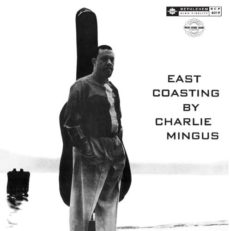
East Coasting is an album by Charles Mingus, recorded in New York City on August 16, 1957 for the Bethlehem record label and released later the same year. All of the songs were composed by Mingus except where noted.
TRACKLIST | 38:49
- Memories of You [Take 7] (Eubie Blake, Andy Razaf) – 4:27
- East Coasting [Take 4] – 5:13
- West Coast Ghost [Take 6] – 10:2
- Celia [Take 5] – 7:54
- Conversation [Take 16] – 5:28
- Fifty-First Street Blues [Take 4] – 5:48
- East Coasting [alternate take] – 5:30
- Memories of You [alternate take] (Blake, Razaf) – 4:42
PERSONNEL
- Charles Mingus – bass
- Clarence Shaw – trumpet
- Jimmy Knepper – trombone
- Shafi Hadi – alto saxophone, tenor saxophone
- Bill Evans – piano
- Dannie Richmond – drums
East Coasting ~ Charles Mingus | By Eddie Carter
This next LP from the library is one of the underrated jewels in the discography of jazz legend, Charles Mingus. A distinguished bandleader, bassist, civil rights activist and composer, Mingus played on and produced some of the greatest albums during the fifties. He founded an independent record label, Debut Records in 1952 with his first wife, Celia, and drummer Max Roach. Charles also recorded for several record labels throughout his career, Atlantic, Candid, Columbia, Impulse, Mercury and United Artists Jazz. For his autobiography, Beneath the Underdog: His World as composed by Mingus, co-written with Louis Lomax, the bassist worked for nearly two decades writing the book until it was published in 1971. The original manuscript totaled nearly fifteen-hundred pages, but the published copy was reduced by nearly two thirds. The album offered now for your consideration is East Coasting (Bethlehem Records BCP 6019), released in 1957. It comes four years after Jazz at Massey Hall and two years before his 1959 Post-Bop masterpiece, Mingus Ah Um. The lineup is Clarence Shaw on trumpet; Jimmy Knepper on trombone; Shafi Hadi on alto and tenor saxes; Bill Evans on piano and Dannie Richmond on drums. My copy used in this report is the 2014 Pure Pleasure UK Mono Audiophile reissue (PPAN 6019).
The album opener is the 1930 song, Memories of You by legendary jazz, ragtime pianist Eubie Blake and Andy Razaf. Shaw on muted trumpet and Mingus present the introduction affectionately preceding the sextet’s tender melody. Evans takes the first solo with a brief reading of elegant sincerity, revealing a glimpse of what he would play two years later on Kind of Blue. Knepper is up next, caressing each note with a lushness and warmth conveying his deepest feelings and roots in a personal expression that will linger long after the song ends. Hadi opens things up on the song’s final interpretation with a short tenor solo of potent playing that’s superbly matched by Richmond’s pensive brushwork into the ensemble’s melodic closing chorus. The title tune is a lighthearted medium tempo swinger and the first of five originals by Mingus making up the remainder of the album. The solo order is Knepper, Evans, Shaw, Hadi and opens with the sextet’s spirited theme treatment. Jimmy is up first with a vivaciously spirited opening statement swinging smoothly to a splendid climax. Bill makes the next solo his own with an exceptional performance that’s completely infectious. Clarence also captivates with a reading that bounces along off the rhythm section’s supplement. Shafi, still on tenor, takes the stage last, wailing on a bewitchingly delightful presentation into a dazzling ending.
West Coast Ghost ends the first side with a distinctive mixture of bop and the blues bringing to mind the street musicians march through the French Quarter in New Orleans. Mingus describes the tune as himself because while living in New York, many of his peers thought him to be an East Coast musician exclusively. That wasn’t the case; Charles saw himself as a West Coast bassist because he also had a home in California and spent a lot of time there also. Clarence leads off with a bright, relaxed interpretation. Shafi soars seamlessly on the next solo, holding no punches with a stimulating sound that’s irresistible. Bill communicates his points well on a luminous performance, then Jimmy hits a splendid pace on the fourth interpretation with imposing authority. Charles puts an exclamation point on this enjoyable tune, casting his spell with a gripping presentation before the reprise. Celia, a poignantly beautiful ballad by Mingus named for his wife opens the second side. She was a producer of documentaries and they were married from 1951 to 1958. The song starts with a gentle introduction by the trio possessing a quiet fire that glows deeply into Clarence’s dreamy muted trumpet for the opening and closing melody. Shafi leads off this time on alto with a soft, sensuous interpretation. Jimmy comes next, delivering an affectionately delicate message. Bill follows him with an intimately lyrical performance that’s stunning. Clarence takes the final bow with the mute off for an enthralling performance before the tender-hearted coda.
The sextet carries on a medium tempo dialogue for Mingus’ Conversation, opening their chat with a bluesy melody in unison led by the front line. Clarence, Jimmy, and Shafi, back on tenor speak individually for one chorus each, then join forces for a three-instrument talk on the next two verses. Bill sums up the song and discussion nicely with an effective solo performance preceding the ending. The closer is Charles’ Fifty-First Street Blues named for the street he and Celia lived on at the time. She gave the song its name and it’s presented with a relaxed beat. Shafi goes to work first with a splendid opening statement, Clarence takes a brassy bite out of the second reading, then Jimmy gives an utterly charming reading exhibiting his rhythmic flexibility very effectively. Bill eases into the final interpretation as mild as a smooth sherry propelled by the sweet beat of Charles’ bass and Dannie’s drums.
The personnel on East Coasting were all members of The Jazz Workshop at the time it was recorded except for Bill Evans and Clarence Shaw. This is also the only time I know of that Evans and Mingus appeared together on an LP. Clarence Shaw comes from Detroit and played with Kenny Burrell, Donald Byrd, Wardell Gray, and T-Bone Walker among others. Jimmy Knepper was born and raised in Los Angeles, he was a significant musician in the orchestras of Woody Herman, Stan Kenton, and Claude Thornhill, and also played with alto saxophonist Charlie Parker. Shafi Hadi, born Curtis Porter comes from Philadelphia, Pennsylvania but grew up in Detroit gaining several years of rhythm and blues experience as an alto saxophonist, before embarking on a jazz career also playing the tenor sax. Bill Evans joined The Miles Davis Sextet in 1958, appearing on the album Jazz Track and Miles’ timeless classic, Kind of Blue a year later. After leaving Davis, he formed a trio that would become the gold standard for all piano, bass, drums groups that would follow and hailed as one of the greatest ensembles in jazz. Dannie Richmond who I became acquainted with on the 1960 album, Jenkins, Jordan, and Timmons was born in New York and raised in Greensboro, North Carolina. He began as a rhythm and blues tenor saxophonist but would abandon both the instrument and the music in 1956 to become a jazz drummer. The sound quality of this Mono reissue is breathtaking with crystal clear transparency throughout the highs, midrange, and low end. The remastering by Ray Staff also makes this album, a serious choice to consider auditioning for your library. If you’re a fan of Cool Jazz and Hard-Bop, East Coasting is an excellent and quite intriguing example of both styles by one of the best musicians in jazz, Charles Mingus!
~ Jazz at Massey Hall (Debut Records DEB-124); Jazz Track (Columbia CL 1268); Jenkins, Jordan, and Timmons (Prestige New Jazz NJLP 8232); Kind of Blue (Columbia CL 1355/CS 8163); Mingus Ah Um (Columbia CL 1370/CS 8171) – Source: Discogs.com
~ West Coast Ghost, Fifty-First Street Blues, Personnel – Source: Album liner notes by Nat Hentoff
~ Memories of You – Source: JazzStandards.com
~ Remastered by Ray Staff at Air Mastering, Lyndhurst Hall, London
Charles Mingus, Debut Records, Beneath the Underdog – Source: Wikipedia.org

More Posts: bass,choice,classic,collectible,collector,history,instrumental,jazz,music
Daily Dose Of Jazz…
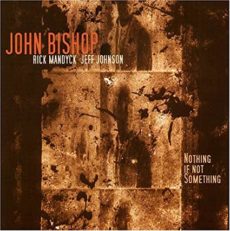
John Bishop was born in Seattle, Washington on April 5, 1956 and raised in Germany, Washington, DC, San Antonio, Texas and Eugene, Oregon. He started playing drums at 9 in Washington, DC with the Patriots drum corps and performed regularly throughout high school and college in Oregon, studying with Mel Brown and Charles Dowd. Attending the University of Oregon, he later transferred to the jazz program at North Texas State University.
Moving to Seattle in 1981 he had an extended engagement with the band Glider and never left. An unusually creative and fertile scene at the time, the city offered performances with top touring artists and the opportunity to create long and substantial musical relationships with inspired Northwest musicians. 1983, saw Bishop helping to form the fusion group Blue Sky, which released two national Top 10 albums and toured throughout the west coast and Canada over the next 9 years.
He was a twenty-year member of the piano trio New Stories with pianist Marc Seales and bassist Doug Miller, releasing 4 CDs of their own, 6 with the late be-bop saxophonist Don Lanphere, and Song for the Geese with Mark Murphy. They were a house trio for 17 years at Bud Shank’s Pt. Townsend Jazz Festival, headlined the 1993 JVC Jazz Festival in Vladivostok, Russia, appeared in concert with Tom Harrell, Julian Priester, Charles McPherson, Vincent Herring, Nick Brignola, Conte Condoli, Bobby Shew and Larry Coryell.
They regularly appeared around the country by themselves or touring with Mark Murphy, Ernie Watts or Don Lanphere. He has performed in concerts and clubs with Lee Konitz, Slide Hampton, Benny Golson, George Cables, Kenny Werner, Bobby Hutcherson, Dr. Lonnie Smith, Sonny Fortune, Herb Ellis, Buddy DeFranco, Bobby McFerrin, Joe Locke, Jerry Bergonzi, Carla Bley, Steve Swallow, Larry Coryell, and countless others.
John has taught drums privately for forty years, was on the faculty at the University of Washington from 2005-2009, regularly holds drum and jazz workshops throughout the country with the Hal Galper Trio, and co-founded The Reality Book, a web-based, HD Video Play-Along education system for jazz musicians of all levels.
Drummer, educator, record label owner, graphic designer, and festival presenter John Bishop continues to perform, record, tour and educate. has been one of the primary voices in Northwest Jazz for over 35 years. He’s appeared on more than 100 albums, was inducted into the Seattle Jazz Hall of Fame in 2008, and was named a “Jazz Hero” by the Jazz Journalists Association in 2019.

More Posts: bandleader,drums,educator,history,instrumental,jazz,music
Daily Dose Of Jazz…
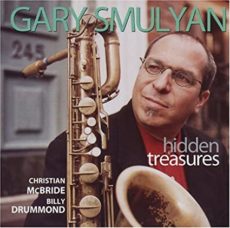
Gary Smulyan was born on April 4, 1956 in Bethpage, New York. He studied at Hofstra University before working with Woody Herman. His biggest influence is Pepper Adams. When Adams died, he recorded an album titled Homage, which featured eight pieces composed by Adams. He has recorded for Criss Cross Jazz and Reservoir Records, including the critically acclaimed High Noon: The Jazz Soul of Frankie Laine, featuring arrangements by Mark Masters.
He has recorded with Jimmy Knepper, Mulgrew Miller, Tommy Flanagan, Dick Oatts, Cedar Walton, Bob Stewart, John Clark, Joe Lovano, Joe Magnarelli, Mike LeDonne, Dennis Irwin, Christian McBride, Billy Drummond, Steve Johns, Peter Bernstein, Dominic Chianese, Gary Versace, Joseph Brent, Martin Wind, and Matt Wilson.
He has worked with an orchestra, as well as with Benny Green, Riccardo Fassi, Gerald Wilson, and Michael Benedict. Since 2006, Smulyan has served as artistic director at the Berkshire Hills Music Academy in South Hadley, Massachusetts.
Baritone saxophonist Gary Smulyan has consistently been ranked best baritone saxophone player in the annual Down Beat magazine readers’ and critics’ polls, continues to lead a trio with bassist Ray Drummond and drummer Kenny Washington.
More Posts: bandleader,composer,history,instrumental,jazz,music,saxophone
Daily Dose Of Jazz
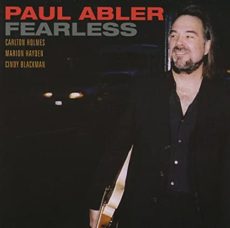
Paul James Abler was born April 3, 1957 in Saginaw, Michigan but grew up in Pontiac, Michigan. He first came into contact with jazz as a child when his grandfather played drums on recordings of Stan Getz, Dave Brubeck and Duke Ellington. Influenced by Jimi Hendrix, he turned to the guitar and in 1982 he moved to Los Angeles, California where he studied with Joe Diorio, Carl Schroeder and Ron Eschete at the Musicians Institute (Guitar Institute of Technology). In 1988 he moved to Boston, Massachusetts where he took improvisation lessons with Jerry Bergonzi.
1990 saw Paul moving back to Michigan where he played in Detroit with Marcus Belgrave, Harold McKinney, James Carter, David McMurray, Roy Brooks, Straight Ahead, and Leonard King. By 2003 he was living in New York permanently and has worked with Cindy Blackman, Allen Farnham, Joe Lee Wilson, Charles Davis, Cameron Brown, Guilherme Franco, Yusef Lateef, the Mingus Big Band, Ted Curson, David Ruffin and The Funk Brothers, among others.
In 2005, Abler released the album In the Marketplace as a leader under his own name, in which Marion Hayden, Cindy Blackman, William Evans, and Robert Pipho had worked. In addition, he worked with his own formations, which in various formations, among others Bobby Battle, Gerald Cleaver, Craig Taborn, Ugonna Okegwo, Helio Alves, Santi Debriano, Adriano Santos and Harvie S belonged.
Abler wrote over 150 compositions, some of which were used in films and television series such as Madam Secretary, Breaking Bad, 20/20, The Big Bang Theory and Mad Men. Abler, who most recently lived in New Jersey, was involved in six recording sessions from 1991 to 2013. On March 3, 2017 in Livingston, New Jersey guitarist and film composer Paul Abler passed away at the age of 69.
More Posts: bandleader,composer,guitar,history,instrumental,jazz,music
Daily Dose Of Jazz…
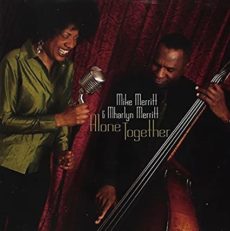
Mharlyn Merritt was born on March 30, 1950 in Philadelphia, Pennsylvania, the daughter of bassist Jymie Merritt. A vocalist rooted in jazz, R&B and classic soul, she has collaborated with her brother Michael on a recording titled Alone Together. She has paid tribute to cabaret with her Jukebox Reveries: Love Songs from the American Songbook as well as experimenting with other genres of music.
A novelist and poet with a Masters of Fine Arts in Creative Writing, Mharlyn is a recipient of a National Endowment for the Arts Fellowship in Jazz Performance and an Interdisciplinary Arts Fellowship from the Pennsylvania Council on the Arts.
Her band Messenger, she has opened fr Hugh Masekela, Eddie Palmieri, and Richard Beltzer among others. She has graced numerous sessions as a background vocalist at Sigma Sound Studios in Philadelphia. Having lived in New York and London vocalist Mharlyn Merritt currently resides in Philadelphia and continues to write, perform and record.

More Posts: bandleader,history,instrumental,jazz,music,vocal