

Daily Dose Of Jazz…
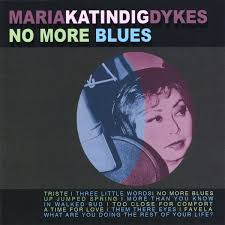
Maria Katindig-Dykes was born in the Philippines on March 21, 1955 into a renowned musical family to legendary jazz pianist, Romy Katindig. In the family music business since the age of 16, she has performed a wide variety of musical styles, but her true passion is for jazz and bossa nova.
During the Seventies, she performed in a pop-rock ensemble called Circus Band, who represented the Philippines at the Tokyo Music Festival in the 1970s. Maria went on to play Silahis International Playboy Jazz Club and was the featured vocalist for 3 years at the Top of the Hilton, both in Manila.
A move to Honolulu, Hawaii where she met her future husband, jazz pianist, arranger and composer, Jimmie Dykes, and together they formed Pacifica, a jazz ensemble that became a very popular music attraction performing in the clubs in the Pacific arena.
Riverside in Southern California was her next stop for the artist with performances at many of the regional universities, at Mario’s Place, and the Silver Screen Jazz Club at the Hyatt on Sunset in Hollywood, alongside internationally renowned jazz artists Tal Farlow and Barney Kessel.
In 2005, diagnosed with cancer, she successfully waged a battle that left her happily performing today with No More Blues! It is a pleasant undertaking featuring eleven covers of pop and jazz standards. Among the best are “Favela” and “In Walked Bud”.

More Posts: bandleader,history,instrumental,jazz,music,vocal
Requisites
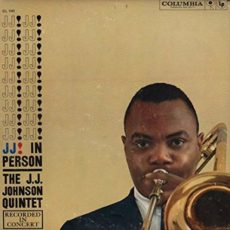
JJ! In Person is a 1958 studio recording by J. J. Johnson on the Columbia Records label. Tracks | 44:15
- Tune Up (Miles Davis) – 5:40
- Laura (David Raksin, Johnny Mercer) – 4:57
- Walkin’ (Richard Carpenter) – 6:51
- What Is This Thing Called Love? (Cole Porter) – 6:30
- Misterioso (Thelonious Monk) – 6:57
- My Old Flame (Sam Coslow, Arthur Johnston) – 3:45
- Now’s The Time (Charlie Parker) – 8:11
- J. J. Johnson – trombone
- Nat Adderley – cornet (tracks 1-5 & 7)
- Tommy Flanagan – piano
- Wilbur Little – bass
- Albert Heath – drums
JJ! In Person ~ The J.J. Johnson Quintet | By Eddie Carter
The word “deception” as described in the Merriam-Webster Online Dictionary is “the act of causing someone to accept as true or valid what is false or invalid”. I mention this definition because it’s significant to begin this week’s review with a live album that isn’t. JJ! In Person (CL 1161) by the J.J. Johnson Quintet is actually a studio recording masquerading as a live album with over-dubbed applause and fake bandstand announcements. That said, it’s not a bad album at all, quite the contrary actually. The choice of classic and contemporary tunes is exemplary, and the musicians assembled for this date are four of the best in the business; Nathaniel “Nat” Adderley on cornet, Tommy Flanagan on piano, Wilbur “Doc” Little on double bass and Albert “Tootie” Heath on drums. My copy used in this report is the original Mono Deep Groove LP and trombonist J.J. Johnson gives the introductions for all seven tunes.
The album begins with a fast-paced rendition of Miles Davis’ 1953 jazz standard Tune-Up opening with a brief introduction by Tommy before the quintet comes together to run through the melody. J.J. takes off first with a high-spirited opening statement, then Nat swings just as hard on the second reading. Tommy’s fingers fly swiftly over the keys next, then Heath wraps everything up in a heated exchange with Johnson and Adderley into the reprise, ending and introductions of the band and next tune. Laura by David Raskin is the title tune of the 1944 film with Johnny Mercer adding the lyrics after the film made the song a huge hit. A favorite of musicians and vocalists since its creation, Laura has been recorded more than four hundred times. This is a quartet feature for Johnson who takes the rhythm section through the midtempo melody completely carefree. J.J. leads off, applying a refreshing airiness to several swinging verses fueled by the trio’s supplement. Tommy follows with a gorgeous account of rhythmic vitality on a brief chorus preceding the trombone’s return for the closing coda.
The quintet returns to full voice on Richard Carpenter’s jazz classic, Walkin’ with everyone collectively cooking on the vivacious opening melody. J.J. states his thoughts economically but effectively on the lead solo. Nat offers up some brassy fire on a strikingly insightful performance next. Tommy handles the finale with a breathtaking flourish ahead of the ensemble’s climax. The first side ends vigorously on Cole Porter’s 1929 classic, What Is This Thing Called Love? An exhilarating opening solo by Flanagan segues into an effervescent theme treatment by the quintet featuring some brief comments by “Tootie”. Adderley takes over for lively, vivacious reading, then Johnson gives a joyously unrestrained performance. Little and Heath share a brief closing statement preceding the firm beat the song ends on.
The music of Thelonious Monk opens Side Two with Misterioso; the song was written in 1958, serving as a title tune of the Riverside album Monk released that year, and again as the title song for a 1965 Columbia LP he recorded while on tour. Its definition means mysterious in Italian and is given a bluesy midtempo treatment after the opening chorus. Nat and J.J. are the featured soloists and the cornetist establishes a nice momentum in a relaxed mood. The leader does a happy romp with an exceptionally agile interpretation, complementing the group’s smooth sound throughout this Monk original.
My Old Flame was written in 1934 by Arthur Johnston and Sam Coslow and featured in the film that year, Belle of The Nineties. This old evergreen is the second quartet tune featuring J.J. as the song’s only soloist. The trombonist starts the slow-tempo standard in excellent voice with a rich, warm tone producing an intimately tender statement of subtlety that’s absolutely beautiful. The album concludes with the 1945 blues by Charlie Parker, Now’s The Time, beginning with a collective medium beat on the melody that’s an irresistible toe-tapper. J.J. cruises at a moderate speed, taking the lead solo for a leisurely saunter. Nat preaches passionate phrases that are pitch-perfect on the second performance. Tommy follows with an expertly crafted interpretation of delightful pleasure. Wilbert and “Tootie” exchange one short verse each with the front line, ending the album on an upbeat note. The sound quality on this Mono LP is stupendous because of the amazing acoustics within the Columbia 30th Street Studio. Many of the label’s top jazz musicians and vocalists, Dave Brubeck, Buck Clayton, Miles Davis, Duke Ellington, Benny Goodman, Billie Holiday, Charles Mingus, Sarah Vaughan, and others used the space to create some of the greatest albums ever recorded.
This album was produced by George Avakian who in addition to his work on Columbia LPs, also produced albums on Decca Records, RCA Records, Warner Bros. Records, and World Pacific Records. The original recording engineer was Frank Laico who worked at both the Columbia 30th Street Studio and CBS Studios in New York City and was also the man behind the dials on albums for Atlantic, Cadence, Colpix, Dot Records, Epic, Reprise, United Artists Records and Verve Records to name of few. For the life of me, I can’t think of any reason why Columbia felt they needed to label this record a live album when it clearly wasn’t. Anyway, that’s a mystery for another day. As I stated at the beginning of this report, J.J. In Person is actually a very good and enjoyable album. It’s also a title I recommend that’s worthy of an audition for a spot in any jazz library, especially if you’re a fan of J.J. Johnson. There was only the one issue of this album in Mono, the Stereo release (CS 8009) hit the stores a year later in 1959. To hear the album as it was originally recorded, it can be found on the 1996 Mosaic Records eleven LP box set, The Complete Columbia J.J. Johnson Small Group Sessions!
George Avakian, Frank Laico, Misterioso (Riverside RLP 12-279/RLP 1133), (Columbia CL 2416/CS 9216); The Complete Columbia J.J. Johnson Small Group Sessions (Mosaic Records MQ11-169) – Source: Discogs.com
Laura, My Old Flame – Source: JazzStandards.comMisterioso, Now’s The Time, Tune-Up, Walkin’, What Is This Thing Called Love? – Source: Wikipedia.org

More Posts: choice,classic,collectible,collector,history,instrumental,jazz,music,trombone
Requisites
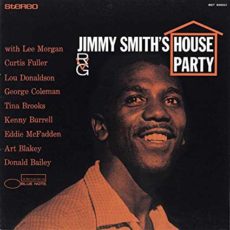
House Party is the fourteenth album by jazz organist Jimmy Smith featuring performances recorded in 1957 and 1958 and released on the Blue Note label. Rudy Van Gelder chose the Manhattan Towers Hotel Ballroom in New York City for the recording sessions in 1957-1958, while he was still using his parents’ Hackensack, New Jersey home studio to record artists for Blue Note.
Track Listing | 42:46- Au Privave (Charlie Parker) – 15:09
- Lover Man (Jimmy Davis, Ram Ramirez, James Sherman) – 7:00
- Just Friends (John Klenner, Sam M. Lewis) – 15:15
- Blues After All (Kenny Burrell) – 6:06
- Jimmy Smith – organ
- Lee Morgan – trumpet (tracks 1, 3, 4 & 5)
- Curtis Fuller – trombone (tracks 3 & 4)
- George Coleman – alto saxophone, (tracks 3 & 4)
- Lou Donaldson – alto saxophone, (tracks 1, 2 & 5)
- Tina Brooks – tenor saxophone (tracks 1 & 5)
- Kenny Burrell – guitar, (tracks 1, 4 & 5)
- Eddie McFadden – guitar, (track 2 & 3)
- Donald Bailey – drums, (tracks 2, 3 & 4)
- Art Blakey – drums, (tracks 1 & 5)
- Alfred Lion – producer
- Rudy Van Gelder – engineer
- Reid Miles – design
- Francis Wolff – photography
- Robert Levin – liner notes
Psychologists call it déjà vu, the distinct impression of having had the same experience before, that’s what it was alright, believe me. I was eight years old when I first discovered Jimmy Smith after hearing him on The Sermon (BLP 4011/BST 84011). His contributions to the development of modern jazz on the Hammond organ as a solo instrument helped to popularize it for others who would follow. Smith would ultimately lead me to discover the music of Charles Earland, Richard “Groove” Holmes, Jack McDuff, Jimmy McGriff, Don Patterson, John Patton, Freddie Roach, Shirley Scott and Dr. Lonnie Smith who made the organ their primary instrument. Houseparty
(Blue Note BLP 4002) hit the stores in 1958 and was the second album I would hear by the man who jazz critics, fans and fellow musicians called “incredible”.
It was recorded at the same session which produced The Sermon and is Smith’s fourteenth album for Blue Note since his debut, A New Sound, A New Star, Volumes 1 & 2 (BLP 1512/BST 81512 – BLP 1514/BST 81514) in 1956. The supporting cast joining the organist are Lee Morgan on trumpet; Curtis Fuller on trombone; Lou Donaldson and George Coleman on alto sax; Tina Brooks on tenor sax; Kenny Burrell and Eddie McFadden on guitar; Art Blakey and Donald Bailey on drums. I became a huge fan of his playing and purchased as many of his albums as my meager allowance would allow. My copy used for this report is the 1959 US Mono reissue (Blue Note Records, Inc. – 47 West 63rd NYC on the Side 1 label and the Deep Groove only on Side 2 with the label showing Blue Note Records, Inc. – NewYork USA), the 2nd US pressing.
The album opens with a vigorous uptempo workout of the 1951 jazz standard, Au Privave by alto saxophonist Charlie Parker who recorded it for Mercury Records on a 78-rpm single (11087), released the same year. It would reappear on Charlie Parker’s 1958 posthumous Verve Records LP, Swedish Schnapps (MG V-8010). Jimmy opens with a brief introduction, afterward, Lee provides a solo chorus of the melody first, followed by the ensemble who add their own excitement to the uptempo theme. Smith is first in the solo spotlight on the attack with a wailing performance, possessing amazing fluency on each chorus. Morgan adds some bite to the second statement with an intense groove that maintains the cooking intensity from beginning to end.
Donaldson steps in next for a torrid performance which gives off intensive heat. Tina Brooks comes in next, riding hard on the next robust reading, providing scorching verses of infinite effervescence delivered with an aggressive impact. At its conclusion, I wished he could have been featured elsewhere on the LP. Burrell takes over, adding a vigorous reading of his own with skillful authority preceding Jimmy’s returns for a short solo spot ahead of the ensemble’s strong finale.
Of all the songs in The Great American Songbook, Lover Man, in my opinion, is the pinnacle standard of jazz, pop, and soul. It was written by Jimmy Davis, Roger Ramirez, and Jimmy Sherman for Billie Holiday who made it a hit on the pop and R&B charts in 1945. This rendition of the timeless classic highlights Lou Donaldson as the featured soloist with Jimmy’s trio of guitarist Eddie McFadden and drummer Donald Bailey. A hauntingly beautiful bass line by Smith makes the introduction, prior to the saxophonist’s warm, affectionate theme statement. Lou’s alto sax moves up to a sprightly tempo for two lively verses of stimulating solo work before returning to a softer mood for his final chorus.
Eddie and Jimmy each deliver one chorus of intensely persuasive passion, then Lou returns to lead the quartet into a thoughtfully, modest climax. Just Friends, the 1931 popular song by John Klenner and Sam M. Lewis kicks off Side Two at medium-tempo with McFadden leading Smith and Bailey through the bluesy melody. Eddie takes the lead solo, offering the first two of four choruses that are infectiously propulsive with a flowing beat. Jimmy takes the next turn, toning down his searing attack to presenting four choruses of low-keyed swing with a down-home flavor as scrumptious as a good meal. Lee is up next, delivering the next reading with a bright tone,
exemplary poise, and accuracy which is executed beautifully. George Coleman enters the spotlight next, establishing long flowing, graceful lines from his alto sax for a lightly swinging performance of carefree verses. Curtis Fuller conjures up some mellow phrases on the final interpretation preceding the final two choruses by McFadden with Smith and Bailey providing the foundation into the close.
Blues After All is from the pen of Kenny Burrell and our final stop on Houseparty. This slow-tempo blues is of the soul food variety and serves up a solo order of Coleman, Morgan, Fuller, Smith, Burrell. Jimmy brings the song to life with one of the smoothest introductions you’ll ever hear. He also provides the bass line with his left foot while playing chords with his left hand, harmonic and rhythmic lines with his right hand. Kenny’s sensitive approach to the melody is shown to fine advantage as he provides the initial theme. The three horns join the trio when the theme is repeated during the opening and closing chorus. The lead solo by George is a tasteful delight to tempt you for what’s to come, followed by Lee who produces a savory broth of the blues that is slowly simmered to perfection. Curtis comes to the table with a plate of appetizing notes that gives the song a wonderful flavor. Jimmy adds the red beans and rice to our dish on the next performance and Burrell delivers the final ingredient to make the meal complete and end the album on a scrumptious note.
Houseparty was recorded by Rudy Van Gelder who used the Manhattan Towers Hotel Ballroom in New York City for recording sessions with larger groups of musicians that would not fit in his parent’s living room. Both, Houseparty and The Sermon were recorded there and are among the outstanding releases in Smith’s discography. The sound is well done and each of the instruments a delight to hear with a wonderful soundstage. Jimmy exhibits a style of playing that is completely comfortable in the Hard-Bop or Soul-Jazz genres. He recorded a total of six studio albums for Blue Note featuring his trio, plus special guests. The other five LP’s are A Date With Jimmy Smith, Volume 1 & 2 (BLP1547/BST 81547 – BLP 1548/BST 81548) in 1957, The Sermon in 1959, Open House (BST 84269) and Plain Talk (84296) in 1968. If you’re a fan of the jazz organ, I offer for your evaluation, Houseparty. It’s an amazing album by Jimmy Smith that though out of print on LP in the US since the 1985 Stereo Cadre Rouge DMM Audiophile Edition (BST 84002), won’t break the bank when seeking a Mono or Stereo copy for your library. It’s also an LP you can enjoy alone, in the company of friends or guests at your next Houseparty! The Blue Note RVG Edition CD-album (7243 524542 8) released in 2000 adds an additional song, Confirmation by Charlie Parker.
Lover Man – Source: JazzStandards.com Au Privave, Just Friends, The Manhattan Towers Ballroom – Source: Wikipedia.org
More Posts: choice,classic,collectible,collector,history,instrumental,jazz,music,organ
Requisites
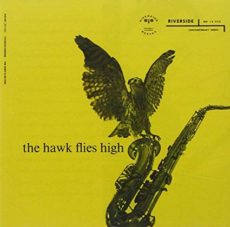
The Hawk Flies High is an album by jazz tenor saxophonist Coleman Hawkins. Apart from Barry Galbraith and Jo Jones on guitar and drums, the line-up of his accompanying sextet had a bebop background. The year is 1957, the dates, March 12th, and 15th, and Reeves Sound Studios at 304 East 44th Street is the destination.
Track Listing | 39:02
- Chant (Hank Jones) – 5:08
- Juicy Fruit (Idrees Sulieman) – 11:16
- Think Deep (William O. Smith) -3:24
- Laura (David Raksin, Johnny Mercer) -4:34
- Blue Lights (Gigi Gryce) -5:44
- Sancticity (Hawkins) -9:10
- Coleman Hawkins – tenor saxophone
- Hank Jones – piano
- Oscar Pettiford – bass
- Jo Jones – drums
- Barry Galbraith – guitar
- J.J. Johnson – trombone
- Idrees Sulieman – trumpet
Coleman Hawkins ~ The Hawk Flies High | by Eddie Carter
Tenor saxophonist Coleman Hawkins steps into the spotlight with his only album as a leader for Riverside Records, The Hawk Flies High (Riverside Contemporary Series 12-233). Originally recorded and released in 1957, this album and the other five he would record for Prestige; Soul (PRLP 7149) and Blues Groove with Tiny Grimes (PRLP 7138/PRST 7753) in 1958; Very Saxy with Eddie “Lockjaw” Davis, Buddy Tate, Arnett Cobb (PRLP 7167); Hawk Eyes (PRLP 7156) and Coleman Hawkins with The Red Garland Trio (Prestige Swingville SVLP 2001) in 1959 became essential parts of his impressive discography. Also, reviving his career as one of the perennial jazz musicians in the world until his death from liver disease on May 19, 1969. My copy used in this report is the 2007 Mobile Fidelity Sound Lab Limited Edition, Half-Speed Mastered Mono Audiophile Reissue (MFSL 1-290). Producer Orrin Keepnews gave Bean (as he was also known) the freedom to choose the personnel he wanted, and he picked a dream lineup to share the date; Idrees Sulieman on trumpet; J.J. Johnson on trombone; Hank Jones on piano; Barry Galbraith on guitar; Oscar Pettiford on bass and Jo Jones on drums.
Side One opens with Hank Jones’ Chant; a midtempo original tailor-made for tuneful blowing by the septet on the melody and five sprightly solos by Hawk, Julie, J.J., Hank, and Oscar. Bean takes charge first, telling a great story with a captivating opening chorus. Sulieman’s trumpet is deliciously appetizing on the next reading, then Johnson fills the third solo with an ecstatic swing. Jones’ ideas flow with finesse on the next performance, and Pettiford swings with light agility on the closing statement before the coda. Idrees Sulieman’s Juicy Fruit is a blues that gradually rises from a march-like introduction to the mid-tempo melody. The trumpeter sustains a single note for nearly a minute (fifty-seconds to be exact) before settling into some bluesy smooth sailing on the lead solo. Coleman endows the next reading with long, flowing mellow lines that are enjoyable. J.J. conjures up some especially inventive playing that develops subtly over the easy, relaxing beat. Hank solos next cultivating an irresistible warmth over the gently rocking groundwork of the rhythm section. Oscar comes in behind him maintaining a relaxed attitude with poise and self-assurance before the ensemble takes the song out.
Think Deep by jazz clarinetist William Smith begins leisurely with Hawk leading the septet on the hauntingly beautiful melody and closing chorus. As the song’s only soloist, the venerable tenor man turns in a very satisfying intimate performance reminiscent of the spontaneously perfect solo he performed on Body and Soul for Bluebird Records (10523) in 1939. Side Two starts with Laura by David Raskin who composed it for the 1944 film of the same name. This classic jazz standard is featured throughout the film noir drama and has been recorded over four-hundred times. Lyricist Johnny Mercer created the words for Laura in 1945 after the film became a huge hit, later admitting he never saw the film before writing them. Raskin also founded a little-known label called Capitol Records and has written over fifteen-hundred lyrics. Sulieman lays out of this version, therefore showcasing Coleman and J.J. who clearly make two convincing cases for interpreting a ballad. The graceful mood is established by the rhythm section for the song’s introduction. Bean states the theme with passionate tenderness, then impresses on an expressively gentle first solo. J.J. adds notes of dreamlike beauty that’s beautifully captured on the closing chorus leading to a subtle climax by Hawk.
Blue Lights by multi-instrumentalist Gigi Gryce made its debut on the 1957 album When Farmer Met Gryce (Prestige PRLP 7085) while he was a member of The Art Farmer Quintet. The septet presents the song at a medium tempo like the original, giving Barry his first solo opportunity for a brief bit that’s inspired. Idrees is particularly intriguing on the third solo; Hank is also in top form on a short statement that’s rhythmically assured. J.J. mixes a bit of grace and fire on the following reading; Oscar and Jo Jones split the next interpretation with a few crisply executed exchanges. Coleman delivers the finale with a smoldering fire emerging from his horn that burns slowly into the closing theme. The album ends with the leader’s joyful original, Sancticity. The rhythm section lays down a swinging line to introduce this jaunty tune, preceding the ensemble’s frolic on the melody. Johnson opens with a carefree, light-hearted opening statement that’s perfectly in step like a street march through the French Quarter in New Orleans. Hawk leads the septet into the bridge between his and the trombonist’s solo statement, then settles in for a deliciously spry and merry reading of his own. Sulieman is firing on all cylinders with a frisky performance that’s a sure attention-grabber. Jones gives the final solo a happy send-off with a bright, breezy interpretation bringing this entertaining forty-minutes of jazz to a close.
I defy anyone to listen to this record with its deliciously smooth sound and punchy rhythms, and not find themselves moving to the music. The six songs that make up The Hawk Flies High offers a refreshing spirit of Cool Jazz, Hard-Bop, and Swing. Bean and his associates bring their talents to the mix with solid performances, superb solos, and vivid ensemble work for an album that you’ll want to add to your library! The original recording by Jack Higgins of Reeves Sound Studios is marvelously remastered by Mobile Fidelity Sound Lab with absolute sonic purity for a riveting soundstage that places you in the studio among the musicians as they work. If you’re a fan of good sax, I recommend for your consideration, The Hawk Flies High by Coleman Hawkins. An LP by one of jazz’s prominent musicians who not only made the tenor sax a jazz instrument but made art with it throughout a distinguished career spanning forty-five years!
~ Laura – Source: JazzStandards.com ~ © 2020 by Edward Thomas Carter
More Posts: choice,classic,collectible,collector,history,instrumental,jazz,music,saxophone
Daily Dose Of Jazz…
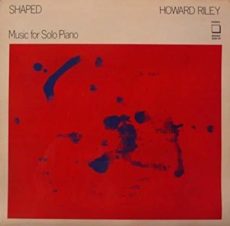
Howard Riley was born on John Howard Riley on February 16, 1943 in Huddersfield, Yorkshire, England. He began learning the piano at the age of six and started playing jazz as early as the age of 13. He studied at the University of Wales from 1961 to 1966, then Indiana University, and finishing up at York University in 1970). While studying he played jazz professionally, with Evan Parker (1966) and then with his own trio (1967–76), with Barry Guy on bass and Alan Jackson, Jon Hiseman, and Tony Oxley for periods on drums.
He worked with John McLaughlin in the late Sixties, the London Jazz Composers Orchestra and Oxley’s ensemble through the Seventies to 1981. He and Guy worked in a trio with Phil Wachsmann from 1976 well into the 1980s and played solo piano throughout North America and Europe. He played in a quartet, with Guy, Trevor Watts, and John Stevens, did duo work with Keith Tippett, with Jaki Byard, and with Elton Dean. From 1985 he worked in a trio with Jeff Clyne and Tony Levin.
Pianist and composer Howard Riley who worked in jazz and experimental music idioms continues to teach at the Guildhall School of Music and Drama and Goldsmiths, University of London, where he has taught since the 1970s.
More Posts: bandleader,educator,history,instrumental,jazz,music,piano