

Daily Dose of Jazz…
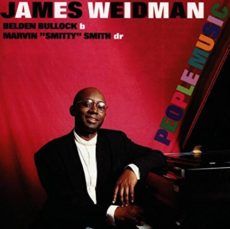
James Edward Weidman, Jr. was born in Youngstown, Ohio on July 23, 1953 to a saxophonist father who led his own band. He began playing piano when he was eight years old and eventually became the electric organist in his father’s group.
Attending Youngstown State University after graduating James spent two years playing locally before he moved to New York City in 1978. There he worked with Pepper Adams, Cecil Payne, Sonny Stitt and Bobby Watson, then became Abbey Lincoln’s pianist in 1982. This association continued into the early Nineties.
He went on to work with Steve Coleman, from 1987 to 1992 replacing Geri Allen in his Five Elements band, and with Jay Hoggard later in the 1980s. Throughout the 1990s he worked with Cassandra Wilson, Talib Kibwe, Kevin Mahogany, Belden Bullock, Max Roach, Woody Herman, Gloria Lynne, Archie Shepp, James Moody, Greg Osby, Slide Hampton, Dakota Staton and Marvin “Smitty” Smith.
Pianist and organist James Weidman who has released several albums as a leader in is a member of Joe Lovano’s Us Five band, continues to perform, tour and record.
Sponsored By

Voices From The Community

#preserving genius
Daily Dose Of Jazz…
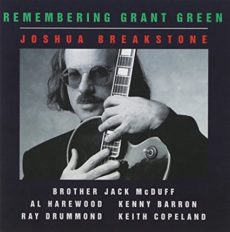
Joshua Breakstone was born July 22, 1955 in Elizabeth, New Jersey and came into the music business early in life watching Jimi Hendrix and Frank Zappa at the Fillmore East. He later became interested in jazz through Charlie Parker and Lee Morgan and found himself studying with guitarist Sal Salvador in Manhattan. By 1972 he was enrolled at the New College of the University of South Florida, graduated three years later and continued his studies at Berklee College of Music.
A move to Brazil for a few months brought him back to New York City to perform and teach. Joshua also taught privately and at the Rhode Island Conservatory of Music. In 1979, he recorded with Canadian saxophonist Glen Hall, with Joanne Brackeen, Cecil McBee, and Billy Hart participating and also worked with Vinnie Burke, Warne Marsh, Emily Remler, and Aaron Bell.
1983 saw Breakstone releasing his debut album, 4/4=1, followed by four more albums from 1986 to 1990 on the Contemporary Records label, with sidemen Pepper Adams, Kenny Barron, Dennis Irwin, Jimmy Knepper, Tommy Flanagan, Keith Copeland and Kenny Washington. He went on his first tour of Japan and has since played twice a year in Japan and has worked with Terumasa Hino, Monkey Kobayashi, and Eiji Nakamura.
Beginning in the Nineties he signed a contract with the Japanese label King Records, released four albums, moved to Evidence Records and worked with Grant Green sidemen organist Jack McDuff and the drummer Al Harewood, and recorded Sittin’ on the Thing with Ming on the Capri label in 1994. He would go on to record tribute albums to Thelonious Monk, Wes Montgomery, and Bud Powell. His latest album in 88 recorded in 2016. Guitarist joshua Breakstone, who has nearly two dozen albums as a leader to his credit, continues to compose, record and perform.
Sponsored By

www.whatissuitetabu.com
#preserving genius
More Posts: guitar
Daily Dose Of Jazz…
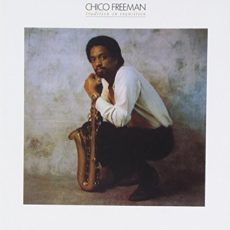
Chico Freeman was born Earl Lavon Freeman Jr. on July 17, 1949 in Chicago, Illinois to saxophonist Von Freeman. His initial outing on his musical path came from his brother Everett who introduced him to the trumpet and began playing, inspired by Miles Davis. In 1967 he attended Northwestern University on scholarship for mathematics and played the trumpet in the school, but did not begin playing the saxophone until his junior year.
Changing his major to music, he graduated in 1972, proficient playing saxophone, trumpet, and piano. After graduation, Freeman taught at the Association for the Advancement of Creative Musicians School of Music in Chicago and started taking classes as a graduate student at Governors State University, earning a master’s degree in composition and theory. Though focused on jazz during this period he also played blues in local clubs with Memphis Slim and Lucky Carmichael.
1976 saw the release of his debut album as a leader, Morning Prayer and moving to New York City the next year he widened his musical influences. He would experience his most productive years of his career, releasing albums such as No Time Left, Tradition in Transition and The Outside Within which earned him Record of the Year from Stereo Review. Coming to prominence in the late 1970s Chico was part of a movement including Wynton Marsalis of modern players steeped in the traditions of jazz.
He went on to record for independent labels India Navigation and Contemporary Records enlisting the talents of Wynton Marsalis, Bobby Hutcherson and Cecil McBee. He formed the band Guataca with Hilton Ruiz, Ruben Rodriguez, Yoron Israel and Giovanni Hidalgo and released Oh By the Way… in 2002. Freeman has toured internationally, both with his band as well as with Chaka Khan, Tomasz Stanko, Celia Cruz and Tito Puente.
His electric band Brainstorm brought together Delmar Brown on vocals and keyboards, percussionist Norman Hedman, bassist Chris Walker, and Archie Walker on drums. By the end of the Nineties he was producing Arthur Blythe’s album NightSong and beginning his teaching role at New School University.
Tenor saxophonist, bass clarinetist and trumpeter Chico Freeman, who was a recipient of the New York Jazz Award, continues to compose, perform and educate.

Daily Dose Of Jazz…
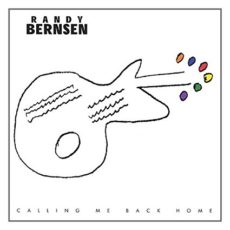
Randy Bernsen was born on July 15, 1954 in Needham, Massachusetts. He began his professional career in the mid-1970s , playing guitar with local groups. He collaborated with the rock band Blood, Sweat & Tears on their 1977 tour, where he was second guitarist alongside Mike Stern until he left the band.
Randy went on to work with Jaco Pastorius, Herbie Hancock, Bob James and Peter Erskine. His debut album as a leader came in the form of Music for Planets, People & Washing Machines on the MCA , label in 1986, that received critical acclaim from Down Beat and Guitar Player.
1987 saw Bernsen releasing his sophomore project Mo ‘Wasabi with Wayne Shorter, Michael Brecker, Marcus Miller, Steve Gadd, Toots Thielemans and Bobby Economou supporting his effort. Once again he received great praise from among others, JazzIn and USA Today. His third MCA project however did not hold up to the standard.
Spending some time touring Asia and composing TV music, he settled in Fort Lauderdale, Florida and then joined Joe Zawinul’s band in 1992, replacing Scott Henderson. This move gave him the opportunity to record of Zawinul Syndicate’s Lost Tribes album.
Picking up a house gig at a Fort Lauderdale club resulted in Bernsen’s next CD in 1997 titled Live at Tavern 213, that featured excellent improvisation by the guitarist, bassist Pete Sebastian and drummer John Yarling. This led to a Mexico tour in 1998 with violinist/vocalist Nicole Yarling, saxophonist Richard Brookens, bassist Javier Carrion, and drummer Archie Pena that ultimately yielded Bernsen’s 2001 CD Live in San Miguel de Allande. Performing with his own band, recording 6 albums as a bandleader, guitarist Randy Bernsen continues to pursue his music career.
Sponsored By
www.whatissuitetabu.com
#preserving genius
More Posts: guitar
Daily Dose Of Jazz…
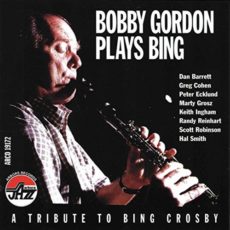
Bobby Gordon was born on June 29, 1941 in Hartford, Connecticut. A student of Joe Marsala and influenced by Pee Wee Russell, in 1962/63 he recorded three albums for the Dot label. At that time he was playing folk music and the music of Acker Bilk .
By the end of the Sixties Max Kaminsky took him to the New York City to the jazz club Jimmy Ryan’s and by the beginning of the 1970s, he was appearing regularly at Eddie Condon’s club. After working with Wild Bill Davison in Chicago, Illinois he moved to San Diego, California and became famous mainly for his recordings for the Jump and Arbors labels and his collaboration with Marty Grosz in the Orphan Newsboys .
Recording as a leader he worked with Keith Ingham, Dan Barrett, Adele Girard, Scott Robinson, Dave McKenna, Tony DeNicola and Bob Wilber. While lived in the San Diego area he accompanied Rebecca Kilgore and occasionally he performed at jazz parties and festivals. Clarinetist Bobby Gordon, who was a proponent of Hot Jazz, passed away on December 31, 2013.
Sponsored By

#preserving genius
More Posts: clarinet