

Requisites
Relaxin’ at Camarillo ~ Hank Jones | By Eddie Carter
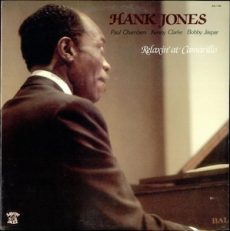
Have you ever found yourself planning to listen to a specific album in your library, only to be drawn to another title on the shelf? That’s precisely what happened to me, and it ultimately led to a delightful surprise and this morning’s discussion. Hank Jones has been one of my favorite pianists since I first heard him on Bass on Top, New Trombone, Portrait of Art Farmer, and Somethin’ Else many years ago. Relaxin’ at Camarillo (Savoy Jazz WL 70504) was initially released in 1956 as the Hank Jones Quartet, and this gem is often overlooked within his extensive discography. Accompanying Hank in this session are Bobby Jaspar on flute, Paul Chambers on bass, and Kenny Clarke on drums. My copy is the 1984 U.S. mono reissue.
The album opener is the lovely forties tune Moonlight Becomes You by Jimmy Van Heusen and Johnny Burke. A brief piano introduction sets up Bobby’s gentle melody, with the trio in tow. Hank begins the solos with notes of beautiful simplicity. Bobby takes over to deliver the second statement effortlessly, then comes Paul’s elegantly subtle closer before the melody returns and ends softly. The title track, Relaxin’ at Camarillo by Charlie Parker, elevates the pace for the foursome’s mid-tempo theme. Jaspar takes flight first in a spirited presentation of rhythmic energy. Chambers then walks skillfully through the following solo, and Jones vigorously tackles the third reading. All three soloists repeat this sequence several times until the theme’s reprise ends abruptly.
Side Two begins with Minor Contention by Hank Jones. The pianist’s introduction ushers in the foursome’s upbeat melody. Bobby leads the charge, building each chorus with irresistible momentum. Hank surges into the following interpretation with a vibrant energy. Paul takes a jaunty walk through the third performance, and finally, Bobby, Hank, and Kenny conclude with an exhilarating three-way dialogue, culminating in a splendid finale. The quartet enjoys a pretty Sunday in Savannah by Hugh McKay next. Hank’s slow-paced introduction blossoms into Jaspar’s tenderly passionate melody. Jones opens with a delicately thoughtful presentation, and then the flutist provides a sultry commentary preceding a gentle conclusion.
The beat ascends one final time for an original by Cannonball Adderley, Spontaneous Combustion. Bobby’s introduction opens the door for the quartet’s blues-infused theme. Hank dives into the leisurely opening solo with relaxing lines. Bobby follows with a refreshing statement reminiscent of a cool swim on a sweltering summer day. Jaspar and Jones share a delightful exchange of notes, leading to Paul’s pleasant moment ahead of the climax. Ozzie Cadena produced the initial session, while Bob Porter oversaw the reissue’s production. Rudy Van Gelder operated the recording dials. The album boasts a stunning soundstage for a fifties release, with instruments that jump out of the speakers in this mono reissue.
Throughout his illustrious career, which spanned sixty-six years, Hank Jones recorded over sixty albums as a leader. He was also a prominent member of the Great Jazz Trio, contributing to thirty-eight albums and an additional seven titles with the Great Jazz Quartet and Quintet. His extensive discography also includes numerous appearances as a sideman. If you’re a piano jazz enthusiast and also enjoy cool jazz and hard bop, Relaxin’ at Camarillo by Hank Jones is an exceptional choice for a spot in your library. As I mentioned earlier, it’s a delightful surprise with the addition of Bobby Jaspar to the trio, making this a title that shouldn’t be missed on your next record-shopping trip!
~ Bass on Top (Blue Note BLP 1569/BST 81569), Hank Jones Quartet (Savoy MG-12087), New Trombone (Prestige PRLP 7107), Portrait of Art Farmer (Contemporary Records C3554/S7027), Somethin’ Else (Blue Note BLP 1595/BST 81595) – Source: Discogs.com
~ Moonlight Becomes You – Source: Wikipedia.org
© 2025 by Edward Thomas Carter

More Posts: choice,classic,collectible,collector,history,instrumental,jazz,music,piano

Requisites
Gettin’ Together ~ Art Pepper | By Eddie Carter
This morning’s library selection is a standout example of cool jazz by the multi-talented musician Art Pepper. Gettin’ Together (Contemporary Records M3573/S7573), released in 1960, was his third album on Lester Koenig’s label. It
demonstrated his creativity and versatility as a composer and featured a superb lineup. Conte Candoli on trumpet (tracks: A1, A2, B1), Art Pepper on alto (A1, A3, A4, B2) and tenor sax (A2, B1, B3), Wynton Kelly on piano, Paul Chambers on bass, and Jimmy Cobb (listed here as Jimmie) on drums. My copy is the 1984 U.S. Original Jazz Classics stereo reissue (Contemporary Records OJC-169).
Side One opens with Whims of Chambers by Paul Chambers, initially recorded by the bassist in 1957. Art, Paul, and Jimmie’s introduction gets things started ahead of the ensemble’s melody. Art sets the groove with some homecooking, and then Wynton follows with a thoroughly satisfying statement. Conte steps in briefly before Paul takes the next flight. Art and Jimmie briefly exchange thoughts, leading to the theme’s reprise. Bijou the Poodle is an original by Art Pepper, inspired by his dog; the quintet collectively presents the medium-paced melody. Pepper opens with long, flowing phrases, and then Candoli makes a profound impression. Kelly gets into the groove next, succeeded by Chambers, who weaves comfortably through the final interpretation until the climax.
Up next is a quartet performance of Why Are We Afraid? by Dory Langdon and André Previn. Wynton’s brief introduction leads into Art’s gentle theme and first solo, which asks this tender question with tranquil support from the rhythm section. Wynton continues the thoughtful mood in the following interpretation before Art makes a few final comments and delivers the ending theme. The tempo picks up with Softly As In a Morning Sunrise by Sigmund Romberg and Oscar Hammerstein II. The trio gets things started, then Pepper leads the lively melody. The leader steps into the spotlight first with a terrific presentation. Kelly takes a sizzling reading next. Paul walks through the third reading with strong bass lines, and Pepper and Cobb engage in an upbeat conversation, leading to the melody’s restatement.
Side Two opens with Thelonious Monk’s Rhythm-a-Ning. Jimmy starts with a brief introduction before the quintet dives into the playful theme. Art goes right to work with fiery passion, and then Conte plays with intense emotion. Wynton makes a quick, impressive statement, and then Paul delivers a deeply expressive reading. Art and Jimmie conclude with an inspired improvisation, leading to the finale. Diane is Art Pepper’s heartfelt tribute to his wife. The rhythm section introduces this gentle ballad ahead of Pepper’s beautiful melody. He continues in the opening solo, displaying romantic tenderness. Kelly glides elegantly into the following performance, culminating gracefully with the quartet’s out-chorus and exit.
The title tune, Gettin’ Together, by Art Pepper, is a blues that allows each musician to shine. The quartet gets underway with Art guiding them through the relaxing theme. The saxophonist opens with a lightly swinging statement. Wynton offers a few breezy choruses next, and then Paul strolls leisurely. Finally, Art and Jimmie briefly converse before the theme returns. Lester Koenig produced the album, and Roy DuNann and Howard Holzer were behind the dials. This OJC reissue is an excellent recording with a stellar soundstage and crystal-clear sonics. If you’re a cool jazz fan, I invite you to check out Gettin’ Together by Art Pepper on your next record hunt. It’s a stellar effort in allareas that sounds as fresh as when it was first released and is highly recommended for a spot in your library!
~ Whims of Chambers (Blue Note BLP 1534/BST 81534) – Source: Discogs.com~ Softly As In a Morning Sunrise – Source: JazzStandards.com
~ Rhythm-a-Ning – Source: Wikipedia.org
© 2025 by Edward Thomas Carter
More Posts: choice,classic,collectible,collector,history,instrumental,jazz,music,saxophone
Daily Dose Of Jazz…
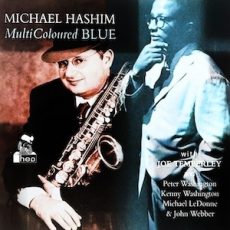
Michael James Hashim was born on April 9, 1956 in Geneva, New York. He began playing saxophone while in elementary school, then played with Phil Flanigan and Chris Flory as a high schooler. He worked with both into the middle 1970s.
In 1976 he toured with Muddy Waters and played with the Widespread Depression Orchestra, which he would later lead. Michael formed his own quartet in 1979, which has included Dennis Irwin, Kenny Washington, and Mike LeDonne as sidemen. In 1980 he toured with Clarence Gatemouth Brown.
Hashim played in New York City in the early 1980s with Roy Eldridge, Jo Jones, Brooks Kerr, Sonny Greer, and Jimmie Rowles. From 1987 he worked often with Judy Carmichael. The Nineties saw him touring China in 1992, and was one of the first jazz musicians ever to do so.
He worked with Flory through the 1990s, and toured North America and Europe regularly. In 1990 with his quartet he recorded Lotus Blossom, an album of Billy Strayhorn songs. In 1998 expanded this ensemble into 11 members as the Billy Strayhorn Orchestra.
Alto and soprano saxophonist Michael Hashim has been a member of the Raymond Scott Orchestra, a mainstay in the George Gee Orchestra, performs with The Microscopic Septet and continues to record as a leader and sideman..

More Posts: history,instrumental,jazz,music,saxophone
Daily Dose Of Jazz…
George Mesterhazy was born April 8, 1954 in Hungary and came to the United States with his family when they fled Hungary following their country’s 1956 revolution. Settling first in upstate New York, they later moved to Atlantic City, New Jersey where he first played guitar and trumpet.
Switching to piano he became a professional musician, relocated to Los Angeles, California but eventually became well known in the area of Cape May, New Jersey.
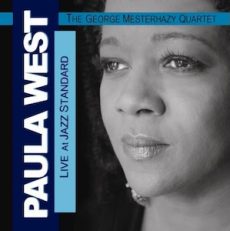
Mesterhazy had recently released a new album with singer Paula West, Live at Jazz Standard, and the pair was scheduled to play the New York club together in May.
He was nominated for a Grammy for his arranging work on Shirley Horn’s 1997’s Loving You album, on which he also played. George also played with Les Paul, Bernadette Peters and others.
At Rowan University he ran the jazz piano program, taught privately and managed Cape May’s Merion Inn. Pianist and composer George Mesterhazy died quietly in his sleep at his home in Cape May on April 11, 2019 of natural causes. He was 59.
More Posts: bandleader,composer,history,instrumental,jazz,music,piano

Daily Dose Of Jazz…
Harvey Wainapel was born in Ellenville, New York on March 31, 1951. Growing up in the small town in the Catskills, he started his musical journey on clarinet at the age of eight. By high school he discovered jazz by playing along with tunes on New York City radio stations. Longing to play saxophone he didn’t get his first horn, an alto, until his freshman year at the University of Pennsylvania. Working at the college radio station, he discovered the music of Cannonball Adderley, John Coltrane and Joe Henderson.
Initially intending to follow the family tradition of pursuing a career in medicine or science, he ended up taking the plunge into music at Berklee in 1971. It was a heady era, and Wainapel played with fellow students, guitarist John Scofield, pianist Kenny Werner, trumpeter Claudio Roditi, and tenor saxophonist Joe Lovano.
During his Boston years Harvey recorded and performed in Carnegie Hall with vibraphonist Gary Burton. After two years at Berklee he toured Tunisia with drummer Jamey Haddad, and made the trip to North Africa. Settling in Amsterdam, Netherlands he made a living before moving to Frankfurt, Germany with the HR Radio Big Band.
By 1979 he returned stateside, landing in New York City, and became enamored with Brazilian music. He quickly landed a gig playing with Thiago de Melo, alongside drummer Duduka da Fonseca, trumpeter Roditi and pianist Marcos Silva, the latter turning Wainapel on to other Brazilian artists. Not cut out for the city, he relocated to the San Francisco Bay Area, after a year on the road with Ray Charles. He became one of the most in-de-mand players in the region while keeping his European presence. Back at home, Wainapel can often be found playing Brazilian music, performing with Rio-born vocal improviser Claudia Villela.
Saxophonist and clarinetist Harvey Wainapel, who debuted as a leader with 1994’s At Home/On the Road, leads his own post-bop combos, freelances extensively, and performs with Beth Custer’s Clarinet Thing.

More Posts: bandleader,clarinet,history,instrumental,jazz,music,saxophone