

Daily Dose Of Jazz…
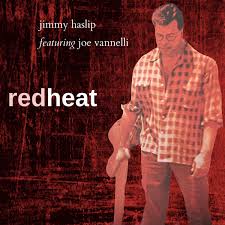
James Robert Haslip was born December 31, 1951 in the Bronx, New York City to Puerto Rican immigrants. Spanish was his first language but he learned to speak English in kindergarten. Moving to Huntington, New York when he was four years old, by age seven he was playing drums then trumpet and tuba until landing on the bass at 15.
Surrounded in the home with music that included classic and orchestra jazz, Latin, and pop vocals, he and his peers also visited nightclubs and concert venues. Jimmy took music lessons and attended a private music school, but considers himself self-taught. He went to a local music shop with his father, purchased a right-handed bass though he is left-handed, and learned to play it upside down without restringing.
During his high school years Haslip formed his first band called Soul Mine with his classmates, playing soul music at school dances and parties. The early 1970s saw him playing with New York glam band Street Punk, then moved to Los Angeles, California in 1976, where he played with guitarists Tommy Bolin and Harvey Mande.
A founding member of the jazz fusion group Yellowjackets in 1977, a relationship that lasted until 2012, he has also worked with Jeff Lorber, Eric Marienthal, Bruce Hornsby, Rita Coolidge, Gino Vannelli, Kiss, Tommy Bolin, Allan Holdsworth, Marilyn Scott, Chaka Khan, Al Jarreau, Donald Fagen, and Anita Baker.
Bassist Jimmy Haslip is currently taking a break from performance to concentrate on family and producing independent projects.

More Posts: bandleader,bass,history,instrumental,jazz,music
Daily Dose Of Jazz…
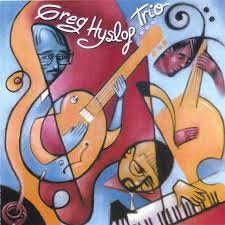
Greg Hyslop was born in Montgomery, West Virginia on December 27, 1951 but grew up in Greensboro, North Carolina since 1957, He graduated from Berklee College of Music in Boston, Massachusetts in 1977 and returned to his hometown to settle down and raise a family.
With his hollow-bodied electric guitar, Hyslop performs straight ahead jazz with a bebop flavor. To date he has released two recordings, his debut with Kenny Werner on piano and John Riley on drums is titled Manhattan Date in 1987. His sophmore recording, The Greg Hyslop Trio features pianist David Fox and bassist Charles Gambetta.
Guitarist Greg Hyslop, who has been a member of the groups Peace Chant and The Third Floor Orchestra, continues to be a long standing member of the piedmont North Carolina jazz community.
More Posts: bandleader,guitar,history,instrumental,jazz,music
Requisites
What Is This Thing Called Soul? ~ The Cannonball Adderley-Nat Adderley Quintet | By Eddie Carter
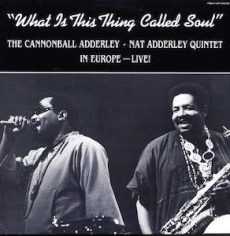
I revisited a few of my mom’s cherished albums a few nights ago. The first of them, this morning’s record from the library submitted for your approval, inspired today’s discussion. What Is This Thing Called Soul? (Pablo Live 2308-238) is a concise retrospective of three live performances by The Cannonball Adderley-Nat Adderley Quintet during their 1960 European Tour in Paris, France, Gothenburg, and Stockholm, Sweden. Released in 1984, the personnel for this live album are Nat Adderley on cornet, Cannonball Adderley on alto sax, Vic Feldman on piano, Sam Jones on bass, and Louis Hayes on drums. My copy is the original U.S. Stereo release.
Side One opens with Victor Feldman’s Azule Serape; the quintet sets things in motion with the effortlessly swinging melody. Cannonball is up first with a finger-snapping flight of pure joy. Nat provides the toe-tapping compliment in the following statement. Victor continues grabbing the listener in the third reading before the ensemble reassembles to take the song out, leaving the audience exhilarated. Cannonball takes a moment to announce the second tune, Big P, by Jimmy Heath, which turns the heat up significantly, beginning with Sam’s bass introduction to the group’s spirited theme. Cannonball is off to the races first with an inexhaustible flow of ideas. Nat follows with a solo full of energy ahead of the vigorous reprise and finale.
Cannonball quickly mentions Nat before presenting the next song, the cornetist’s One For Daddy-O, his tribute to the Chicago disc jockey, Daddy O-Daylie. The rhythm section starts with a relaxing introduction to the group’s laid-back theme. Cannonball’s opening solo is pleasant and friendly. Nat is as carefree as a day at the beach in the following reading preceding the out-chorus and ending. The second side opens with what Cannonball describes as a soul piece, The Chant by Victor Feldman. The ensemble starts the song with a happy melody, then steps aside for Cannonball’s funky opening statement. Nat emerges next with an enthusiastic performance; then Victor contributes an impressive interpretation before the quintet restates the theme.
What Is This Thing Called Love? by Cole Porter is a classic jazz standard from the thirties, or as Cannonball describes it in his introduction, What Is This Thing Called Soul? The quintet kicks off the melody vigorously; Cannonball then cooks up a storm in the opening statement so hard that the listener might need to check that their speakers aren’t on fire. Nat comes sailing in next and continues cruising down the road rapidly. Victor states his case in a furiously swinging solo, and then Louis engages in a heated exchange with Cannonball until the theme’s reappearance and climax. The ensemble launches into the melody of Cannonball’s Theme, where the saxophonist thanks the audience and reintroduces the group before the song ends as quickly as it began.
Cannonball and Nat Adderley produced What Is This Thing Called Soul? There’s no mention of who recorded these concerts, but I’m happy to say the album’s sound quality is excellent, allowing the listener to feel like they’re part of the French and Swedish audiences. My mom always loved Cannonball’s rapport with the crowd on his live albums, and his playing always possessed a soulful groove that got your fingers and toes tapping from the first note to the last. If you’re already a fan of both brothers and enjoy live hard-bop, I offer for your consideration What Is This Thing Called Soul? by The Cannonball Adderley-Nat Adderley Quintet on your next record hunt. It’s an overlooked but enjoyable album you won’t regret adding to your library!
~ What Is This Thing Called Love? – Source: JazzStandards.com
© 2024 by Edward Thomas Carter

More Posts: choice,classic,collectible,collector,history,instrumental,jazz,music,saxophone,trumpet
Daily Dose Of Jazz…
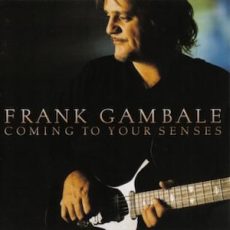
Frank Gambale was bornon December 22, 1958 in Canberra, Australia. He graduated from the Guitar Institute of Technology in Hollywood, California with Student of the Year honors and taught there from 1984 to 1986.
With the Mark Varney Project, consisting of Allan Holdsworth, Brett Garsed, and Shawn Lane, he recorded two albums, his debut Truth in Shredding in 1990 and his sophomore project Centrifugal Funk the following year.
1987 saw Frank spending six years as a member of the Chick Corea Elektric Band, playing with Eric Marienthal, John Patitucci, and Dave Weckl. With the band he recorded five albums and shared two Grammy Award nominations.
He spent twelve years as a member of Vital Information led by Steve Smith. He reunited with the Elektric Band in 2002 and with Corea in 2011 when he joined Return to Forever IV with Stanley Clarke, Jean-Luc Ponty, and Lenny White.
Gambale has been head of the guitar department at the Los Angeles Music Academy. He joined the Isina mentorship program as head of the guitar department in 2014. During the next year, he started an online guitar school.
Guitarist Frank Gambale has released twenty albums over a period of three decades, and continues to perform and teach.
More Posts: bandleader,guitar,history,instrumental,jazz,music
Daily Dose Of Jazz…
Jeremy Bacon was born in New York City, New York on December 16, 1959 into a musical family that were big jazz fans. His father sang with the New York Choral Society and The Occasional Singers, an avant-garde group led by folk singer Gil Robbins. Her uncle designed album covers for Thelonious Monk, Cannonball Adderley and numerous others for Riverside Records.
Taking piano lessons as a child he went on to study in high school at the Center for Open Education and then jazz improvisation and composition at Oberlin. After college, Jeremy became the protégé of pianist Don Pullen. He worked regularly in a trio led by bassist Charles Fambrough, which rotated drummer Jeff “Tain” Watts, trumpeters Johnny Coles and Michael Philip Mossman, saxophonists Joe Ford and Ralph Bowen, and guitarist Pat Martino.
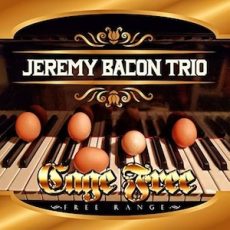
He was musical director for Joey Arias’ Billie Holiday show at Carnegie Hall and accompanied many vocalists, including Kristin Chenoweth and Jeanie Bryson, daughter of Dizzy Gillespie. He recorded two albums as a leader Cloud Hands and Cage Free: Free Range, and Travels with the band Big Train. Bacon lent his talents to three recordings with saxophonist Joey Cavaseno, and one with vocalist Queen Esther.
Having established himself on the East Coast, a move to the Pacific Northwest in 2018 opened a new audience, performing regularly as a leader and accompanist. He taught piano on the faculty of Cornish College of the Arts, accompanied dance classes in the theater department, and performed with Seattle JazzED at many regional elementary schools.
Jazz pianist Jeremy Bacon died at Franciscan Hospice House in Tacoma, Washington on July 8, 2024, after months of treatment for metastatic colon cancer. He was 64 years old.
More Posts: bandleader,history,instrumental,jazz,music,piano