

Daily Dose Of Jazz…
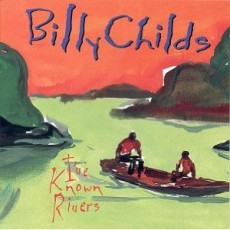
Billy Childs was born William Edward Childs on March 8, 1957 in Los Angeles, California and began piano lessons when he was six. By age 16 he started attending the Community School of the Performing Arts, a prestigious music program sponsored by the University of Southern California, in which he ultimately attended in 1975.
Playing professionally as a teenager, he made his recording debut in 1977 with the J. J. Johnson Quintet’s Yokohama Concert during a tour of Japan. He would gain significant attention during his six-year stint playing with trumpeter Freddie Hubbard’s group from 1978 to ’84.
His early playing influences were Herbie Hancock, Keith Emerson and Chick Corea and in his composing came by Paul Hindemith, Maurice Ravel and Igor Stravinsky. Adept in both the jazz and classical idioms, Childs develop his own voice with an original conception near the start of his career. His solo recording career began in 1988 with the release of Take for Example, This… the first of four critically Windham Hill Jazz label. He would go on to record two albums for Stretch/GRP and Shanachie.
In 2000 Childs arranged, orchestrated and conducted for Dianne Reeves’ project The Calling: Celebrating Sarah Vaughan that won a Grammy for Best Jazz Vocal. He has also arranged for Sting, Yo-Yo Ma, Chris Botti, Gladys Knight, Michael Bublé, David Foster, Phil Ramone and Claudia Acuna.
Billy’s 2005 “Lyric, Jazz-Chamber Music, Vol. 1”, a jazz chamber music ensemble recording, influenced by the Laura Nyro-Alice Coltrane collaboration, garnered three Grammy nominations. He has received a Guggenheim Fellowship, and Chamber music grant, and has been commissioned for more than a dozen jazz and classical compositions and arrangements.
Pianist Billy Childs has been nominated for seven Grammys, of which he has won six. He has fifteen albums to his leader roster with his latest album, The Winds Of Change, was released in 2024. He continues to make music on stage and in the studio.
More Posts: piano
Daily Dose Of Jazz…
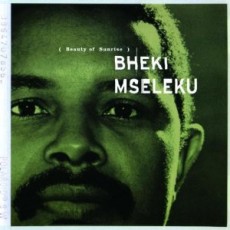
Bheki Mseleku was born Bhekumuzi Hyacinth Mseleku on March 3, 1955 in South Africa. Entirely self-taught, though his father was a musician and teacher, his religious belief denied musical access to his children. Growing up in Apartheid he was subjected to restricted healthcare and lost the upper joints of two fingers in a go-karting accident.
His musical career began in Johannesburg in 1975 as an electric organ player for the R&B band Spirits Rejoice. After performing at the Newport Jazz Festival in 1977, Mseleku settled in Botswana for a time, then moved to London in the late 1970s. He attempted to settle into the jazz scene in Stockholm from 1980 to 1983, but returned to London. It was not until 1987 that Bheki made his debut at Ronnie Scott’s Jazz Club, playing piano unaccompanied by other musicians, with a saxophone in his lap that a wider audience became familiar.
With the release and notoriety of his 1991 debut album Celebration, and subsequent nomination for a Mercury Music Prize that Verve Records signed him for several albums. The first of these featured Joe Henderson, Abbey Lincoln, and Elvin Jones.
Twelve years and five albums later Bheki recorded his final session “Home at Last” in 2003, having spent most of his last years in South Africa. He never found an outlet for his skills and established a new band in London that was very well received by fans. Over the course of his life Bheki Mseleku lived with diabetes and on September 9, 2008 the pianist, saxophonist, guitarist, composer and arranger passed away in his London flat at age 53.

Daily Dose Of Jazz…
Claire Daly was born on February 26, 1959. At the age of 12 she began playing the saxophone and was soon turned onto jazz by way of a live performance by the Buddy Rich Big Band. She went on to attend Berklee College Of Music and upon graduation she became a full-time professional musician.
In the late 70s and early 80s Claire played with various groups in the jazz and rock arenas, and her powerful tenor saxophone suited the latter perfectly. However, playing more jazz than rock, Daly switched to the baritone saxophone and has worked in New York City since the mid-80s.
>A seven-year association with the all-female big band, Diva, was followed with her working with People Like Us. Daly’s versatility moves between jazz, R&B and Latin, releasing two CDs as a leader for Koch Records and three on her own label DalyBread.
Her influences include Rahsaan Roland Kirk and Sonny Rollins and, on baritone, Serge Chaloff, Ronnie Cuber and Leo Parker. She has performed with Aretha Franklin, James Brown, Joe Williams, and Rosemary Clooney among many others, and her first CD Swing Low resides in the William Jefferson Clinton Library in Little Rock, Arkansas.
Claire Daly, a gifted improviser whose rich tone and emotional depth has earned her a place as a respected member of the baritone saxophone family, continues to lead her own jazz groups and to pass the gift of music on to the next generation.
Diagnosed with head and neck cancer in 2023, baritone saxophonist and composer Claire Daly died at the residence of a friend in Longmont, Colorado, on October 22, 2024, at the age of 66.
More Posts: saxophone
Daily Dose Of Jazz…
Jean-Paul Maunick was born February 19, 1957 in Mauritius to poet Edouard Maunick. At the age of nine his family moved to the United Kingdom and learning to play the guitar began his journey in music.
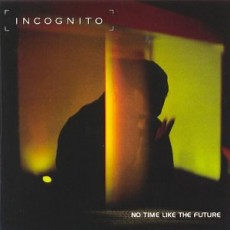
A founding member of the group Light of the World, Maunick formed the British acid jazz band Incognito in 1979 and released his debut album “Jazz Funk” in 1981. Bluey, as he is known to most, has fused funk, R&B, Brazilians rhythms and soul into a sound that has captured and kept the world’s attention. In addition to releasing fourteen studio albums as well as several live albums, remix albums and compilation albums.
His group dynamic has changed over the years as he has brought singers Jocelyn Brown, Carleen Anderson, Tony Momrelle, Imaani, Maysa Leak Kelli Sae of Count Basic and Joy Malcom to take the lead vocal position. His record production credits include artists such as Paul Weller, George Benson, Maxi Priest, and Terry Callier, having also collaborated with Stevie Wonder.
Guitarist, bandleader, composer and record producer Jean Paul Maunick, better known as Bluey, continues to explore new directions in music performing and touring worldwide.
More Posts: guitar
Requisites
Tubby Hayes and The Jazz Couriers Featuring Ronnie Scott | By Eddie Carter
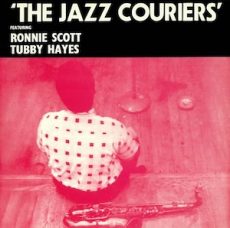
This morning’s album from the library is Tubby Hayes and The Jazz Couriers (Tempo TP 15), a 1958 release by a British quintet inspired by Art Blakey and The Jazz Messengers. The group lasted only two years, but in that time, they produced some of the best hard-bop jazz in the United Kingdom. The ensemble on this date consists of Jimmy Deuchar (tracks A1, B3) on trumpet; Tubby Hayes on tenor saxophone and vibraphone (tracks A2 to A4, B3); Ronnie Scott on tenor saxophone; Terry Shannon on piano; Phil Bates on bass; and Bill Eyden on drums. The copy I own is a 1982 U.K. mono reissue (Jasmine JASM 2004).
The album kicks off and wraps up with a quick burst of Sonny Stitt’s The Theme, driven by both saxes and ends as quickly as it starts. The opener is “Through The Night Roared The Overland Express,” by Tubby Hayes. A happy original that opens with a steady beat and splendid work by the ensemble during the melody. Tubby is up first and gives an enthusiastic lead solo, then Jimmy takes a robust turn. Ronnie brings a rush of excitement to the third reading, and Terry swings joyfully before the sextet reunites for the closing chorus. The quintet introduces On A Misty Night, by Tadd Dameron, with a gentle melody. Ronnie embraces the opening solo warmly, then Tubby radiates heartfelt sincerity with his vibes. Terry and Phil share a thoughtful reading of refined elegance that gently leads to a loving finish.
“Plebus, by Tubby Hayes, is dedicated to Tony Hall and shifts the beat to a medium groove, allowing the front line to state the melody. Ronnie takes the lead this time, cruising at a comfortable speed. Tubby’s vibraphone flows effortlessly through the second reading next. Terry keeps the infectious beat going with finesse, followed by Tubby on tenor sax, who has a short say, then both horns engage in a brief exchange ahead of the close. Hank Mobley’s Reunion sets the beat to an uptempo pace for the quintet’s brisk theme, with Hayes on vibes during the opening melody and the out-chorus. Ronnie charges into the lead solo first; next, Tubby delivers a torrent of electrifying notes. Terry follows his colleague with feisty agility, and Bill has a spirited exchange with both horns ahead of the reprise and close.
Oh, My! by Allan Ganley opens Side Two with a lively ensemble theme that conveys the joy and pleasure the horns feel as it unfolds. Tubby launches into the opening solo vigorously. Terry comes right behind him with a spirited performance. Ronnie next takes center stage with a series of fiery verses, then both saxophonists share a vibrant finale, leading to the closing chorus. A Foggy Day, by George and Ira Gershwin, begins with a tender melody led by the front line. Tubby strolls into the opening solo with a beautifully sincere performance, then Ronnie builds the following statement gently. Terry evokes a warm glow of elegant sincerity next, and Phil takes a delicately intimate walk before the alluring theme returns.
Tubby Hayes’ Royal Ascot takes its name from Ascot Racecourse, and brings back Jimmy Deuchar to the group with Hayes, back on vibes. The infectiously charming tune begins with the ensemble’s lively opening chorus. Tubby is up first with an energetic bounce, then Jimmy responds with an invigorating reading that is sadly over before you know it. Ronnie takes the next spot with a brisk statement, and Terry follows with a swift chorus ahead of the theme’s return. Cheek To Cheek by Irving Berlin takes off at breakneck speed from the ensemble’s melody. Tubby leads off with passionate intensity. Ronnie then delivers a dazzling, high-octane solo. Bill wraps up this exhilarating ride with a fiery conversation between both saxophones, leading to a powerful finish with The Theme’s reprise.
Tony Hall supervised the initial session, and Bert Steffans and Cyril Windobanks are the talented individuals at the recording console. The sound quality is crisp with an impressive soundstage emerging from your speakers with stunning fidelity. The album recaptures the spirit of hard bop at its best by two of Britain’s top saxophonists, Tubby Hayes and Ronnie Scott, alongside the excellent rhythm section. My only issue with this reissue is Jasmine’s choice to apply a pink filter to the original black-and-white photo of Hayes sitting at the bandstand that Tempo used for the original release. That issue aside, “Tubby Hayes and The Jazz Couriers” is an album that still stands up over six decades later and is well worth adding to your jazz library!
~ A Foggy Day, Cheek To Cheek – Source: JazzStandards.com © 2026 by Edward Thomas Carter

More Posts: choice,classic,collectible,collector,history,instrumental,jazz,music,saxophone