

Requisites
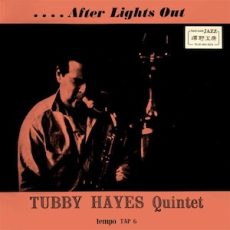
After Lights Out ~ Tubby Hayes Quintet | By Eddie Carter
This morning’s spotlight shines on a 1956 release by the Tubby Hayes Quintet, After Lights Out (Tempo TAP 6). It was Tubby’s seventh release as a leader, showcasing his growing influence in jazz. Teddy was born on January 30, 1935, in St. Pancras, London, and grew up in the Raynes Park neighborhood in the southwest of the city. His father, a talented violinist at the BBC studios, started teaching him the instrument when he was very young. By the time he was ten, he was also playing the piano, and at eleven, he took up the tenor saxophone. One of his earliest musical inspirations was the trumpeter Dizzy Gillespie. He’s joined on this date by Dickie Hawdon on trumpet, Harry South on piano, Peter Elderfield on bass and Bill Eyden on drums. The copy I own is the 2011 Japanese limited-edition mono reissue, sharing the original catalog number.
Side One kicks off with Ode to Ernie by Harry South. The quintet brings this upbeat tune to life with their brisk melody. Hawdon leads the way with a spirited solo, then Hayes takes the next performance for a lively ride. Young adds the exclamation mark with a concise comment before the ensemble returns for the closing chorus, including a short remark by Eyden. No, I Woodyn’t by Tubby Hayes is built on the changes of “Woody ‘n You,” by Dizzy Gillespie, and the group begins with a Latin-flavored theme. Tubby sinks his teeth into the opening statement, then Hawdon follows with a happy tone that’s sure to get your toes tapping. Young takes the reins next and delivers a delightful performance. Both horns share a short conversation with Eyden before his first solo of the set ahead of the closing ensemble.
Up next is Foolin’ Myself, a beautiful and little-known ballad by Jack Lawrence and Peter Tinturin. The front line takes the lead for a warm, affectionate melody. Hawdon opens with a thoughtfully tender solo, then Hayes unfolds a sensuously sweet statement, while the rhythm section provides a lush foundation, leading into the gentle reprise and close. The first side ends with a lightly swinging rendition of Nicole by Howard McGhee. The quintet sets the song’s tone with the easy-flowing theme. Hayes comes out cooking in the opening solo, then Hawdon builds on what Hayes began with a few attractive ideas. Young takes charge next in the third statement, then steps aside for Hayes and Hawdon, who engage in a brief exchange. The full ensemble returns for the theme’s reprise, during which Eyden has a short workout.
The quintet opens the second side with Message to the Messengers by Harry South, a leisurely-paced melody that gets things started. Hayes is up first with a bluesy interpretation that gets things off to a good start. Hawdon takes over on muted trumpet and provides a tremendous compliment to the saxophonist. Young brings out the best in the third reading, and Elderfield makes a brief point during the theme’s restatement. Hall Hears The Blues by Harry South is the pianist’s tribute to Tony Hall’s Record Mirror weekly jazz column. The trio’s introduction and melody segues into Young’s opening statement. Hayes follows with a model of melodic creativity; next, Hawdon treats us to authentic down-home cooking in a soulful solo. The front line shares a carefree exchange before Elderfield has the last word, before the group takes the song out.
Tony Hall supervised the session and wrote the album’s liner notes. Bert Steffens was behind the dials of the recording console. The album’s sound quality is superb, with a stunning soundstage that transports listeners to the studio where the musicians are performing. Tubby Hayes amassed a large discography as a leader and worked with many elite musicians, including co-leading The Jazz Couriers with Ronnie Scott. If you’re in the mood for an excellent hard bop album by one of the best British saxophonists, I offer for your consideration After Lights Out by the Tubby Hayes Quintet, the next time you’re out record-shopping. It’s a terrific album to enjoy with family and friends after dinner, or to have on hand for a quiet moment alone after the lights are out!
© 2026 by Edward Thomas Carter

More Posts: choice,classic,collectible,collector,history,instrumental,jazz,music,saxophone
Requisites
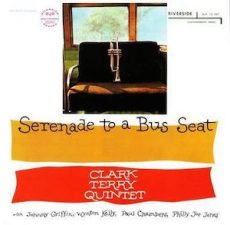
Serenade To A Bus Seat ~ Clark Terry Quintet | By Eddie Carter
This morning’s spotlight shines on a remarkable trumpeter who, in my view, always delivered flawless performances. Serenade To A Bus Seat (Riverside RLP 12-237) by the Clark Terry Quintet is the subject of this discussion. Clark enjoyed an illustrious career performing with Charlie Barnet, Count Basie, Duke Ellington, Quincy Jones, and Oscar Peterson. He was also a member of The Tonight Show Band from 1962 to 1972. Terry’s influence extended far beyond his performances; his jazz career spanned more than 70 years, and he became one of the most-recorded jazz musicians, appearing on more than 900 recordings. He also mentored Terry Lyne Carrington, Miles Davis, Herbie Hancock, Quincy Jones, Wynton Marsalis, Pat Metheny, and Dianne Reeves.
On his third album as a leader, Clark Terry is working with Johnny Griffin, tenor saxophone; Wynton Kelly, piano; Paul Chambers, bass; and Philly Joe Jones, drums. The copy I own is the 1977 Riverside Original Recording Series Japanese mono reissue (SMJ-6209M) by Victor Musical Industries. The opener, Donna Lee by Charlie Parker, begins with Philly’s introduction ahead of the quintet’s brisk melody. Johnny ignites the first solo with bursts of passionate fire, then Clark and Philly share an energetic conversation. Kenny caps off the solos with an impressive display of vibrant energy ahead of the group’s lively closing chorus and dead stop.
Boardwalk by Clark Terry is a blues that begins with an enjoyable, medium-tempo theme by the ensemble. Terry opens with a poised, almost dignified solo, then he engages in a friendly exchange of ideas with Griffin. Kelly then provides the exclamation point with a laid-back interpretation before the group reconvenes for the climax. Terry’s second creation, Boomerang, is a lively little original that takes off with the front line’s melody in unison. Clark gives his undivided attention to the opening solo, then Johnny enters and simply swings. Wynton follows with a strong statement that’s a joy to listen to. Paul takes a short walk preceding the group’s return to the theme’s reprise and close.
Digits by Clark Terry turns the temperature down for an easygoing theme by the ensemble. Terry steps up first to give a relaxing solo, then shares the next happy statement with Griffin. Kelly wraps up everything with a leisurely reading until the quintet returns for the closing chorus. The title tune, Serenade To a Bus Seat by Clark Terry, is a swinging homage to the trips musicians took from city to city with big bands. It’s off to the races with the ensemble’s melody, then Johnny is up first to ignite the first solo with passionate fire. Clark meets the challenge with an effervescent interpretation. Wynton gets the last spot and handles it comfortably before the front line’s fine blowing signals the end.
Hoagy Carmichael and Mitchell Parish’s classic, Stardust, is one of the most recorded songs in history. Both horns deliver a gentle introduction leading to Terry’s delicately phrased melody. Terry and Griffin are the featured soloists, and both turn in two beautiful solos that complement each other until the theme returns and the song ends softly. Cruising by Clark Terry opens with an easy-flowing theme led by both horns, before stepping aside for Johnny to lead off with an excellent first solo. Clark speaks his piece in the following statement, then Wynton follows at an unhurried pace, leading to the restatement of the theme and climax.
That Old Black Magic by Harold Arlen and Johnny Mercer is an old favorite from 1942 that first appeared in the film, “Star Spangled Rhythm.” The quintet wraps the album up in a bow with a short Latin rendition, which begins and ends with Terry using a cowbell and Griffin on the claves. In between, both Terry and Griffin, on trumpet and tenor sax, make swinging comments. Orrin Keepnews produced the initial session, and Jack Higgins was behind the recording console. The Victor Japanese mono reissue is a delight to hear, with a breathtaking soundstage that places the musicians in your listening room’s sweet spot with stunning fidelity.
For anyone who admires Clark Terry or is just beginning to discover his discography and enjoys hard bop, I strongly recommend picking up Serenade To a Bus Seat by the Clark Terry Quintet the next time you’re at your favorite record store. It’s a fabulous album that should make a meaningful addition to any jazz library, especially for those who appreciate the artistry of a masterful trumpeter!
~Stardust, That Old Black Magic – Source: <ahref=”http://jazzstandards.com”>JazzStandards.com
More Posts: choice,classic,collectible,collector,history,instrumental,jazz,music,trumpet
Requisites
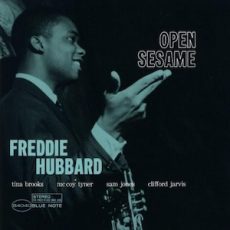
Open Sesame ~ Freddie Hubbard | By Eddie Carter
I’ve been a huge Freddie Hubbard fan since I was ten years old, and he’s always been one of my favorite trumpet players. It was while listening to a few of his albums that the inspiration for this morning’s discussion was born. Submitted for your consideration is his first release as a leader, a 1960 release, Open Sesame (Blue Note BLP4040/BST 84040). Freddie was 22 years old when he recorded it, and he’s joined by an excellent ensemble: Tina Brooks on tenor saxophone, McCoy Tyner on piano, Sam Jones on bass, and Clifford Jarvis on drums. The copy I own is the 1999 Classic Records U.S. stereo audiophile reissue sharing the original catalog number.
The title tune, Open Sesame by Tina Brooks, gets the first side off to a good start with the rhythm section’s intro to the quintet’s lively theme. Freddie launches into the first solo with vigorous zest. Tina follows him into the second statement enthusiastically, then McCoy explores the third reading at a consistently high level before the group reassembles for the closing chorus and ending. But Beautiful by Jimmy Van Heusen and Johnny Burke is a pretty ballad whose gentle melody begins with Freddie leading the group. Brooks starts the first solo gracefully, then Tyner continues with a wonderfully rich interpretation. Hubbard shares the song’s final elegant reflection, leading to the ensemble’s reprise and tender close.
Gypsy Blue by Tina Brooks is a medium blues that the quintet brings to life with an easygoing melody. Tina starts the opening solo at an unhurried pace, then Freddie takes over, giving a soulful interpretation. McCoy follows, feeding fresh ideas into the third statement, and Sam takes a carefree walk toward the ensemble’s restatement of the theme and fadeout. Tyner’s introduction sets the stage for the group’s speedy melody of All or Nothing at All by Arthur Altman and Jack Lawrence. Hubbard flies swiftly out of the gate first, then Brooks swings to perfection next. Tyner follows with a spirited statement, and Hubbard and Jarvis share a short exchange preceding the group’s return to the theme.
The trio’s bluesy introduction segues to the ensemble’s relaxed theme, One Mint Julep by Rudolph Toombs. Tina opens with a laid-back swing as comfortable as a favorite outfit. Freddie follows, demonstrating great poise and precision in every note. McCoy then steps into the spotlight for a few easy, flowing lines before the theme returns and the song fades out. The closer is a toe-tapper original by Freddie Hubbard, Hub’s Nub. After the sextet establishes the theme, Freddie takes the lead and constructs a joyous interpretation. Tina is right on his heels with a sprightly statement, and McCoy gets the last word before the theme’s reprise and fadeout.
The original session was produced by Alfred Lion, with Rudy Van Gelder at the controls. The Classic Records audiophile edition was expertly remastered by Bernie Grundman, delivering exceptional audio quality and an outstanding soundstage that places the musicians right in your listening room. Pressed on 180-gram vinyl, the record is perfectly quiet until the music fills the room. Fans of Freddie Hubbard’s Blue Note releases will find this album essential for their library. Open Sesame is a remarkable showcase of musicianship, and this album marks the beginning of a remarkable career. It’s also a title I’m proud to own and wholeheartedly recommend for your shelves!
~ But Beautiful – Source: JazzStandards.com ~ All or Nothing at All – Source: Wikipedia.org © 2026 by Edward Thomas Carter
More Posts: choice,classic,collectible,collector,history,instrumental,jazz,music,trumpet
Requisites
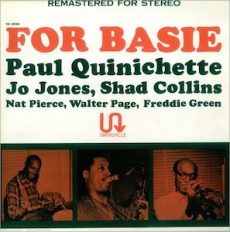
For Basie ~ Paul Quinichette | By Eddie Carter
A few nights ago, with rain falling and a cold atmosphere outside, it felt like the ideal moment to listen to a favorite album by tenor saxophonist Paul Quinichette. For Basie (Prestige PRLP 7127), first released in 1958, is a great “blowing session” of the 1950s and a heartfelt homage to Count Basie, offering memorable tunes and lively arrangements by pianist Nat Pierce. The group features two alumni from Basie’s band, showing that these jam sessions were anything but rushed or lacking in artistic merit. Rounding out the sextet are Shad Collins on muted trumpet (tracks: A1, A2, B2) and trumpet (tracks: A3, B1, B2), Freddie Green on guitar, Walter Page on bass, and Jo Jones on drums. The copy I own is the 1963 remastered stereo reissue (Prestige Swingville SVST 2036).
Side One opens at a relaxing beat with Rock-a-Bye Basie by Count Basie, Shad Collins and Lester Young. Nat opens with a short introduction, segueing into Shad's leisurely-paced melody, with Paul playing behind him. Paul’s opening solo is cool and inviting, then Shad comes in on muted trumpet like a gentle breeze on a summer night. Nat sums it up with a friendly reading, returning to the theme’s restatement and a soft conclusion. Texas Shuffle by Herschel Evans and Edgar Battle turns up the heat significantly, beginning with Pierce and Jones’ quick introduction ahead of the ensemble’s speedy melody. Quinichette takes the lead first, then Collins, again using a mute, takes over for a quick run. Quinichette has a short conversation with Jones, and Pierce has the last word before the group ends softly.
Out The Window, by Count Basie and Eddie Durham, was first recorded by Basie’s band in 1937. The sextet pays homage, with the front line featuring Shad on the open horn, leading the mid-tempo melody. Shad struts boldly into the opening statement. Paul follows with a solo that soothes as it swings, then Nat strolls into the third reading with finesse, leading to a lengthy theme reprise with quick comments by Paul and Jo before the close. The group starts Side Two with Jive at Five by Count Basie and Harry Edison, which opens at an easygoing beat for Jones, Pierce, and Page’s introduction to the ensemble’s melody. Quinichette takes the lead here at an unhurried pace. Collins steps up next, still on the open horn with an easily flowing solo. Pierce continues moving along toward the sextet’s closing chorus.
Digging For Dex by Count Basie and Eddie Durham is their tribute to former “Down Beat” editor, Dave Dexter. Nat continues the easygoing pace, leading the rhythm section through the introduction, segueing to the sextet’s theme with Shad still on the open horn. Paul has the first say and makes the most of each note. Shad steps into the spotlight next for some muted work, then Nat takes over and cruises comfortably toward the ensemble’s laid-back climax. Bob
Weinstock supervised the session, and Rudy Van Gelder managed the recording console. I was pleasantly surprised by the reissue’s sound quality, especially for a remastered stereo album from the 50s. The soundstage is excellent, and brings the listener to the studio as the musicians perform.
In my opinion, For Basie captures the essence of Count Basie’s music, allowing each musician in the ensemble to shine. With Quinichette leading the sextet and his subtle homage to Lester Young in his playing, hence his nickname, The Vice Pres pays a respectful tribute to Basie’s legacy, blending nostalgia with innovative interpretations. The seamless chemistry between Collins, Pierce, Green, Page, and Jones elevates each tune into a stellar example of jazz artistry. If you enjoy swing, big band jazz, or have a soft spot for the tenor sax as I do, I invite you to check out Paul Quinichette’s For Basie on your next record-shopping trip. It’s a delightful album that’s perfect for listening to at any time of day or night, a real joy for jazz fans, and a title well worth adding to your library!
© 2026 by Edward Thomas Carter
More Posts: choice,classic,collectible,collector,history,instrumental,jazz,music,saxophone
Daily Dose Of Jazz…
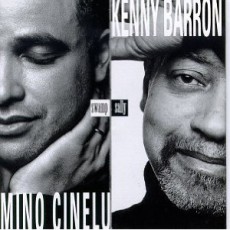
Mino Cinelu was born on March 10, 1957 in Saint-Cloud, Haute-de-Seine and was introduced to music as a child playing percussion in concert halls in the suburbs of Paris. He became interested in jazz, rock, salsa eventually expanded into fado, flamenco, African, Japanese and other varieties.
His first instrument was the bongo drums, which led him to decide to try and live from his music. He often played the bongos in the streets experimenting with improvisation. By the end of the 1970s he became more and more interested in the French jazz-fusion scene working with Jef Gilson, Chute Libre and Moravagine
In 1979 Mino moved to New York, met George Benson, Wayne Shorter, Kenny Barron and Cassandra Wilson, added new instruments to his repertoire, and was soon joining Miles Davis on tour. This recognition led Joe Zawinul asking him to be a part of Weather Report during which time he began composing with the help of Wayne Shorter and Zawinul.
Cinelu also played with Michel Portal prior to beginning his solo career in the 1990s with his self-titled debut album Mino Cinelu was released in 2000, followed by Quest Journey in 2002 and La Californie in 2006. He continues to compose, record and perform.
More Posts: percussion