

Daily Dose Of Jazz…
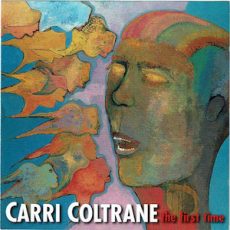
Carri Coltrane was born Carrie Thompson in Phoenix, Arizona on March 14, 1953. Singing professionally since childhood, she was only nine when she joined Wallace & Ladmo, a children’s program that was founded by her father. The program aired in the Phoenix Area from 1954 to 1989 and she remained with the show until she reached adolescence and outgrew her role as a little girl singer.
She moved to Seattle, Washington in 1979 and went on to sing with various rock and pop bands as an adult, and did quite a few jingles for commercials along the way. While living in Seattle she met Eugene McDaniels who really encouraged her to explore straight-ahead jazz. Carri eventually became friends and partners with McDaniels and formed Numoon Publishing with him. They have put out several allbums on the Numoon label that included jazz, contemporary pop and Christmas music.
Carri released her self-titled debut album in 1980 under her birth name. It wasn’t until 1986 that she started going by Carri Coltrane as an homage to the tenor saxophonist. She moved to New England in 1987.
Vocalist Carri Coltrane, whose subtle waifish introspection continues to perform, record and publish her music.

More Posts: bandleader,history,instrumental,jazz,music,publisher,vocal
Requisites
1957 ~ Red Rodney | By Eddie Carter
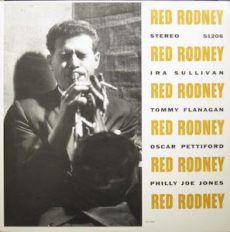
Red Rodney enters the spotlight to begin this morning’s discussion with 1957 (Signal S 1206), his second release as a leader. He was born in Philadelphia, Pennsylvania, and began playing the trumpet professionally at age fifteen, appearing in some of the best big bands during the Forties. Red later began playing Bebop after hearing Dizzy Gillespie and Charlie Parker. He played with Gillespie, Woody Herman, Gene Krupa, Ira Sullivan, and Claude Thornhill and was part of Parker’s quintet for two years. Ira Sullivan on tenor sax (A1 to A3, B2, B3) and trumpet (B1), Tommy Flanagan on piano, Oscar Pettiford on bass, ‘Philly’ Joe Jones (A1 to A3), and Elvin Jones (B1 to B3) on drums complete the ensemble. My copy is the 1997 Classic Records Stereo audiophile reissue sharing the original catalog number.
Star Eyes by Gene de Paul and Don Raye opens the album with Red taking the lead at a relaxing tempo in the melody and opening chorus. Ira gets his teeth into the second statement and swings comfortably, then Tommy strolls into the next reading with intuitive ease. Oscar has the last say and glows in a delightful performance before the quintet reassembles for the closing chorus and climax. Up next is a beautiful rendition of You Better Go Now by Robert Graham and Bickley Reichner. The rhythm section provides the perfect backdrop for Rodney’s elegantly tender opening chorus and lead solo. Sullivan follows with a sensuously warm statement, then Flanagan and Pettiford turn in two touching interpretations leading to a graceful ending.
The first side finale, Stella By Starlight by Victor Young and Ned Washington, begins with a brief introduction by Philly, leading to the quintet’s lively melody. Ira kicks off the solos with a spirited opening statement. Red makes his mark next with an aggressive interpretation. Tommy delivers the third reading with evident enjoyment, and Philly shines in a short solo ahead of the song’s conclusion. Side Two starts with Red Arrow, the first of two tunes by Red Rodney. Sullivan is featured on trumpet, and Elvin Jones takes over on drums. Rodney and Sullivan begin the melody briskly; then, Red opens with a vigorous first solo. Flanagan provides a brief break; then Ira gives a quick, pulse-raising reading. After Flanagan’s second break, the two trumpets share an invigorating exchange before a speedy closing chorus.
Red’s Box 2000 is a blues that Oscar introduces before the front line delivers the medium-tempo melody in unison. Ira launches into a well-constructed opening statement, and Red excels on the second interpretation; then Tommy and Oscar share a swinging conversation, and Jones engages in a short exchange with both horns ahead of the theme reprise and exit. The finale is Oscar Pettiford’s Ubas, dedicated to conga player Sabu Martinez. This song is festive from the opening chorus, and Sullivan kicks off the solos with a happy lead solo, and Rodney responds with a joyful spirit in the second statement. Flanagan has a jubilant moment next, and Elvin provides a bit of propulsive energy in the finale preceding the theme’s return and close.
Jules Colomby, the founder of Signal Records, supervised the initial session of 1957, and Rudy Van Gelder was the recording engineer. Bernie Grundman remastered this reissue, and the record was pressed on 180 grams of audiophile vinyl. The sound quality is superb, with a breathtaking soundstage that transports the musicians to the sweet spot in your listening room with stunning fidelity. Despite his struggles with drug addiction, Red recorded twenty-four albums as a leader and appeared on twelve releases as a sideman over a five-decade career. He died from lung cancer at age sixty-six on May 27, 1994. If you’ve not heard Red Rodney before and are a fan of jazz trumpet, I invite you to check out 1957 or its two reissues, Fiery (1973) and The Red Arrow (1972), on your next vinyl shopping trip. It’s an excellent album that’s a welcome introduction to his music and an addition to any jazz lover’s library!
~ Fiery (Savoy Records MG 12148), The Red Arrow (Onyx Records ORI 204) – Source: Discogs.com ~ Star Eyes, Stella By Starlight – Source: JazzStandards.com © 2023 by Edward Thomas Carter

More Posts: choice,classic,collectible,collector,history,instrumental,jazz,music,trumpet

Daily Dose Of Jazz…
LaDonna Smith was born on March 2, 1951 in Birmingham, Alabama. She learned to play violin and went on to perfect viola and piano. Since 1974 she has been performing free improvisational music with musicians Davey Williams, Leland Davis, Michael Evans, Gunther Christmann, Anne Lebaron, Derek Bailey, Eugene Chadbourne, Misha Feigin, Michael Evans, David Sait, Jack Wright, John Russell, Sergey Letov, Toshi Makihara, Andrew Dewar and many other world major improvisers.
As a performer, she has toured the United States, Canada, Europe, Russia, Siberia, Korea, India, China and Japan. She produced concerts and festivals in Alabama and the Southeast, including the Birmingham Improv Festival and The Improvisor Festival. She serves on the Board of Directors of the International Society of Improvised Music (I.S.I.M.).
In 1976, Smith co-founded TransMuseq Records with Davey Williams. She is editor-in-chief and publisher of The Improvisor magazine which began in 1980 as an extension of The Improvisor’s Network, a grass-roots organization in New York City that attempted to connect improvising musicians across America. She is a member of the Fresh-Dirt collective (Alabama Surrealism).
Avant garde violinist, violist, and pianist LaDonna Smith, who has recorded 37 albums, continues to perform and record.
More Posts: bandleader,history,instrumental,jazz,music,piano,viola,violin
Requisites
Overseas ~ Tommy Flanagan Trio | By Eddie Carter
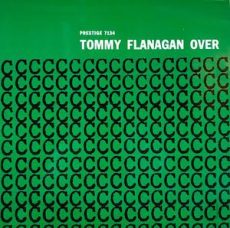
Tommy Flanagan steps into the spotlight of this morning’s discussion with Overseas (Prestige PRLP 7134/PRST 7632), recorded during his 1957 tour with J.J. Johnson and released the following year. The pianist works with Wilbur Little on bass and Elvin Jones on drums on this album. My copy is the 2012 Analogue Productions US Mono audiophile reissue sharing the original catalog number. The album starts quickly with Relaxing at Camarillo by Charlie Parker. It was named for Bird’s six-month stay at Camarillo State Hospital, where he recuperated from drug addiction. Tommy takes off on the opening solo briskly. Wilbur’s bass walks lively on the next reading, then Elvin caps off the closing presentation, exchanging exquisite brushwork with Tommy ahead of the theme reprise and climax.
Chelsea Bridge by Billy Strayhorn is one of his best-loved compositions. Flanagan is the single soloist, and the pianist gives a gorgeous interpretation emphasizing his light touch. Eclypso, Flanagan’s first of six originals, has a Caribbean-flavored rhythm on the melody and closing chorus. Tommy offers a cheerfully bright mood in the opening solo, and Elvin shares an exuberant exchange with Flanagan before the song fades gracefully. Tommy’s tune Beat’s Up featuring him and Jones in two spirited interpretations with short interludes by Little that spices things up nicely. Skål Brothers is a concise midtempo blues by Flanagan, who cruises leisurely on the opening chorus and ending theme anchored by the relaxing foundation Wilbur and Elvin provide.
Little Rock opens Side Two with a delightful statement by Little. Flanagan and Jones join him; the pianist serves up some down-home cooking on a delicious performance. Wilbur delivers a tasty reading which walks firmly into the finale by Elvin, who adds a scrumptious dessert on the drums. Flanagan’s Verdandi brings the trio back to uptempo with an electrifying opening solo by Tommy and a fiery showcase for Elvin, who gives a virtuoso demonstration before the trio’s finale. Delarna is dedicated to the province in central Sweden, known for its breathtaking landscape. The trio opens with a beautiful melody that starts at a slow tempo but moves upward for Flanagan’s execution of a solo of extraordinary beauty into a gentle climax.
Willow Weep For Me comes from the pen of Ann Ronell, who also composed the lyrics. The jazz standard opens with a quiet demeanor collectively followed by a passionate performance by Tommy, and Wilbur takes us toward the album’s climax with a profoundly affecting presentation. Overseas began his forty-five-year career as one of the most respected and revered jazz musicians. The recording engineer was Gösta Wilholm, and Kevin Gray remastered the album. The sound quality of this Mono reissue is demonstration class with a superb soundstage that places the trio in your listening room with stunning definition. For anyone who’s a fan of this remarkable pianist, I invite you to treat yourself to Overseas by The Tommy Flanagan Trio on your next vinyl search. It’s a forty-minute trip that requires no luggage, passports, or plane tickets, just a turntable, stereo system, and your favorite drink to enjoy while you listen!
~ Chelsea Bridge, Relaxing At Camarillo, Willow Weep For Me – Source: JazzStandards.com ~ Tommy Flanagan – Source: Wikipedia.org © 2023 by Edward Thomas Carter
More Posts: choice,classic,collectible,collector,history,instrumental,jazz,music,piano
Daily Dose Of Jazz…
Steve Grover was born February 26, 1956 in Lewiston, Maine and studied with jazz drummer and teacher Dick Demers. He studied at Berklee School of Music and the University of Maine, and landed a gig with guitarist Lenny Breau, working with him on and off for the next few years, learning the subtleties of small group interplay with a master musician.
In 1979, Grover attended a program at The Creative Music Studio, the music school run by Karl Berger, which had such visiting artists as Oliver Lake, Julius Hemphill, Lee Konitz, Bob Moses, and other musicians. At CMS, he was exposed to the concepts of artists from the world of jazz, new music, and world music.
The 1980s saw Steve team up with clarinetist Brad Terry, saxophonist Charlie Jennison and bassist John Hunter to form a group called The Friends of Jazz. The group played host to visiting artists like Dizzy Gillespie, Buddy Tate, Gray Sargent and others while occasionally reconstituting itself with pianist Chris Neville, trombonist Tim Sessions, bassists John Lockwood and Tom Bucci, guitarist Tony Gaboury, and others.
In 1985, Grover composed his Blackbird Suite, a song cycle setting for the Wallace Stevens poem Thirteen Ways of Looking At a Blackbird. Further explorations of this piece continued into 1994, when Blackbird Suite won the Thelonious Monk Institute of Jazz/BMI Jazz Composers Competition. For the first time the music involved the vocalist Christine Correa and the pianist Frank Carlberg, who performed the piece at the Kennedy Center in 1994, as part of the Monk Institute’s competition. When a CD of the music was finally released in 1997, the reviews were excellent. Drummer and composer Steve Grover continues to compose, perform and record.

More Posts: bandleader,composer,drums,history,instrumental,jazz,music