

Daily Dose Of Jazz…
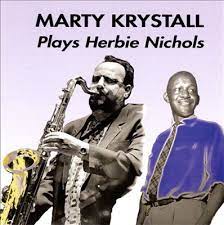
Marty Krystall was born on April 12, 1951 in Los Angeles, California. He beame fluent on tenor saxophone and clarinet and his sound was somewhat influenced by Ben Webster but is open to adventurous improvisations.
Marty has appeared in several of Buell Neidlinger’s groups through the years. Since the late 1970s he has worked as a Los Angeles studio musician and helped run the K2B2 record label. He has recorded with Neidlinger in Krystall Klear and the Buells, Buellgrass which was later renamed String Jazz, the group Thelonious, and a tribute album to Herbie Nichols.
He has recorded with Leon Kottke, Aretha Franklin, Peter Erskine, Hugh Schick, Yasushi Yoneki, and his marty krystall spatial quartet. Saxophonist and clarinetist Marty Krystall, who is a member of the Hollywood Bowl Orchestra, continues to explore the genres of jazz.
More Posts: bandleader,clarinet,history,instrumental,jazz,music,saxophone
Daily Dose Of Jazz…
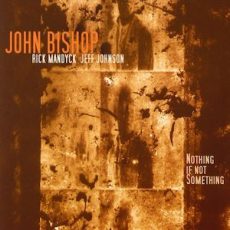
John Bishop was born on April 5, 1959 in Seattle, Washington and raised in Germany, Washington, D.C., San Antonio, Texas, and Eugene, Oregon. He started playing drums at the age of seven with the Patriots drum corp. Through high school and college he performed regularly and studied with Mel Brown and Charles Dowd at the University of Oregon prior to transferring to North Texas State University. A move back to Seattle in 1981 he played an extended engagement with Glider and never left.
The early Eighties saw Bishop as a member of the fusion group Blue Sky and for 20 years was a member of New Stories with pianist Marc Seales and bassist Doug Miller. They had four CDs of their own, six with the late be-bop saxophonist Don Lanphere, and a Grammy nominated recording with Mark Murphy, among others. They were a house trio for 17 years at Bud Shank’s Pt. Townsend Jazz Festival.
In 1997 John started the jazz label Origin Records, which was later named Jazzweek’s 2009 Label Of The Year, and OriginArts, a graphic design & CD production company, to help further the exposure of creative artists and their music. In partnership with his ex-drum student, Matt Jorgensen, and released over 750 recordings by 370 artists from around the world. 2003 saw them begin Seattle’s annual 4-day Ballard Jazz FestivalIn 2002 they added another jazz label, OA2 Records, a classical imprint, Origin Classical in 2008. Bishop has designed over eight hundred recording packages and multiple book covers, banners, posters, and other graphics for clients around the globe.
He has taught drums privately for 40 years, was on the faculty at the University of Washington from 2005-2009, and is presently adjunct at the Cornish College of the Arts. He regularly does drum and jazz workshops throughout the country, often with Hal Galper, including at the University of North Texas, University of Indiana, Dartmouth, Cal Arts, The New School, Purchase Conservatory-NYC, William Paterson University, University of Louisville, San Jose State University, The Jazz School- Berkeley, and Kent State University, to name a few.
He’s appeared on more than a hundred albums, and was inducted into the Seattle Jazz Hall of Fame in 2008, and named a Jazz Hero by the Jazz Journalists Association in 2019. Drummer and record producer John Bishop continues to pursue his endeavors in the industry.
More Posts: drums,history,instrumental,jazz,music,record producer
Requisites
Barry Harris At The Jazz Workshop | By Eddie Carter
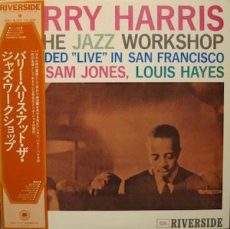
This morning’s subject is one of my favorite albums from the library. Barry Harris at The Jazz Workshop (Riverside RLP 326/RLP 1177) is a 1960 live date capturing the pianist in performance with two-thirds of Cannonball Adderley Quintet’s rhythm section, Sam Jones on bass, and Louis Hayes on drums. It was his debut on the label and his second release as a leader. My copy is the 1976 Riverside Original Recording Series Japanese Stereo reissue (SMJ-6123) by Victor Musical Industries. The album opener, Is You Is or Is You Ain’t My Baby by Louis Jordan and Billy Austin, begins with the trio cruising comfortably in the melody. Barry swings easily into the opening solo; then Sam enhances the appeal of the song’s lyrics in a splendid performance before Barry reappears to end the song softly.
Up next is Curtain Call, the first of three tunes by Barry Harris. After the trio states the theme, the pianist takes off for a speedy ride in the opening statement. Louis comes in next to have a short conversation with Harris leading to the closing chorus. The ensemble infuses Star Eyes by Gene de Paul and Don Raye with an infectious Latin-flavored melody and ending theme. In between them, Barry illustrates his melodic ideas efficiently while Sam and Louis collaborate tastefully in support. Charlie Parker’s Moose The Mooche begins with the trio’s easy-going theme. Harris sets the mood with a cheerful opening solo. Jones takes over for some leisurely walking, and Hayes puts his best foot forward in an exchange with Harris preceding the song’s climax.
Side Two gets underway with Lolita, a pretty song by Barry Harris with a toe-tapping tempo that gives the pianist the spotlight for the song’s only solo. Barry offers a smartly paced performance with exquisite accompaniment by Sam and Louis preceding a gorgeous finale. Morning Coffee, the leader’s third original, is what many of us drink to begin our day. Hayes introduces this tune, segueing into the ensemble’s lively melody. Harris kicks off the solos with an enjoyable romp; Sam contributes to the fun in the second reading. Louis sparkles in an exchange with Harris ahead of the exit. Don’t Blame Me by Jimmy McHugh and Dorothy Fields is a ballad highlight for Barry, who gives a sensuously beautiful performance supplemented by the gentle accompaniment of Sam and Louis, leading to a gorgeous ending.
Woody ‘n’ You by Dizzy Gillespie takes off briskly from the trio’s melody. Harris gets busy immediately on the opening statement; next, Jones takes an enthusiastic walk with the bass. Hayes gets the last word and heightens the group’s energy in a vigorous exchange with Harris before the conclusion and appreciative applause from the club crowd.
Orrin Keepnews produced Barry Harris at The Jazz Workshop, and Wally Heider was the recording engineer. Victor Musical Industries has done an excellent job remastering this reissue. The sound quality is gorgeous, transporting the listener to the club among the audience. If you’re a fan of Barry Harris or enjoy a good jazz trio, I highly recommend checking out Barry Harris at The Jazz Workshop the next time you’re out vinyl shopping. It’s a superb concert recording by one of the best pianists in jazz and is worthy of a spot in your library!
~ Don’t Blame Me, Star Eyes, Woody ‘n’ You – Source: Discogs.com ~ Is You Is or Is You Ain’t My Baby, Moose The Mooche – Source: Wikipedia.org © 2023 by Edward Thomas Carter

More Posts: bass,choice,classic,collectible,collector,history,instrumental,jazz,music
Requisites
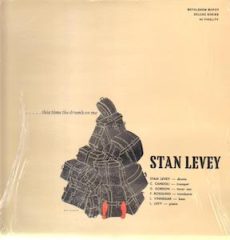
This Time The Drum’s On Me ~ Stan Levey | By Eddie Carter
Stan Levey, one of the great Bebop drummers, enters the spotlight with his second album as a leader, This Time The Drum’s On Me (Bethlehem BCP-37). Stan was born in Philadelphia, Pennsylvania, and started playing with Dizzy Gillespie at age sixteen. He left for New York City, where he worked with Gillespie, Charlie Parker, and Oscar Pettiford. Levey also spent some time with the Stan Kenton Orchestra before moving to the West Coast and becoming an essential contributor to West Coast Jazz with Howard Rumsey, Don Joham, and The Lighthouse All-Stars. Here, he’s accompanied by Conte Condoli on trumpet, Frank Rosolino on trombone, Dexter Gordon on tenor sax, Lou Levy on piano, and Leroy Vinnegar on bass. The copy in this report is a friend’s original 1956 US Mono deep groove release.
Diggin’ For Diz, by George Handy, sets the album in motion with a danceable beat for the sextet’s collective melody featuring a few comments by the front line. Conte swings into the opening solo with a joyful improvisation that builds to an effective climax. Dexter follows with a marvelous statement that cooks convincingly, then Frank follows with a captivating performance. Stan shares the subsequent interpretation with all three horns, and Lou closes with a concise reading into the theme’s restatement and close. Thelonious Monk’s hauntingly beautiful Ruby, My Dear, is a feature for Condoli. He leads the ensemble in a thoughtfully tender melody, then gives an elegant first solo. Before the group’s gentle ending, Levy compliments him with a short, delicately attractive reading.
Tune Up, by Miles Davis, brings the sextet back to a vibrant beat, and the ensemble begins the melody briskly before Dexter starts the solos with some spirited blowing. Conte comes behind him for a quick and agile interpretation; then Frank sparkles on an energetic reading. Lou takes the listener on a swift joyride, followed by Leroy’s scintillating walk. Stan shares a short conversation with Dexter preceding the closing chorus. The first side ends with La Chaloupée by Jacques Offenbach from the 1881 French opera, The Tales of Hoffman. The front line starts the melody collectively at a medium groove, giving way to Frank, Dexter, Conte, Stan, and Lou, who all excel in five utterly charming presentations ahead of the ending theme.
Side Two starts with the sextet’s upbeat rendition of Day In, Day Out by Rube Bloom and Johnny Mercer. Conte leads the ensemble’s theme, then Gordon launches into a scintillating opening statement. Condoli is next to give a vigorous interpretation; then Rosolino delivers a vitalized performance. Levy has the last word and reveals his keyboard artistry with energy to spare, leading to the group’s reprise and climax. Dexter Gordon’s Stanley The Steamer is a bluesy tribute to Stan Levey. Lou brings the song to life with a brief introduction segueing into the sextet’s easygoing theme. Dexter delivers an inspired improvisation as the song’s only soloist to the rhythm section’s infectious accompaniment before the ensemble’s conclusion.
The title tune, This Time The Drum’s On Me, was initially titled Max is Making Wax, Oscar Pettiford’s tribute to drummer Max Roach. The sextet puts the accelerator to the floor at a breakneck pace from the opening chorus to the final note. Gordon ignites the opening statement with blazing heat, then Condoli shines like a bright beacon on the second solo. Rosolino takes over to give a speedy presentation; next, Lou moves into the next spot aggressively. Stan wraps up things nicely in a high-powered workout ahead of the enthusiastic ending. It’s unknown who produced the album, but Val Valentin was the man behind the dials of the recording. The sound quality is excellent, with a clean and crisp soundstage that’s a delicious treat for any jazz fan!
Stan Levey recorded three albums for Bethlehem as a leader but appeared on many more as a sideman with some of the best jazz musicians. Levey retired from music altogether in 1973 and became a professional photographer. He died at age seventy-nine on April 19, 2005. If you’re a fan of Bop like me, I invite you to check out This Time The Drum’s on Me on your next vinyl hunt. It’s a perfect introduction to drummer Stan Levey and an excellent release worthy of a spot in any jazz library and repeated listening on the turntable!
~ Stan Levey Plays The Compositions of Cooper, Holman, and Giuffre (Bethlehem BCP 1017), Grand Stan (Bethlehem BCP-71) – Source: Discogs.com ~ Day In, Day Out, Tune Up – Source: Wikipedia.org © 2023 by Edward Thomas Carter
More Posts: choice,classic,collectible,collector,drums,history,instrumental,jazz,music
Daily Dose Of Jazz…
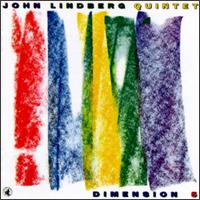
John Lindberg was born March 16, 1959 in Royal Oak, Michigan. He began his professional career at the age of 16, eventually moving to New York City in 1977. After moving to New York, he played with the Human Arts Ensemble alongside Joseph Bowie and Bobo Shaw. In 1977, with James Emery and Billy Bang. He co-founded the String Trio of New York.
In 1980 he formed a trio with Jimmy Lyons and Sunny Murray. From 1980 to 1983 he lived in Paris, playing there solo and with Murray and John Tchicai. He has recorded extensively as a leader. He studied bass with the bassist from the Battle Creek, Michigan symphony orchestra and jazz musician Roscoe Mitchell.
He has to date recorded twenty-five albums as a leader, eight with the String Tio of New York, and twenty with Anthony Braxton, Human Arts Ensemble, Susie Ibarra, Jimmy Lyons and Sunny Murray, Kevin Norton, Wadada Leo Smith and ten with Blob.
Double bassist John Lindberg continues to perform and record.

More Posts: bandleader,bass,history,instrumental,jazz,music