


Daily Dose Of Jazz…
Eric Marienthal was born on December 19, 1957 in Sacramento, California but moved with his family to San Mateo, California when he was two years old. He was taught music while in school and picked up the saxophone in the fourth grade. His father bought him a $400 Selmer saxophone and enrolled him in Corona Del Mar High School. Throughout his education, he learned to play guitar, flute, clarinet and piano.
After graduating from high school he studied saxophone at the Berklee College of Music. By the time he left Berklee, Eric had achieved the highest proficiency rating given by the school. He began his professional career in 1980 with New Orleans trumpeter Al Hirt. Heading west he settled in Los Angeles, California and became a member of the Chick Corea Elektric Band. He recorded six albums with that band and two of them won Grammy Awards.
Marienthal has also written instructional books, including Comprehensive Jazz Studies & Exercises, The Ultimate Jazz Play Along, and The Music of Eric Marienthal. He has made instructional videos, Play Sax From Day One, Modern Sax and Tricks of the Trade. He occupies the lead alto chair of Gordon Goodwin’s Big Phat Band, playing alto saxophone, soprano saxophone, flute, and piccolo.
Grammy Award-nominated alto saxophonist Eric Marienthal continues to perform and record.

More Posts: bandleader,flute,history,instrumental,jazz,music,piccolo,saxophone
Requisites
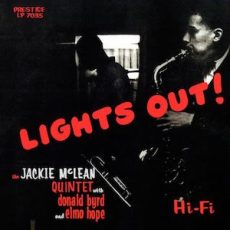
Lights Out! ~ The Jackie McLean Quintet | By Eddie Carter
The Jackie McLean Quintet steps into this morning’s spotlight with a 1956 release, Lights Out! (Prestige PRLP 7035/PRST 7757). It was the alto saxophonist’s label debut, and a superb supporting cast joins him on this date, Donald Byrd on trumpet, Elmo Hope on piano, Doug Watkins on bass, and Art Taylor on drums. My copy is the 2022 Analogue Productions Mono Audiophile reissue sharing the original catalog number. Side One opens with Jackie McLean’s Lights Out, a slow blues that comes to life in the rhythm section’s introduction, with a short statement by Elmo segueing into Jackie’s easy-going theme and opening solo. Donald compliments him leisurely using a mute, and Hope does his thing in the following reading. Both horns engage in an exchange of thoughts before the climax.
Up, also by the saxophonist, soars from the front line’s introduction into a rapid-fire melody. Byrd is up first and back on the open horn for a brisk reading. McLean romps through the second interpretation; next, Hope keeps up the energetic pace in a speedy performance. Taylor displays his talents in a brief finale followed by the horn’s return for a quick reprise. Lorraine, by Donald Byrd, begins with the trumpeter’s lovingly tender theme. He adds a personal touch to the first interpretation, matched by the rhythm section’s gorgeous groundwork. Jackie follows with a beautiful reading that’s a sultry treat for the ears, then Donald returns for a second statement that takes us away into a pretty ending by the front line.
A Foggy Day by George and Ira Gershwin kicks off Side Two. The song premiered in the 1937 musical comedy, A Damsel In Distress. McLean begins the melody with a happy, medium beat that extends to his lead solo. Byrd is back on the mute and flows with a gentle swing before passing it on to Hope. The pianist gives a charming closing statement leading to the ending theme that dissolves into emptiness. Donald Byrd’s Kerplunk gets underway with a carefree opening statement by Elmo that Donald maintains on the second interpretation with a relaxed groove. Jackie enters next and delivers a very efficient solo that proceeds to the front line blending their ideas into a satisfying conclusion ahead of the quintet’s exit.
Jackie McLean’s Inding starts with the trio’s introduction ahead of Byrd’s lively opening statement. Hope succeeds him with a lively presentation that shapes up nicely. McLean has the final say and brings the song home with a cheerful reading preceding the climax. Bob Weinstock supervised Lights Out!, and Rudy Van Gelder recorded it. Kevin Gray remastered this reissue, and the sound quality is outstanding. The record is on two-hundred grams of audiophile vinyl, and the album jacket has a high gloss. If you don’t already own an original pressing or early reissue, I highly recommend this Analogue Productions reissue for a spot in your library. It’s an excellent album by Jackie McLean that’s nearly forty-six minutes of pure bliss and can be enjoyed during the day, evening, or with the Lights Out!
~ A Foggy Day – Source: JazzStandards.com ~ © 2022 by Edward Thomas Carter

More Posts: choice,classic,collectible,collector,history,instrumental,jazz,music,saxophone

Daily Dose Of Jazz…
Mathias Rüegg was born on December 8, 1952 in Zurich, Switzerland and began playing jazz in secondary school. Trained as a schoolteacher, he taught for a while in special-needs schools. From 1973 to 1975 he attended the Musikhochschule in Graz, Austria, studying classical composition and jazz piano. While in Vienna, Austria he performed in a nightclub as a solo jazz pianist, joined later by saxophonist Wolfgang Puschnig. The duo formed the core of an ensemble that in 1977 became the Vienna Art Orchestra (VAO).
His distinctive, often humorous compositions have drawn on a range of influences, from traditional folk music to classics. He has also led the VAO to explore the big band repertory of American jazz composers such as Duke Ellington. Besides the traditional big-band complement, his orchestrations have prominently featured such instruments as the tuba, piccolo, bass clarinet, alphorn, exotic percussion, and wordless vocals. Beyond jazz, Mathias has composed for big bands, and classical orchestras, as well as theatre music, film music, soloist and chamber orchestra.
Rüegg has conducted workshops, worked as artistic director for music festivals, and headed multimedia and music-related projects. Rüegg founded the Porgy & Bess music club in Vienna and the Hans Koller Prize for Austrian jazz.
Composer, bandleader and educator Mathias Rüegg continues to compose and direct orchestras.
More Posts: composer,director,educator,history,instrumental,jazz,music
Requisites
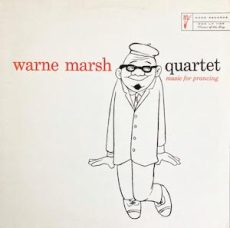
Music For Prancing ~ Warne Marsh Quartet | By Eddie Carter
Tenor saxophonist Warne Marsh steps into the spotlight for this morning’s discussion with the 1957 album, Music For Prancing (Mode Records MOD-LP 125). Marsh was a student of pianist Lennie Tristano and a graduate of the Cool Jazz school. He possessed a sweet tone that could be captivating and energetic but could also touch someone’s heart and soul when he played a ballad. For his sixth album, Warne’s leading a great quartet with Ronnie Ball on piano, Red Mitchell on bass, and Stan Levey on drums. My copy used in this report is the 1985 V.S.O.P. Records US Stereo reissue (Mode Records VSOP 8 – MOD LP-ST-125).
The quartet launches Side One with a song by Richard Rodgers and Lorenz Hart, You Are Too Beautiful. The group’s rendition is a catchy tune that’s full of good spirits as Warne begins the melody and relaxing opening solo. Red walks with great ease on the second statement, next Ronnie follows with a neatly paced reading. Stan adds the finishing touches in a brief exchange with Marsh and Ball leading to the closing chorus. Autumn In New York by Vernon Duke is the first of three jazz standards the ensemble performs from The Great American Songbook. The pianist introduces the song discreetly, segueing into Marsh’s tender melody and delicate lead solo. Ball and Mitchell continue the mood with two interpretations that are warm and beautiful ahead of the leader’s return to close out the song gently.
The first side closes on an upbeat note with Playa del Ray by Warne Marsh, beginning with a cheerfully buoyant theme in unison. Warne is up first with a lively interpretation; next Ronnie shows off his light and airy touch on the keys. Red takes over for a few soulful grooves and Stan speaks last with some spirited brushwork into the leader’s closing chorus and soft ending. Side Two gets underway with Ad Libido, an original by Ronnie Ball that’s built on the progressions of Long Ago and Far Away by George and Ira Gershwin. The ensemble starts the song at a laid-back pace for the collective melody. Ronnie opens the conversation with a mellow performance. Warne swings casually during the next reading, then Red adds a happy comment to the closing chorus before the leader wraps it up.
Up next is Everything Happens To Me by Matt Dennis and Thomas Adair. Warne is having a two-instrument conversation with Red as the song opens. Ronnie and Stan enter a little later to complete the lovely melody. Warne continues making melodic magic in the first reading, then Red mines a rich vein of sentimentality from his bass. Ronnie offers a deeply emotional statement next, and Warne makes an additional comment leading to the theme’s reprise. It’s All Right With Me by Cole Porter is a swinging affair from the opening chorus. Marsh takes flight first and speeds through the skies. Ronnie moves just as rapidly on the second solo. Red’s fingers flow swiftly on the bass next, then Stan gives his drums a vigorous workout in the finale ahead of the song’s conclusion.
Music For Prancing was produced by Red Clyde, and the recording engineer was Dayton Howe. The sound quality of this reissue is excellent with a superb soundstage that emerges from your speakers vividly. Warne Marsh recorded for many labels during his long career and has an extensive discography. He suffered a heart attack during a performance at Donte’s Jazz Club in Los Angeles and passed away on December 18, 1987. If you’re a Cool Jazz fan or are just discovering his music, I offer for your consideration, Music For Prancing by The Warne Marsh Quartet on your next vinyl shopping trip. It’s an excellent album that’s perfect to enjoy with your favorite beverage, and one I can recommend to any jazzophile’s library!
~ Postscript: Producer, Red Clyde’s name doesn’t appear on the original Mono LP or my Stereo reissue, but the 1992 V.S.O.P. Records CD album (V.S.O.P. #8 CD – Mode 125) – Source: Discogs.com ~ Autumn In New York, Everything Happens To Me, It’s All Right With Me – Source: JazzStandards.com ~ You Are Too Beautiful – Source: Wikipedia.org © 2022 by Edward Thomas Carter
More Posts: choice,classic,collectible,collector,history,instrumental,jazz,music,saxophone
Daily Dose Of Jazz…
Lisle Ellis was born Lyle Steve Lansall on November 17, 1951 in Campbell River, British Columbia. and began playing electric bass in his teens and worked professionally from an early age in numerous environments including studios, radio & TV shows, and strip clubs. He studied at the Vancouver Academy of Music with Walter Robertson and attended Douglas College in Vancouver, Canada. He later studied at the Creative Music Studio in New York City from 1975-1979.
He moved to Toronto, Ontario, Canada where he resided from 1982 until 1983 and then went to Montreal, Quebec, Canada for nearly a decade until 1992. Lisle became the inaugural recipient of Canada’s Fred Stone Award in 1986, given annually to a musician for integrity and innovation. The Eighties saw him as a conspicuous activator of musician alliance organizations, performance venues, and concert series presentations in Vancouver and Montreal. One collective in particular, Vancouver’s New Orchestra Workshop, is still active nearly thirty years later.
After moving to the United States in 1992, he settled in San Francisco, California where he worked with Glenn Spearman for nine years. In 1994, he was a member of the Cecil Taylor band for a brief tour of California. He lived in San Diego, California from 2001–2005 and then crossed the country to New York City where he presently lives.
Since the late 1990s, he primarily focused on developing an electro-acoustic interface he calls “bass & circuitry”. By 2008 he turned his attention back to acoustic music projects with an emphasis on jazz based improvisation and to finding a balance between his electronic and acoustic music interests. Bassist and composer Lisle Ellis, who professionally has used both L. S. Ellis and L. S. Lansall-Ellis, and is known for his improvisational style and use of electronics, continues to explore the realm of jazz.
More Posts: bandleader,bass,history,instrumental,jazz,music