

Daily Dose Of Jazz…
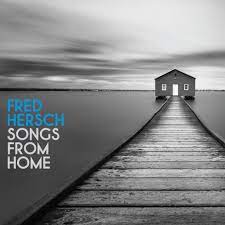
Fred Hersch was born October 21, 1955 in Cincinnati, Ohio to Jewish parents and began playing the piano at the age of four, composing music by eight. By ten he won national piano competitions.
Hersch first became interested in jazz while at Grinnell College in Iowa. He dropped out of school and started playing jazz in Cincinnati, continuing his studies at the New England Conservatory under Jaki Byard and attracting attention from the press in a college recital. Upon graduation, he became a jazz piano instructor at the college.
1977 saw Fred moving to New York City, then gigged with Art Farmer in Los Angeles, California in 1978. He would play with Farmer again three years later, played for singer Chris Connor, then with Joe Henderson. He would go on to perform with Jane Ira Bloom, Jamie Baum, Toots Thielemans, Eddie Daniels, and Janis Siegel. A fortuitous firing of his pianist by Art Pepper gave Hersch the launch of his career when he filled in for the pianist.
In 1986, he taught at Berklee College of Music, performed and recorded sixty-four albums as a leader or co-leader, seventy-nine as a sideman and wrote an autobiography, Good Things Happen Slowly: A Life In and Out of Jazz.
In 1993, Hersch came out as gay and has been treated for HIV since 1984. He fell into a coma in 2008 for two months but when he regained consciousness, he had lost all muscular function as a result of his long inactivity and could not play the piano. After rehabilitation, he was able to play again. He continues to compose, perform and record.
More Posts: bandleader,composer,educator,history,instrumental,jazz,music,piano
Requisites
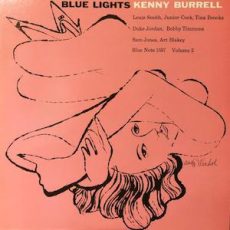
Blue Lights, Volume 2 ~ Kenny Burrell | By Eddie Carter
This morning’s subject offered for your consideration is a recent acquisition to my library. Blue Lights, Volume 2 (Blue Note BLP 1597/BST 81597) by Kenny Burrell was recorded in 1958 but hit the stores in 1961. The guitarist is back to work on this bluesy blowing session with Louis Smith on trumpet, Tina Brooks (tracks: A1, B1), Junior Cook (tracks: A1, B1, B2) on tenor sax, Duke Jordan (tracks: A2, B2), Bobby Timmons (tracks: A1, B1) on piano, Sam Jones on bass, and Art Blakey on drums. My copy used in this report is the Toshiba-EMI Limited Japanese Mono reissue sharing the original catalog number.
Side One opens with Kenny’s Rock Salt, a soothing blues that the septet opens with a relaxing melody. Louis takes the lead solo like a breath of fresh air, then Junior comes in with a solid, irresistible swing. Kenny keeps it going with a few easy-going licks ahead of Tina’s tasty statement next. Bobby’s fingers run smoothly over the keys on the following reading. Sam brings us back to the closing chorus with a brief solo matched by Art’s perfect timekeeping. The Man I Love by George and Ira Gershwin begins as a conversation between Jones and Blakey. Sam states the theme accented by Kenny’s comments, then the bassist gives a fine opening statement. Louis follows with a jubilant solo and Duke turns in a refreshing reading leading to Sam and Art’s closing chorus.
Side Two starts with Chuckin’ by Sam Jones, a lively little tune allowing everyone a solo opportunity. Kenny and the rhythm section establish the dialogue for the melody. Bobby takes the lead this time and moves into a swinging groove. Kenny follows in his footsteps with a fulfilling solo, and Tina also provides a pleasant improvisation. Louis comes in next with a well-constructed statement. Junior and Sam speak effectively in the next two readings, and Art has a conversation with Bobby and the front line into the climax. Burrell’s Phinupi takes off at a fast clip on the ensemble’s theme. Cook and Smith kick off the solos with some spirited blowing. Burrell comes straight to the point on the next reading, then Jordan takes an enthusiastic turn. Blakey gets the last word preceding the ending theme.
Like its companion, Blue Lights, Volume 2 was produced by Alfred Lion and Rudy Van Gelder was again at the controls for the recording. Toshiba-EMI Limited has done another superb job with the remastering of this reissue. The album has an excellent soundstage with all the instruments emerging vividly from your speakers. The vinyl is also silent until the music starts. Kenny’s playing throughout the album is easy on the ears and his bandmates swing along perfectly when soloing. If you’re a fan of straight-ahead jazz guitar, I hope you’ll consider Blue Lights, Volume 2 by Kenny Burrell on your next vinyl treasure hunt. It’s a splendid example of his work and a perfect companion to Volume 1 that’s sure to be a welcome addition to any library!
~ Blue Lights, Volume 1 (Blue Note BLP 1596/BST 81596) – Source: Discogs.com ~ The Man I Love – Source: JazzStandards.com © 2022 by Edward Thomas Carter

More Posts: choice,classic,collectible,collector,guitar,history,instrumental,jazz,music
Requisites
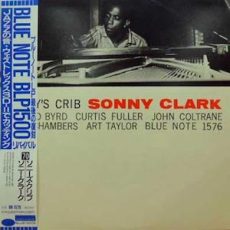
Sonny’s Crib ~ Sonny Clark | By Eddie Carter
Sonny Clark steps into the spotlight with his third LP as a leader, Sonny’s Crib (Blue Note BLP 1576/BST 81576), released in 1957. He was considered the label’s house pianist appearing on many albums with some incredible musicians. On this date, he heads a stellar sextet of heavy hitters; Donald Byrd on trumpet; Curtis Fuller on trombone; John Coltrane on tenor sax; Paul Chambers on bass; and Art Taylor on drums. My copy used in this report is the 1990 Toshiba-EMI Limited Japanese Mono reissue (Blue Note BLP 1576 – BN 1576).
Side One starts with a rapid burner; the 1929 show tune With a Song In My Heart by Richard Rodgers and Lorenz Hart. The sextet takes off on a brisk run through the melody stepping aside for Byrd who gives an electrifying first solo. Coltrane emerges with a vengeance delivering passionate fire at a high velocity on the next reading. Fuller responds with a robust, resonant tone releasing plenty of energy during his turn. Afterward, Clark offers an exhilarating reading that cooks and swings into the climax.
Speak Low by Kurt Weill and Ogden Nash is a popular song from 1943 that starts at mid-tempo. John takes the lead on the Latin-flavored melody with the ensemble manufacturing a firm foundation behind him. He continues with a fervent opening statement that heightens the trio’s flawless accompaniment. Curtis and Donald share the next reading; both men bring out the best in each other with two presentations showcasing their technical chops. Sonny steps in last, summing up the song with a captivating solo before the close. Come Rain or Come Shine by Harold Arlen and Johnny Mercer brings the first side to a close as a beautiful slow-tempo ballad. Fuller opens the melody with a simple statement that’s seductively tender. Clark guides his way sensuously through the next reading presenting an ardently touching interpretation. Coltrane follows with a beautifully constructed, elegant reading and Byrd takes the ensemble home on the ending theme into a gentle climax.
The final two tracks are by the leader Clark and occupy Side Two. Sonny’s Crib is a blues with everyone laid-back and taking it easy on the carefree melody. John goes first swinging expressively with rhythmic verses that are enjoyable listening; Curtis comes in next also contributing some fine solo work. Donald takes the next turn, making his mark with an easy swing that’s cheerfully bright. Sonny is artfully tasteful on the next solo with nimble piano lines that affirm his capability as a great interpreter of Hard-Bop. Paul cuts into the final reading with an exceptionally articulate statement that says plenty about the ensemble’s exit.
Sonny’s News For Lulu closes out the album giving everyone a solo opportunity except Art. The song opens with a brief introduction by the trio followed by a collective midtempo melody presentation and the solo order is piano, trumpet, tenor sax, trombone, and bass. The leader’s opening statement shows his rhythmic vitality on spirited lines that move freely and confidently. Donald reciprocates with a happy, infectious groove on the next solo that shows the workings of a very creative mind. John comes in next, infusing his performance with an energetic effervescence that’s bold, and assertive. Curtis sparkles on the fourth reading with a flow of musical ideas that are brimming with vitality. The finale is a delectable dish served up by Paul anchored by just Art’s tranquil brushwork that swings very nicely into the sextet’s closing chorus and the album’s climax concluding an enjoyable album.
The original recording by Rudy Van Gelder has been lovingly remastered by Toshiba-EMI Limited with a superb soundstage that surrounds your listening spot as if you’re in the studio with the musicians. In addition to Sonny’s Crib, Clark recorded eight more albums for Blue Note as a leader and with many other stars on the label as a sideman. He passed away on January 13, 1963, at the age of thirty-one from a heroin overdose in New York City although the official cause was listed as a heart attack. On this album, Clark and his colleagues leave a lasting impression on the listener through their outstanding interplay together that makes the music come alive. If you’re seeking some Hard-Bop on your next vinyl hunt, I offer for your consideration, Sonny’s Crib by Sonny Clark. It’s an excellent album of good tunes with great solos by six remarkable musicians who together, make highly delectable listening that should appeal to any jazz collector who’s also a fan of jazz piano!
~ Come Rain or Come Shine, Speak Low – Source: JazzStandards.com ~ Sonny Clark, With a Song In My Heart – Source: Wikipedia.org © 2022 by Edward Thomas Carter
More Posts: choice,classic,collectible,collector,history,instrumental,jazz,music,piano
Daily Dose Of Jazz…
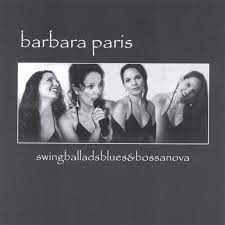
Barbara Paris was born on October 2, 1954 in Denver, Colorado and from an early age listened to Nat King Cole, Dinah Washington, Mel Torme and Frank Sinatra. Constantly listening to the radio she memorized every song she heard. She sang with her church choir, played violin, took piano lessons and began playing the guitar at 15. She started out singing folk music but gravitated to jazz.
After high school graduation at 16, she moved to Boulder, Colorado and began a successful hairdresser career. However, it was on vacation in St. Thomas that she met Louis Armstrong veteran Eddie Shu and subsequent encouragement led her to the stage.
Barbara made her debut as a jazz singer while in Paris, France. There an acquaintance told her about Denver resident pianist Joe Bonner and upon her return tracked him down and a 23 year musical partnership commenced. She has worked with Freddie Hubbard, Junior Mance, Joe Pass, and recorded with Nancy Wilson’s rhythm section, pianist Llew Matthews, bassist John B. Williams and drummer Roy McCurdy, among numerous others.
Vocalist Barbara Paris continues to pursue performing, composing, recording, and clinics.

More Posts: bandleader,history,instrumental,jazz,music,vocal
Requisites
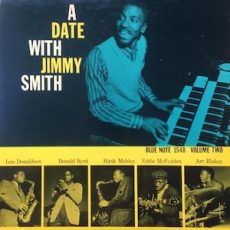
A Date With Jimmy Smith, Volume Two ~ Jimmy Smith | By Eddie Carter
This morning’s subject brings us back to The Manhattan Towers Hotel Ballroom for A Date With Jimmy Smith, Volume Two (Blue Note BLP 1548/BST 81548). Jimmy Smith was an accomplished pianist who began playing the organ at the age of twenty-eight. He made the instrument popular for jazz improvisation and would lead me to discover the other organists who followed him. Joining the organist again are Donald Byrd (tracks: A1, B2) on trumpet, Lou Donaldson (tracks: A1, B1, B2) on alto sax, Hank Mobley (tracks: A1, B2) on tenor sax, Eddie McFadden (tracks: A1, B2) on guitar, and Art Blakey (tracks: A1, B2) on drums. The copy used in this report is a friend’s 1984 Toshiba-EMI Limited Japanese Mono reissue sharing the original catalog number.
Side One is occupied by an extended version of I Let A Song Go Out Of My Heart by Duke Ellington, Irving Mills, Henry Nemo, and John Redmond. The rhythm section swings easily into the melody stated by Lou. Donald sets the pace with a relaxed attitude on the first solo, next Hank gives a cheerfully buoyant reading. Eddie follows with a simple, bluesy statement, then Lou brings a good deal of enthusiasm to his interpretation. Jimmy is just a pleasure in the finale leading to Lou’s closing chorus and Jimmy’s ending. Side Two opens with I’m Getting Sentimental Over You by George Bassman and Ned Washington. This is a duet by Donaldson and Smith who embrace the jazz standard with elegant simplicity on the melody and during two touching interpretations before a pretty finale.
Hank Mobley’s Groovy Date is a blowing session that coaxes everyone to great heights and allows each member a chance to shine. Lou wastes no time getting down to business on the first solo, then Donald takes us on an eventful ride. Hank makes an indelible imprint on the third interpretation. Eddie responds with a spirited contribution and Jimmy offers a zestful joy on the next reading. Art gets the last word in a lively conversation with the front line into the close. A Date With Jimmy Smith, Volume Two was produced by Alfred Lion and the man behind the dials was Rudy Van Gelder. This Toshiba-EMI reissue is a wonderful recording with an impressive soundstage that brings the group to your listening room with superb definition. If you’re a fan of jazz organ, make A Date With Jimmy Smith, Volume Two on your next vinyl hunt. Like its companion, it’s a solid album with a superb ensemble that gives a glimpse into what was to come from Jimmy Smith in the next few years!
~ A Date With Jimmy Smith, Volume One (Blue Note BLP 1547/BST 81547) – Source: Discogs.com ~ I Let a Song Go Out of My Heart, I’m Getting Sentimental Over You – Source: JazzStandards.com © 2022 by Edward Thomas Carter
More Posts: choice,classic,collectible,collector,history,instrumental,jazz,music,organ