

Daily Dose Of Jazz…
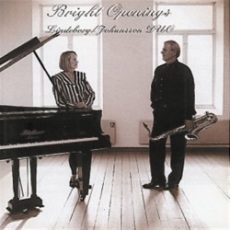
Susanna Lindeborg was born on April 18, 1952 in Gothenburg, Sweden and began classical training on piano at a young age which turned into work with jazz and improvisation, showing to be her right element. She started her professional musical career in the middle of the Seventies.
Susanna went on to mix acoustic and electronic instruments, which has been known most of all through the group Mwendo Dawa, which she leads and tours together with saxophone player Ove Johansson. Writing her own music for the group, she also toured with the female jazz group Salamander during the beginning of the 1980s. Both Mwendo Dawa and Salamander attracted a lot of attention on the European continent and in the United States.
She currently tours with her Lindeborg/Johansson Duo and Natural Artefacts. Her performances are both in the world of improvisation music, the world of electro~acoustic music, and solo improvisations. With the release of her first solo compact disc in 1989, she parlayed the acceptance into some work in Germany with some radio and TV recordings. Avant~garde pianist Susanna Lindeborg continues to push the boundaries of her music.
More Posts: bandleader,history,instrumental,jazz,keyboard,music,piano
The Jazz Voyager
Two years ago the Jazz Voyager commenced lockdown against a very serious pandemic that was taking lives without discretion. Though I am beginning to get out and experience life outside with talks, films and music in open air spaces, the airlines has sent another important message by extending my eCredit another year until December 2023. Still aware that the pandemic is not over, I remain vigilant with mask wearing and social distancing in enclosed spaces such as markets, doctor’s offices. It is our duty to keep others safe as well by doing our individual part.
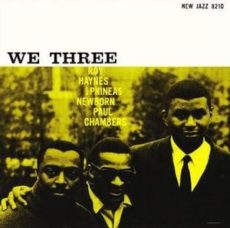
This week we are traveling musically back and taking down off the shelves to listen to We Three, the 1958 recording led by Roy Haynes by a trio of players who made their mark on the genre. Though the group was short-lived, the trio made the best of the time they spent together and delivered this album.
The album was recorded on November 14, 1958 at the Van Gelder Studio in Hackensack, New Jersey, produced by Esmond Edwards, and was released in May the following year on the New Jazz record label.
Track List | 39:29- Reflection (Ray Bryant) ~ 4:24
- Sugar Ray (Phineas Newborn, Jr.) ~ 6:25
- Solitaire (King Guion, Carl Nutter, Renee Borek) ~ 8:54
- After Hours (Avery Parrish) ~ 11:21
- Sneakin’ Around (Bryant) ~ 4:24
- Our Delight (Tadd Dameron) ~ 4:01
- Roy Haynes – drums
- Phineas Newborn Jr. ~ piano
- Paul Chambers ~ bass

More Posts: adventure,album,bass,club,drums,genius,jazz,museum,music,piano,preserving,restaurant,travel
The Quarantined Jazz Voyager
As the Jazz Voyager continue to remain masked and socially distant, I have ventured out to a couple of events. I am, however, not surprised by the number of people who are unmasked and congregating as if the pandemic is over. This virus keeps mutating and though you may only get mildly ill, you will be ill and it will take a toll on your body, so protect yourself and others.
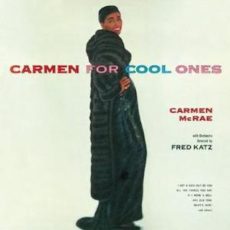
This week I am pulling out a classic album that shows this vocalist at her best delivering twelve compositions that were recorded on two separate occasions, December 5 & 16, 1957 in Los Angeles, California titled Carmen for Cool Ones. Released in 1958 by Carmen McRae on the Decca Records label, the sessions were arranged and directed by cellist Fred Katz.
The liner notes were scribed by Benny Golson and Burt Korall, and the photographs were taken by Wendy Hilty.
Track Listing | 36:15
- All the Things You Are (Oscar Hammerstein II, Jerome Kern) ~ 2:26
- A Shoulder to Cry On (Chuck Darwin, Paulette Girard) ~ 3:53
- Any Old Time (Artie Shaw) ~ 3:10
- Weak for the Man (Jeanne Burns) ~ 4:08
- What’s New? (Johnny Burke, Bob Haggart) ~ 2:29
- I Get a Kick Out of You (Cole Porter) ~ 2:15
- What Can I Say After I Say I’m Sorry? (Walter Donaldson, Abe Lyman) ~ 1:47
- Without a Word of Warning (Mack Gordon, Harry Revel) ~ 3:20
- You Are Mine (Ted Snyder, Sam Lewis, Joe Young) ~ 1:55
- If I Were a Bell” (Frank Loesser) ~ 3:27
- The Night We Called It a Day (Tom Adair, Matt Dennis) ~ 4:27
- I Remember Clifford (Benny Golson, Jon Hendricks) ~ 2:58
- Carmen McRae ~ vocals
- Fred Katz ~ arranger, conductor, cello
- Ike Isaacs ~ double bass (except track 6)
- Specs Wright ~ drums (exc. track 6)
- Harry Klee ~ flute solo
- George W. Smith ~ clarinet
- Justin Gordon, Mahlon Clark ~ bass clarinet
- Buddy Collette ~ flute, alto saxophone
- George W. Smith ~ clarinet
- Justin Gordon ~ bass clarinet
- Warren Webb oboe
- Joe Marino ~ piano
- Joseph R. Gibbons ~ guitar
- Thirteen unknown string players
- Joe Marino, John T. Williams ~ piano, celeste
- Larry Bunker, Frank Flynn ~ vibraphone, marimba
- Pete Candoli, Ray Linn ~ trumpet
- Vincent DeRosa ~ French horn
- Bob Enevoldsen, Milt Bernhart ~ trombone
- Tommy Johnson ~ tuba
- Calvin Jackson ~ piano
- Billy Bean ~ guitar
- Red Mitchell ~ double bass
- Larry Bunker ~ drums
More Posts: adventure,album,club,genius,jazz,museum,music,preserving,restaurant,travel,vocal

Daily Dose Of Jazz…
John Paul Pizzarelli Jr. was born April 6, 1960, in Paterson, New Jersey and started playing guitar when he was six He attended Don Bosco Preparatory High School, an all-boys Catholic school. In his teens, he performed with Benny Goodman, Les Paul, Zoot Sims, Slam Stewart, and Clark Terry.
He played trumpet through his college years, attending the University of Tampa and William Paterson University, but his most important teacher was his father through the Eighties. During that period he established himself as a jazz guitarist and a vocalist and released his debut solo album, I’m Hip (Please Don’t Tell My Father) in 1983.
During the 1990s, Pizzarelli played in a trio with Ray Kennedy and his younger brother Martin. In 1993, the trio opened for Frank Sinatra in Las Vegas, Nevada and four years later, he was starring on Broadway in Dream, a show devoted to the music of Johnny Mercer.
Naming Nat King Cole as the inspiration for his career, he has honored him with the albums Dear Mr. Cole and P.S. Mr. Cole. He has also recorded tribute albums to Frank Sinatra, Duke Ellington, Antônio Carlos Jobim, Richard Rodgers, and Paul McCartney. Along with his father accompanying Annie Ross, they recorded her album To Lady with Love, a tribute to Billie Holiday that Ross recorded when she was eighty-four.
He has hosted a national radio show, Radio Deluxe with John Pizzarelli, and has worked with George Shearing, Rosemary Clooney, Johnny Frigo, Buddy DeFranco, the Clayton-Hamilton Jazz Orchestra, the Boston Pops Orchestra, and the Cincinnati Pops Orchestra.
As a co-producer of the James Taylor album American Standard, he received a Grammy nomination for Best Traditional Pop Vocal Album in 2020. Guitarist and vocalist John Pizzarelli continues to explore and expand his musical vocabulary.
More Posts: bandleader,guitar,history,instrumental,jazz,music,vocal
Daily Dose Of Jazz…
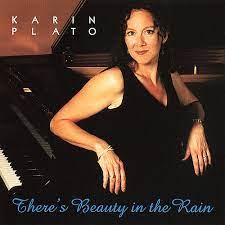
Karin Plato was born on March 31, 1960 in Alsask, Saskatchewan, Canada. As a small child she studied piano and later attended the University of Saskatchewan in Saskatoon, where she received a Bachelor Of Music Degree in Piano and Voice.
Moving to Vancouver, Canada in 1985 she studied vocal jazz and arranging at Capilano College, and has made the city her base ever since. In the late 90s, she studied with Sheila Jordan and Jay Clayton at the Banff Centre For The Arts. In 2000, her album There’s Beauty In The Rain was nominated for a Juno Award.
She has performed at numerous festivals and in 2000, she became a member of DIVAS For Life, which came about when the Vancouver-based magazine, Lifestyles, profiled six female vocalists: Plato, Laura Crema, Dee Daniels, Kate Hammett-Vaughan, Stevie Vallance and Tammy Weis. Established to help raise money for people living with cancer and other life-threatening illnesses. Their debut concert was a huge success and the singers appeared collectively and individually at a series of SOR engagements,
Vocalist Karin Plato continues to use her contralto to deliver elegant performances of standards and original material.
More Posts: bandleader,history,instrumental,jazz,music,vocal