


Daily Dose Of Jazz…
Andy González was born in The Bronx, New York on January 1, 1951. He and his brother Jerry González were founding members of Conjunto Libre and Grupo Folklórico y Experímental Nuevayorquíno, with whom he produced three albums: Concepts in Unity (1975), Lo Dice Todo (1976), and Homenaje a Arsenio (2011).
The band included Frankie Rodríguez, Milton Cardona, Gene Golden, Carlos Mestre, Nelson González, Manny Oquendo, Oscar Hernández, José Rodríguez, Néstor Torres, Gonzalo Fernández, Alfredo “Chocolate” Armenteros, Willy García, Heny Álvarez, Virgilio Martí, Marcelino Guerra, Rubén Blades, Orlando “Puntilla” Ríos, and Julito Collazo on the first two albums.
Over the course of his career, along with leading bands of his own, Andy worked with Dizzy Gillespie, Tito Puente, Eddie Palmieri, Kip Hanrahan and Astor Piazzolla.
Double bassist Andy González, who performed primarily in the Latin jazz and Afro-Cuban idioms, transitioned on April 9, 2020 from pneumonia and complications of diabetes in the Bronx.
More Posts: bass,history,instrumental,jazz,music
The Quarantined Jazz Voyager
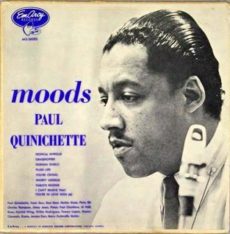
Moods, also referred to as Moods Featuring Paul Quinichette is the 1954 debut album by saxophonist Paul Quinichette. It features compositions and arrangements by Quincy Jones and was released in 1955 on the EmArcy label. The tracks were recorded on two session dates, on November 4th (tracks 5–8) and 22nd (tracks 1–4) 1954 with two different line-ups at Fine Sound Studios in New York City.
The second session featured an Afro-Cuban combo with Herbie Mann on flute and also on tenor saxophone and Latin percussion instead of a drum set. The difference between the two sessions was preserved in splitting the album with the later recorded Latin jazz session on the LP’s A-side, the more straight ahead approach on the other.
Tracks | 40:40 All compositions by Quincy Jones except as indicated
- Tropical Intrigue ~ 3:04
- Grasshopper ~ 4:02
- Dilemma Diablo ~ 4:03
- I Can’t Believe That You’re In Love With Me (Jimmy McHugh, Clarence Gaskill) ~ 6:44
- Plush Life ~ 7:48
- You’re Crying ~ 3:13
- Shorty Georgie (Harry Edison, Count Basie) ~ 6:33
- Pablo’s Roonie ~ 4:53
- Paul Quinichette – tenor saxophone
- Herbie Mann – flute, tenor saxophone
- Jimmy Jones – piano
- Al Hall – bass
- Tommy Lopez – congas
- Manny Oquendo – bongos
- Willie Rodriguez – timbales
- Paul Quinichette – tenor saxophone
- Sam Most – flute
- Sir Charles Thompson – piano
- Jerome Darr, Barry Galbraith – guitar
- Paul Chambers – bass
- Harold Wing – drums

More Posts: adventure,album,club,genius,jazz,museum,music,preserving,restaurant,saxophone,travel
Daily Dose Of Jazz…
John Lurie was born on December 14, 1952 in Minneapolis, Minnesota and was raised with his brother and sister in New Orleans, Louisiana and Worcester, Massachusetts.
In high school, he played basketball and harmonica and jammed with Mississippi Fred McDowell and Canned Heat in 1968. He briefly played the harmonica in a band from Boston, Massachusetts but soon switched to the guitar and eventually the saxophone.
After high school, he hitchhiked across the country to Berkeley, California. Moving to New York City in 1974, he briefly visited London, England where he performed his first saxophone solo at the Acme Gallery.
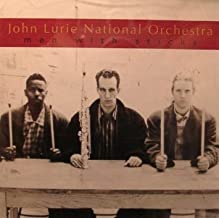
In 1978 John formed the Lounge Lizards with his brother Evan Lurie on piano. The two of them were the only constant members in the band through numerous lineup changes. In the early 1990s he formed a smaller group, the John Lurie National Orchestra and their work was heavily improvised.
By the early Nineties he was composing the theme to Late Night with Conan O’Brien with Howard Shore, which was also used when O’Brien hosted on The Tonight Show. He has written scores for over 20 movies, including Get Shorty, for which he received a Grammy Award nomination. As an actor he has starred, acted or made cameos in nineteen films and numerous television shows.
Saxophonist, painter, actor, director, and producer John Lurie has suffered debilitating ill health since 2000 with initially baffling neurological symptoms, and from symptoms attributed to chronic Lyme disease. The illness prevents him from acting or performing music, so he spends his time painting. His art has been shown in galleries and museums around the world. His 1980s NYC memoir, The History of Bones, was published by Penguin Random House in 2021.
More Posts: bandleader,history,instrumental,jazz,music,saxophone
Requisites
John Jenkins, Cliff Jordan, Bobby Timmons | By Eddie Carter
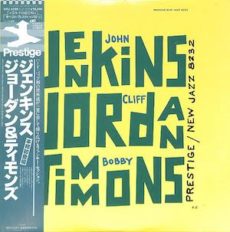
I begin this morning’s discussion with the 1960 collaborative album, Jenkins, Jordan, and Timmons (New Jazz NJLP 8232) by John Jenkins, Clifford Jordan, and Bobby Timmons. Joining them on this date are Wilbur Ware on bass and Dannie Richmond on drums. My copy used in this report is the 1981 Japanese Mono reissue by Victor Musical Industries (New Jazz SMJ-6299). John Jenkins’ approach to Hard-Bop and standards on the alto sax was distinctively tasteful. His solos always showed respect and affection for the tunes he played, and he could bring imaginatively unique lines even to well-worn standards. His other album as a leader is the self-titled release, John Jenkins (1957). Clifford Jordan’s interpretations on the tenor sax were the perfect characterization of his sound, sometimes growling, sometimes purring, but always with a formidable technique and a passionately assertive tone. Here, Jordan is in great form with another horn to joust with.
Pianist Bobby Timmons was one of the most talented yet neglected figures in the annals of Jazz. He composed two songs that are etched in the minds of many Jazz fans, Dat Dere, a mainstay in the early days of The Cannonball Adderley Quintet and Moanin’ that became a huge hit for The Jazz Messengers. Timmons appeared on the landmark album, Art Blakey and The Jazz Messengers (1958). On this date, he approaches each tune with a melodic and rhapsodic touch that’s irresistible. Wilbur Ware was an extraordinary soloist on the bowed bass; he possessed a beautiful sound that could be fat, resonant, and fluid without any loss of body on any of the songs he played. Dannie Richmond is best known for his many albums with Charles Mingus, he’s a very pleasant surprise on this record with an energetic liveliness in his playing. He also recorded with many jazz greats including George Adams, Pepper Adams, Chet Baker, Ted Curson, Booker Ervin, Duke Jordan, Herbie Nichols, Horace Parlan, and Don Pullen.
Clifford Jordan’s Cliff’s Edge starts Side One at midtempo with both saxes flexing their muscles in unison on the opening chorus. Cliff is up first with a very satisfying opening solo at an easy, unhurried pace. John continues the conversation with a pleasant zest on the second performance. Bobby tells his story last with a charming interpretation that comes across effectively anchored by Wilbur and Dannie’s support into the quintet’s ending. Up next is the 1946 jazz standard Tenderly by Walter Gross and Jack Lawrence. Timmons opens the song with a soothing introduction, then Jordan steps up first for a deeply compassionate melody and an opening statement exhibiting sensitive delicacy. Timmons comes in next, gently caressing each note of an exceptionally tasteful interpretation. Ware deftly captures the song’s subtle mood on a gorgeously warm solo, followed by Jenkins who concludes the readings and the song with a beautifully tender interpretation.
The first of two tunes from Jenkins’ pen, Princess begins with a collective mid-tempo groove. John starts the opening solo with an articulate tone dispensing absolute joy. Cliff takes the listener for a comfortable joyride on the next statement. Bobby is consistently inventive on the closing performance preceding the quintet’s exit. Side Two starts with Soft Talk by Julian Priester, an energized swinger from the start of the ensemble’s electrically charged theme. Jenkins speaks first to start this scintillating conversation with an aggressive fierceness. Jordan continues the dialogue, making every note count with high voltage power. Jenkins and Jordan soar to great heights in an invigorating exchange over the next few verses. Timmons adds his voice to the discussion next on a heated reading, then Ware walks briskly on an abbreviated statement. Richmond has the last word with energetic drumming in an exciting conversation between both saxes into the reprise and abrupt climax.
Jenkins’ Blue Jay is a laid-back midtempo blues that begins with an unaccompanied lively introduction by Ware, segueing into the quintet’s collective theme. John starts the soloing with an easy-going opening statement. Clifford responds with a marvelous interpretation. Bobby cruises into the third reading with a strong beat and Wilbur steps last into the spotlight for a concise comment that flows effortlessly to the ensemble’s closing chorus and finale. The remastering of Rudy Van Gelder’s original recording has been superbly recreated by Victor Musical Industries with all five instruments full of body, presence, and a vibrant soundstage. If you enjoy good Hard-Bop and are a fan of John Jenkins, Cliff Jordan, and Bobby Timmons, I offer for your consideration, Jenkins, Jordan, and Timmons. An excellent album that in my opinion, no library should be without!
~ Art Blakey and The Jazz Messengers (Blue Note BLP 4003/BST 84003), John Jenkins (Blue Note BLP 1573), Them Dirty Blues (Riverside RLP 12-322/RLP 1170) – Source: Discogs.com ~ Tenderly – Source: JazzStandards.com © 2021 by Edward Thomas Carter
More Posts: choice,classic,collectible,collector,history,instrumental,jazz,music,piano,saxophone
Daily Dose Of Jazz…
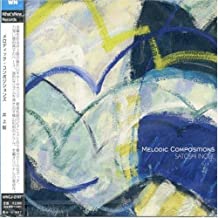
Satoshi Inoue 井上智 was born on November 12, 1956 in Kobe, Japan and studied at Kyoto’s Fuji School of Music from 1979 to 1981. Between 1981-1988, he led his own groups in Japan.
Moving to New York City in 1989 he studied at The New School for Jazz and Contemporary Music where he met Jim Hall, who has been on the faculty of the university since his senior year.
Over the years, Inoue has toured with jazz greats such as James Moody, James Williams, Cecil Bridgewater, Frank Foster, Slide Hampton, Barry Harris, Jimmy Heath, Arnie Lawrence, Jack McDuff, Junior Mance, Jon Faddis, Akira Tana, The Clayton Brothers and Toshiko Akiyoshi.
His own band has gigged at New York’s top jazz venues, and for twelve years, Inoue has brought American musicians to Japan to conduct fall tours for concerts and workshops, including the Big Apple in Nonoichi festival. His lectures on jazz standards appear monthly in a Japanese jazz magazine called Jazz Life.
Guitarist Satoshi Inoue, who performed together on Hall’s widely used instructional video collection called Jazz Guitar Master Class Volumes 1&2, continues to compose, record and perform.

More Posts: bandleader,guitar,history,instrumental,jazz,music