

Requisites
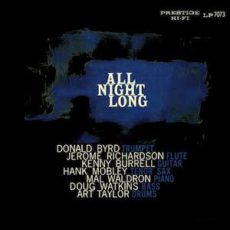
All Night Long ~ The Prestige All-Stars | By Eddie CarterThis morning’s choice from the library is a recent acquisition I’ve been hunting for since it was reissued as part of The Prestige Mono Series. It’s a swinging Fifties jam session that was originally released in 1957 by The Prestige All-Stars. All Night Long (Prestige PRLP 7073/PRST 7289) brings together a first-class ensemble, Donald Byrd on trumpet, Hank Mobley on tenor sax, Jerome Richardson (tracks: A1, B1 to B3) on flute, and (track: A1) on tenor sax, Mal Waldron on piano, Kenny Burrell on guitar, Doug Watkins on bass, and Art Taylor on drums. My copy used in this report is the 2012 Analogue Productions Mono audiophile reissue (APRJ 7073 – PRLP 7073).
Side One opens with Kenny Burrell’s All Night Long occupying the entire side. Art kicks off the song with an infectious beat. Kenny starts the opening solo with exquisite execution. Jerome’s flute flows with a happy feeling on the first of two statements. Hank takes us on a carefree joyride in the next reading, then Donald speaks his peace with a stellar presentation. Jerome resurfaces on tenor for a sparkling performance, and Mal gives a soulful effort on the next interpretation. Art follows with a brief exchange with the principal soloists before the group takes the song out. Side Two starts with the first of two tunes by Hank Mobley, Boo-Lu. Richardson sets the mood of this happy groove on the melody and opening chorus. Burrell, Byrd, Mobley, and Waldron follow with four short solos ahead of the reprise and close.
Flickers by Mal Waldron suggests a homage to the movies. It begins with the ensemble’s collective mid~tempo theme. Jerome is up first and shines with a light-hearted warmth. Donald and Hank follow with one easygoing reading each, then trade a few feisty riffs. Kenny turns in a tasty performance next and Mal applies blues-rooted energy to the finale leading to the closing chorus and Doug’s slow fade into oblivion. Mobley’s Li’l Hankie comes at you at medium speed with the ensemble in unison on the melody. Hank leads off the solos with a marvelous interpretation. Donald delves into the second reading on muted trumpet mining a vein of musical riches. Kenny tells a short story that makes every note count on the third statement. Jerome lights a fuse of creative inspiration on the next performance, followed by a stimulating conversation between the front line, Waldron, and Richardson ahead of the ending theme.
Bob Weinstock supervised the original album and the man behind the dials was Rudy Van Gelder. Kevin Gray did the remastering from the analog tapes. The record has a flat-edge and deep groove on the label like the original release, and the album cover has a high gloss. This reissue was pressed on 200-gram audiophile vinyl by Quality Record Pressings. The soundstage is outstanding, transporting the musicians to your listening room and the record is silent until the music starts. Burrell, Byrd, Watkins, and Taylor also appear on the companion album, All Day Long, recorded just a few days after this date. If you’re a Hard-Bop fan and are looking for an album with superb musicianship, I can’t think of a better choice to introduce you to The Prestige All-Stars than All Night Long! It’s a gorgeous recording that’s highly recommended and well worth adding to your library!
~ All Day Long (Prestige PRLP 7081/PRST 7277) – Source: Discogs.com © 2022 by Edward Thomas Carter

More Posts: bass,choice,classic,collectible,collector,drums,flute,guitar,history,instrumental,jazz,music,piano,saxophone,trumpet
Daily Dose Of Jazz…
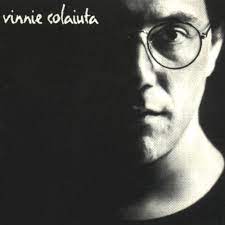
Vincent Peter Colaiuta was born on February 5, 1956 in Brownsville, Pennsylvania and was given his first drum kit when he was seven. He took to it naturally, with little instruction. By fourteen, the school band teacher gave him a book that taught him some of the basics and Buddy Rich was his favorite drummer until he heard the album Ego by Tony Williams, an event that changed his life. He started listening to organ groups, notably Jack McDuff, Jimmy McGriff and Don Patterson.
While matriculating through Berklee College of Music in Boston , Massachusetts at the time jazz fusion was on the rise, he listened to and admired Alphonse Mouzon and Billy Cobham. After leaving school, he played local gigs in Boston, joined a brief tour organized by Al Kooper, then worked in California on an album by Christopher Morris.
Returning to Boston, Colaiuta was drawn back to California by friends and took the bus from Boston to Los Angeles during the blizzard of 1978. After performing in jazz clubs, he won the audition to play drums for Frank Zappa, with whom he toured and appeared on the albums Joe’s Garage, Tinsel Town Rebellion, and Shut Up ‘n Play Yer Guitar.
In 1981, he left Zappa for the gig as a studio musician and recorded for the band Pages, Gino Vannelli, saxophonist Tom Scott, bassist Larry Klein, Joni Mitchell, touring with the latter. The late Eighties saw him as the house drummer for The Late Show Starring Joan Rivers. The band was led by Mark Hudson and was called the Party Boys and the Tramp.
By the end of the 1980s back as a studio musician he was recording albums, doing TV and film work during the day, and playing clubs at night. He worked with jazz musicians Herbie Hancock, Chick Corea, Buell Neidlinger, and the Buddy Rich Big Band. The 1990s he was with Sting, and released his debut solo album as well as two more as a leader.
He has won over fifteen Drummer of the Year awards from Modern Drummer magazine’s annual reader polls. These include ten awards in the “Best Overall” category. He was inducted into the Modern Drummer Hall of Fame in 1996 and the Classic Drummer Hall of Fame in 2014. Colaiuta has won one Grammy Award and has been nominated twice. Drummer Vinnie Colaiuta continues to perform, tour and record.

More Posts: bandleader,drums,history,instrumental,jazz,music
Daily Dose Of Jazz…
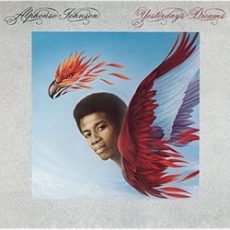
Alphonso Johnson was born on February 2, 1951 in Philadelphia, Pennsylvania and started off as an upright bass player, but switched to the electric bass in his late teens. He began his career in the early 1970s, and showing innovation and fluidity on the electric bass he sessioned with a few jazz musicians before landing a job with Weather Report, taking over for co-founding member Miroslav Vitous.
His debut with Weather Report was on the album Mysterious Traveller, followed by two more albums in the Seventies: Tale Spinnin’ and Black Market before he left the band to work with drummer Billy Cobham. During 1976-77 Alphonso recorded three solo albums as a bandleader, for the Epic label, in a fusion-funk vein.
One of the first musicians to introduce the Chapman Stick to the public, in 1977, his knowledge of the instrument offered him a rehearsal with Genesis, who were looking for a replacement for guitarist Steve Hackett but being more of a bassist than a guitarist, Johnson instead recommended his friend ex-Sweetbottom guitarist and fellow session musician Daryl Stuermer. However, he was one of two bass players on Phil Collins’s first solo album, Face Value, in 1981.
He would work with Bob Weir on a couple of projects – Bobby & The Midnites and The Other Ones; reunite with Cobham in the band Jazz Is Dead, and Steve Hackett’s Genesis Revisited album as well as with Santana, Steve Kimock and Chet Baker. He toured Europe and Japan with saxophonist Wayne Shorter, pianist James Beard, drummer Rodney Holmes, and guitarist David Gilmore.
Earning a Bachelor of Arts in Music Education degree from California State University in 2014, as an undergrad he was a member of the CSUN Wind Ensemble. With extensive experience as a bass teacher he has conducted bass seminars and clinics in Germany, England, France, Scotland, Ireland, Japan, Switzerland, Australia, Brazil and Argentina.
Bassist Alphonso Johnson continues to perform while serving as an adjunct instructor at the University of Southern California and the California Institute of the Arts.
More Posts: bandleader,bass,educator,history,instrumental,jazz,music
Requisites
Johnny Griffin Sextet | By Eddie Carter
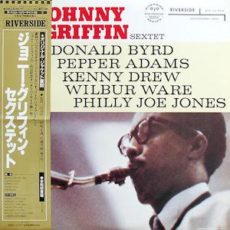
This morning’s discussion is the 1958 album, Johnny Griffin Sextet (Riverside RLP 12-264). Griffin began his career in the forties, playing the alto sax until joining Lionel Hampton’s Orchestra after graduating high school. Hampton urged him to play the tenor sax, and he did in the band until 1947. Johnny also played with Art Blakey, The Kenny Clarke-Francy Boland Big Band, Eddie “Lockjaw” Davis, and Thelonious Monk.
He made three albums for Blue Note and recorded for a variety of labels as a leader and sideman. Griff was nicknamed The Little Giant for his diminutive size but possessed a robust sound that produced riveting solos effortlessly. Donald Byrd on trumpet, Pepper Adams on baritone sax, Kenny Drew on piano, Wilbur Ware on bass, and Philly Joe Jones on drums complete the sextet. My copy used in this report is the 1974 Japanese Mono reissue (Riverside SMJ 6285) by Victor Musical Industries.
Side One opens with Stix’ Trix by Wilbur Campbell. A lively introduction by Philly precedes the ensemble’s feisty opening chorus. Kenny takes the first solo and gives a vigorously spirited performance. Pepper states his case on the second reading, then Donald follows in fine form on the next statement. Philly picks up the baton with some exciting brushwork, and Johnny gives a vivacious finale into the sextet’s reprise and conclusion.
What’s New? by Bob Haggart and Johnny Burke begins with a thoughtfully tender introduction and gentle melody by Griff. The saxophonist’s opening solo is beautifully constructed and poignant. Byrd and Adams split the next chorus with two pensive performances. Drew executes an elegant touch on the next interpretation, then Griffin returns for a few more intimate thoughts before ending with a sultry, seductive exit.
The first side ends with Dizzy Gillespie’s tribute to Woody Herman, Woody ‘n’ You. It starts with a lively conversation between Johnny and Philly. The rhythm section joins them for a cheerfully spirited theme, then Wilbur kicks off the solos with a rousing unaccompanied reading. Kenny delivers a dynamic performance on the next statement. Griff is up next with an interpretation that swings soulfully, and Philly generates an electrical charge ahead of the ensemble’s vigorous closing chorus.
Johnny G.G. by John Hines opens Side Two at a laid-back tempo for the sextet’s melody. Drew is up first with a smoothly flowing solo, then Griff carries the easygoing mood to a delightfully satisfying close. Byrd approaches the third reading with thoughtful construction and fluid lines. Adams delivers the next statement free and easy. Ware has a wonderful thing going into the closing chorus after sharing a final thought with Griff.
The finale is Catharsis, an upbeat swinger by Johnny Griffin that begins with a brisk collective theme and allows everyone solo space. Pepper takes off with rapturous enthusiasm on the opening statement. Donald creates an exuberant reading next. Kenny follows with a solo that’s like the cherry and cream on top of a succulent, tasty sundae. Johnny and Wilbur share the spotlight again on the next interpretation, then Philly has a short exchange with the front line leading to the closing chorus.
Johnny Griffin Sextet was originally recorded by Jack Higgins at Reeves Sound Studios, and the remastering by Victor Musical Industries has a spectacular soundstage. If you’re in the mood for a superb blowing session, I invite you to audition Johnny Griffin Sextet for a spot in your library. It’s forty-two minutes of some of the best Hard-Bop you’ll hear on a turntable and an enjoyable album I highly recommend!
~ A Blowing Session (Blue Note BLP 1559), Introducing Johnny Griffin (Blue Note BLP 1533/BST 81533), The Congregation (Blue Note BLP 1580) – Source: Discogs.com ~ Woody ‘n’ You, What’s New? – Source: JazzStandards.com © 2022 by Edward Thomas Carter
More Posts: choice,classic,collectible,collector,history,instrumental,jazz,music,saxophone
Daily Dose Of Jazz…
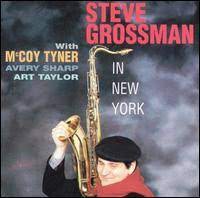
Steven Mark Grossman was born on January 18, 1951 in Brooklyn, New York to Rosalind, an amateur pianist, and Irving, an RCA salesman and later president of KLH Research and Development Corporation. At 18, he went on to replace Wayne Shorter in Miles Davis’ jazz-fusion band. Then, from 1971 to 1973, he was in Elvin Jones’ band.
In the late 1970s, he was part of the Stone Alliance trio with Don Alias and Gene Perla. The group released four albums during this period, including one featuring Brazilian trumpeter Márcio Montarroyos. The albums also feature an array of other musicians. They went on to release three live reunion albums during the 2000s.
Fusion and hard bop saxophonist Steve Grossman passed away of cardiac arrest in Glen Cove, New York, on August 13, 2020, at the age of 69.
More Posts: bandleader,history,instrumental,jazz,music,saxophone