


Daily Dose Of Jazz…
Arlene Bardelle was born on November 2, 1959 and Chicago, Illinois is her home. Growing up Judy Garland was an early influence and Ella Fitzgerald was a major influence on her singing. She also took cues from Sarah Vaughan, Carmen McRae and Irene Kral.
Having a longtime love affair with the grand old movies of the 30’s and 40’s, Arlene has accumulated a vast repertoire of the great American standard songbook as a result.
Bardelle has performed at the top Chicago venues with her band including the likes of pianists Tom Muellner, John Campbell, Jeremy Kahn and Dennis Luxion, bassist Kelly Sill, Jim Cox, Rob Amster, Larry Kohut, Joe Policastro and Larry Gray, drummers Tim Davis, Phil Gratteau, Bob Rummage and Rusty Jones and multi-instrumenatalist Ira Sullivan, saxophonists Eric Schneider and Ron Dewar, as well as trumpeter Art Davis.
Vocalist Arlene Bardelle released her last album Blue Gardenia in 2010 and she continues to perform and select the music she is passionate about.

More Posts: bandleader,history,instrumental,jazz,music,vocal

The Quarantined Jazz Voyager
For Musicians Only is an album by Dizzy Gillespie, Stan Getz and Sonny Stitt incorporating bebop influences. Produced by Norman Granz, it was recorded on October 16, 1956 at Radio Recorders in Hollywood, California. It wasn’t released until 1958 on the Verve label. It has been described as the real thing, no pretense.
The story behind this session from Stan Levy’s point of view is that everything was done in one take, no 2nd takes, no overdubbing. It was virtually a live, real bebop session, nothing worked out, just play by the seat of your pants or get off the bandstand. Like it or not, that was the way it was with Bird and those cats, the real thing, no pretense.
The album is known for the front line’s winding, intricate solos. This has led to praise for the back line, particularly bassist Ray Brown, for keeping some semblance of the original tune going behind the solos.
Track List | 42:59- Bebop (Gillespie) ~ 12:48
- Dark Eyes (Traditional) ~ 12:10
- Wee (Allen’s Alley) (Denzil Best, Gillespie) – 8:28
- Lover Come Back to Me (Sigmund Romberg, Oscar Hammerstein II) ~ 9:33
- Dizzy Gillespie ~ trumpet
- Sonny Stitt ~ alto saxophone
- Stan Getz ~ tenor saxophone
- John Lewis ~ piano
- Herb Ellis ~ guitar
- Ray Brown ~ bass
- Stan Levey ~ drums

More Posts: adventure,album,club,genius,jazz,museum,music,preserving,restaurant,saxophone,travel,trumpet
Daily Dose Of Jazz…
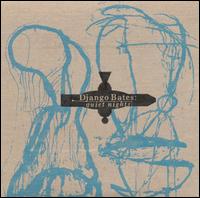
Django Bates was born Leon Bates on October 2, 1960 in Beckenham, Kent, England where he attended Sedgehill School. While at this school, for six years he also attended the Centre for Young Musicians in London, England, where he learned trumpet, piano, and violin. In 1977 he studied at Morley College. The following year he enrolled at the Royal College of Music to study composition but left after two weeks.
He founded Human Chain in 1979 and, in the 1980s, he rose to prominence in a jazz orchestra called Loose Tubes. In 1991, Django started the 19-piece jazz orchestra Delightful Precipice. He also assembled the Powder Room Collapse Orchestra and created Circus Umbilicus, a musical circus show. As a sideman he was a member of Dudu Pukwana’s Zila, Tim Whitehead’s Borderline, Ken Stubbs’s First House, Bill Bruford’s Earthworks, Sidsel Endresen, and in the bands of George Russell and George Gruntz.
As an educator, he has tutored at the Banff Centre jazz program, and was appointed Professor of Rhythmic Music at the Rhythmic Music Conservatory in Copenhagen. Bates was appointed visiting professor of jazz in 2010 at the Royal Academy of Music in London, and the next year was appointed Professor of Jazz at HKB Bern Switzerland.
He has performed with Michael Brecker, Tim Berne, Christian Jarvi, Vince Mendoza, David Sanborn, Kate Rusby, and Don Alias. Pianist, keyboardist, tenor hornist Django Bates continues to perform and record.

More Posts: bandleader,educator,history,instrumental,jazz,keyboards,music,piano,tenorhorn
The Quarantined Jazz Voyager
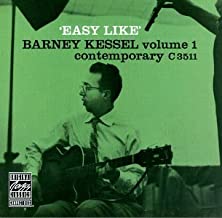
To maintain my health during this variant period of the pandemic I am continuing to listen to great music as I remain socially distant. This week I am pulling out from my shelves the album Easy Like, Volume 1 by guitarist Barney Kessel.
The album was released by Contemporary Records in 1956. Eight songs were released on the 10-inch album Barney Kessel which were recorded on November 14, and December 19, 1953, while other songs were recorded on February 23, 1956. It was recorded at Contemporary Records Studio in Los Angeles, California. The album was produced by Lester Koenig.
Track Listing | 46:04All tracks are written by Barney Kessel except where noted.
- Easy Like ~ 4:04
- Tenderly (Walter Gross/Jack Lawrence) ~ 4:06
- Lullaby of Birdland (George Shearing/George David Weiss) ~ 3:16
- What Is There to Say? (Vernon Duke/Yip Harburg) ~ 3:10
- Bernardo ~ 3:34
- Vicky’s Dream ~ 2:37
- Salute to Charlie Christian ~ 2:52
- That’s All (Alan Brandt/Bob Haymes) ~ 3:18
- I Let a Song Go Out of My Heart (Duke Ellington/Irving Mills/Henry Nemo/John Redmond) ~ 4:12
- Just Squeeze Me (But Please Don’t Tease Me) (Ellington/Lee Gaines) ~ 3:41
- April in Paris (Duke/Harburg) ~ 3:00
- North of the Border ~ 2:46
- Barney Kessel ~ guitar
- Buddy Collette ~ alto saxophone, flute
- Bud Shank ~ alto saxophone, flute
- Arnold Ross ~ piano
- Claude Williamson ~ piano
- Harry Babasin ~ double bass
- Red Mitchell ~ double bass
- Shelly Manne ~ drums
More Posts: adventure,album,club,genius,guitar,jazz,museum,music,preserving,restaurant,travel
Requisites
Lee Konitz With Warne Marsh ~ Lee Konitz & Warne Marsh | By Eddie Carter
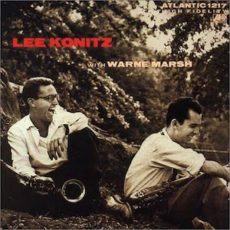
This morning’s choice from the library is an album bringing together two of the best musicians from the Cool Jazz school, Lee Konitz on alto sax and Warne Marsh on tenor sax. Lee Konitz With Warne Marsh (Atlantic 1217) was recorded and released in 1955. Ronnie Ball (track: B3), Sal Mosca (tracks: A2, A4 to B2, B4) on piano, Billy Bauer on guitar, Oscar Pettiford on bass, and Kenny Clarke on drums round out the stellar supporting cast. My copy used for this report is the 2018 Speakers Corner Mono audiophile reissue sharing the original catalog number.
Side One begins with Topsy by Edgar Battle and Eddie Durham. Oscar starts an elegant bass introduction segueing into a collective subtle theme minus both pianists. Lee opens with a relaxing informality on a lyrical, soft-spoken statement. Oscar delivers the next reading with exquisite skill and Warne excels on the final solo before both saxes take the closing chorus into a soft climax. The sextet turns the beat upward on There Will Never Be Another You by Harry Warren and Mack Gordon. It opens with a quick collective theme led by Konitz who also cooks briskly on the opening statement. Marsh follows with a passionately assertive solo, then Pettiford delivers something special on the next vigorous reading. Both horns return to share the final solo ahead of the close.
I Can’t Get Started by Vernon Duke and Ira Gershwin tells the story of a man who’s achieved great success in everything, except the affection and love of the woman he desires. Both pianists lay out on this tune also. Lee takes the lead this time with a dreamy melody and reading that’s delicately crafted. Warne approaches the next solo with tender sincerity. Oscar walks a short distance on the closer leading to a gentle exit. Donna Lee by Miles Davis is named for the daughter of bassist Curly Russell and begins with an expedient theme that’s breathtaking. Konitz opens with a very impressive reading, then Mosca takes over for an energetic interpretation. Marsh charges into the next searing statement and Clarke shares a fiery conversation with both saxes into the reprise and abrupt ending.
Side Two opens with Two Not One by Lennie Tristano that gets underway a vibrant opening chorus. Lee takes off first like a jolt of electricity traveling through the body. Warne adds some additional power on an inspired solo as steady as the rock of Gibraltar. Sal responds with an exhilarating reading shadowed closely by both saxes in the background. Kenny shares a brief statement with the principal soloists into the climax. Don’t Squawk is by Oscar Pettiford, a blues he makes his presence felt on the introduction and the melody with the rhythm section. Konitz takes the first solo for a slow stroll, then Mosca swings softly and smoothly into the next interpretation. Marsh also makes his point in a relaxed manner, followed by Pettiford who gives a slow, easy groove gently sailing over the rhythm section.
Ronnie Ball takes over the piano chair on his uptempo original, Ronnie’s Line. Lee begins with an upbeat, energetic theme, then adds exuberant vitality to the opening solo. Ronnie takes the next spot for a swiftly paced statement. Marsh swings into the next performance vigorously, and the front line energizes the closing chorus with a spirited ride ending with an attractive exit. The album ends with a little Background Music by Warne Marsh opening with a collective theme. Lee applies some serious blowing to the opening statement. Sal gives an exhilarating reading next, followed by Warne who executes the third solo with high-voltage precision. Oscar and Kenny exchange their ideas on the finale into a soft summation. Lee Konitz With Warne Marsh was produced by Nesuhi Ertegun and engineered by Tom Dowd.
Speakers Corner reissues are remastered using pure analog components only, from the master tapes through to the cutting head. The soundstage on this album is immense and absolutely stunning, drawing you in completely the moment your stylus touches the lead groove. You don’t just hear the musicians and their instruments; you almost feel their presence in your listening room. In my opinion, the album’s not only remarkable for its musicianship, but an underrated jewel of fiery and relaxed tempos by both saxophonists. If you’re a fan of Cool Jazz and in the mood for some great sax, I invite you to check out, Lee Konitz With Warne Marsh for your library. It’s a terrific album of pure bliss that’s perfect in every way!
~ Tom Dowd – Source: Discogs.com ~ Donna Lee, I Can’t Get Started, There Will Never Be Another You, Topsy – Source: JazzStandards.com © 2021 by Edward Thomas Carter

More Posts: choice,classic,collectible,collector,history,instrumental,jazz,music,saxophone