
Daily Dose Of Jazz…
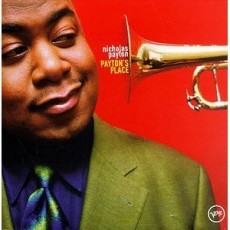
Nicholas Payton was born on September 26, 1973 in New Orleans, Louisiana, the son of bassist and sousaphonist Walter Payton. He took up the trumpet at age four and by nine was playing in the Young Tuxedo Brass Band. Upon leaving school, he enrolled first at the New Orleans Center for Creative Arts and then at the University of New Orleans under the tutelage of Ellis Marsalis.
Payton toured with Marcus Roberts and Elvin Jones in the early 90s, signed a recording contract with Verve Records, and released his first album, From This Moment in 1994. In 1996 he performed on the soundtrack of the movie Kansas City.
After seven albums on Verve, Nicholas signed with Warner Bros. and would perform and record with Wynton Marsalis, Dr. Michael White, Nancy Wilson, Christian McBride, Joshua Redman, Roy Hargrove Clark Terry, Allen Toussaint, and Joe Henderson among others. He is a founding member of the SFJAZZ Collective and in 2008, he joined The Blue Note 7 in 2008, releasing an album the following year that produced a U.S. promotional tour.
Trumpeter Nicholas Payton also plays piano and is a prolific blogger and has written a notable blog titled “On the Difference Between Prejudice and Racism…” in which Payton theorizes that blacks cannot be racist because a prerequisite to racism is power.
He has recorded more than a dozen albums as a leader and sideman, received a Grammy Award for Best Instrumental Solo for his playing on the album Doc Cheatham & Nicholas Payton and continues to compose, record and perform.
Daily Dose Of Jazz…
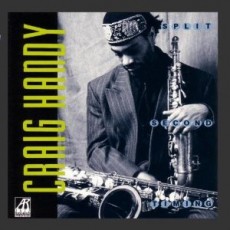
Craig Handy was born Craig Mitchell Handy on September 25, 1962 in Oakland, California and played guitar, trombone and piano before falling in love with the tenor saxophone. He was a part of the Berkeley High School Jazz Program, earned a Charlie Parker Scholarship award and attended North Texas State University from 1981 to 1984, where he was a member of their prestigious One O’Clock Lab Band.
By 1986 at age 23 he moved to New York City and once there he built up a cache of credits performing and recording with Herbie Hancock, Head Hunters, Art Blakey, Wynton Marsalis, Roy Haynes, Abdullah Ibrahim, Elvin Jones, Joe Henderson, Betty Carter, John Hicks, George Adams, Ray Drummond, Conrad Herwig, Dee Dee Bridgewater, Charles Tolliver, The Cookers, and David Weiss among many others.
He was a member and Musical Director of the Mingus Big Band, Mingus Dynasty, and Mingus Orchestra, post-bop tenor saxophonist Craig Handy has recorded as a leader, as a member of the group Chartbusters, portrayed the role of Coleman Hawkins in the 1996 film Kansas City and is credited for performing the Season Six theme of the Cosby Show. He continues to compose, perform, record and tour.
More Posts: saxophone
Daily Dose Of Jazz…
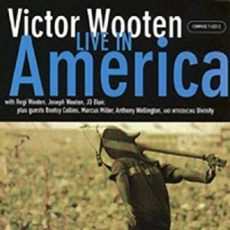
Victor Lemonte Wooten was born on September 11, 1964 in Mountain Home, Idaho and was the youngest of the five Wooten Brothers; Regi, Roy, Rudy and Joseph, all of whom are musicians. Regi began to teach him to play bass when he was two, and by the age of six was performing with his brothers in their family band, The Wooten Brothers Band. As a United States Air Force family, they moved around a lot when he was very young, but the family finally settled in the Warwick Lawns neighborhood of Newport News, Virginia in 1972.
While in high school, he and his brothers played in the country music venue at Busch Gardens theme park in Williamsburg, Virginia, Graduating from Denbigh High School in 1982, by 1987 Victor was traveling to Nashville, Tennessee to visit friends that he made at the theme park, one of whom was a studio engineer who introduced him to Béla Fleck, with whom he still collaborates musically.
As an educator Wooten has created a music program called Bass/Nature camp that has since expanded into the Victor Wooten Center for Music and Nature and now includes all instruments. All of his camps are held at his location called Wooten Woods which is a 147 acre retreat center located in Only, Tennessee, outside of Nashville. He also co-leads the Victor Wooten/Berklee Summer Bass Workshop at Berklee College of Music in Boston, MA. He collaborates with Berklee Bass Dept. chair, Steve Bailey and the two bassists have been teaching together since the early 1990s.
He has been featured on the cover of Making Music Magazine, has won the “Bass Player of the Year” award from Bass Player magazine three times, is the first to win the award more than once, and was named #10 in the “Top 10 Bassists of All Time” by Rolling Stone. As a leader he has recorded ten albums, another seven with various groups and with Béla Fleck , fourteen. He has authored a novel titled “The Music Lesson: A Spiritual Search for Growth Through Music” and has a sequel in the making. Bassist, composer, author, producer, educator, and five-time Grammy Award winner Victor Wooten, who has recorded an album titled SMV with Stanley Clarke and Marcus Miller, continues to compose, perform and record.
More Posts: bass
Daily Dose Of Jazz…
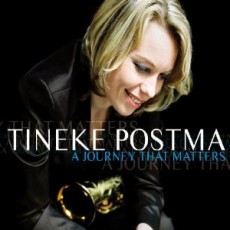
Tineke Postma was born on August 31, 1978 in Heereveen, The Netherlands. At the age of eleven she began playing the saxophone and studied at the Amsterdam Conservatory. Graduating the conservatory in 2003, Tineke received a Masters from the Manhattan School of Music in New York and during this period of her education Tineke was taught by David Liebman, Dick Oatts and Chris Potter. She has been teaching at the Amsterdam Conservatory since 2005.
Performing internationally the saxophonist and composer has worked with Esperanza Spaulding, Terri Lyne Carrington and Wayne Shorter; she has received numerous recognitions from Down Beat Poll, won the Dutch Edison Award, the Jazz Juan Revelations Award, the Midem International Jazz Revelation of the Year Award and The Sisters in Jazz All Star Award.
Postma leads the Tineke Postma Quartet and The Tineke Postma International Quartet featuring Geri Allen on piano, Scott Colley on bass and Terri Lyne Carrington on drums. They have played festivals around the globe and recorded five albums under the leaders name. Postma has recorded as a sideman and collaborator and continues to compose, perform and tour.
More Posts: saxophone
Requisites
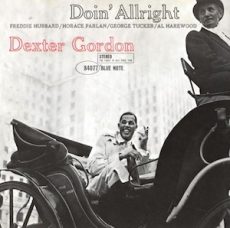
Doin’ Allright ~ Dexter Gordon | By Eddie Carter
This morning’s discussion came up after dinner a few nights ago, when I chose a few titles to play and considerreviewing for our jazz members. After listening, I’d settled on one of my favorite tenor saxophonists, Dexter Gordon. Doin’ Allright (Blue Note BLP 4077/BST 84077) was released in 1961 and is his Blue Note debut, celebrating his comeback from personal struggles and incarceration. The album showcases Gordon at his very best, backed by Freddie Hubbard on trumpet, Horace Parlan on piano, George Tucker on bass, and Al Harewood on drums. I own the 1992 Toshiba-EMI Japanese Stereo reissue in the Blue Note 4000 Series Ultra Collection, sharing the original catalog number.
The album opens with a classic by George and Ira Gershwin, I Was Doin’ All Right. The quintet gets things going with an easy medium groove on the melody. Dexter makes a relaxed entrance for the first solo, followed by Freddie, who swings smoothly and confidently in the second statement. Horace comes in last, complementing the horns with a laid-back reading before the group returns to reprise the theme and fade out gradually. You’ve Changed by Carl Fischer and Bill Carey slows down to a ballad tempo for an emotionally sensitive melody by Dexter. He continues communicating his heart and soul in the opening statement. Freddie speaks next in a warm, emotional tone, and Horace has a deeply expressive moment before the front line returns and slowly takes the song out.
Dexter’s For Members Only ends the first side with an infectious ensemble theme that gets things started. Dexter goes right to work with a relaxing opening statement. Freddie is next, swinging effortlessly with a bright tone and articulate, precise notes. Horace takes his turn last with a laid-back solo ahead of the ensemble’s restatement of the melody and close. Society Red, a funky blues by Dexter Gordon, gets the second side underway with the quintet’s easy-flowing melody. Freddie puts together the first appetizer of this soulful meal. Dexter then shares a rich, bluesy flavor, simmered to perfection, inviting the listener to savor every note. Horace adds a delightful touch of seasoning, and George adds the final ingredient, wrapping up a musical feast that feels like home ahead of the close.
It’s You or No One by Sammy Cahn and Jule Styne wraps up the album on a brisk note, beginning with Dexter’s introduction before the quintet’s lively theme. Dexter takes center stage first with an energetic solo. Freddie adds some bite with the second statement. Horace follows, delivering exuberant verses with an aggressive impact. George takes a short, robust walk in the fourth reading, and Al brings plenty of heat in the finale preceding the group’s return to take the song out. Alfred Lion produced the session, and Rudy Van Gelder managed the recording console. The album’s sound quality is demonstration-class, with a stunning soundstage that if you close your eyes, you’ll swear the musicians are playing right in front of your sweet spot. The front and back covers are glossy, and the record is absolutely quiet until the music starts.
If you’re in the mood for a terrific hard bop album to enjoy anytime of the day or evening, I highly recommend you check out Doin’ Allright on your next record store visit. It makes a great introduction for jazz newcomers discovering Dexter Gordon, and a title I’m sure will also please seasoned fans. It also proves that the tenor saxophonist was not only back, but definitely Doin’ Allright!
~ I Was Doin’ All Right, You’ve Changed – Source: Wikipedia.org © 2026 by Edward Thomas Carter

More Posts: choice,classic,collectible,collector,history,instrumental,jazz,music,saxophone