

Requisites
Whistle Stop ~ Kenny Dorham | By Eddie Carter
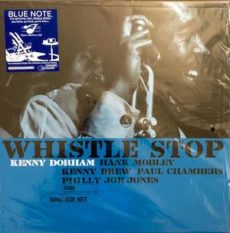
One of the biggest pleasures I get from listening to and discussing records from my library each week is I’m able to revisit favorite albums and artists to share my thoughts with my readers. If you’re a fan of Hard-Bop, this morning’s subject of discussion is one of the best by trumpet player, Kenny Dorham. Whistle Stop (Blue Note BLP 4063/BST 84063) was recorded and released in 1961 with a stellar supporting cast: Hank Mobley on tenor sax, Kenny Drew on piano, Paul Chambers on bass, and Philly Joe Jones on drums. Kenny was born in Fairfield, Texas; he played and recorded with many great jazz musicians during his lifetime. He was also a member of the orchestras of Billy Eckstine, Dizzy Gillespie, Mercer Ellington, and The Jazz Messengers. Dorham composed all seven tunes on Whistle Stop and my copy used in this report is the 2017 Music Matters Stereo audiophile reissue (MMBST-84063).
Side One starts with ‘Philly’ Twist, a driving blues that’s off to the races from the opening notes of Philly’s brief introduction into the quintet’s brisk melody. Kenny opens with a vigorously agile reading, then Hank wails convincingly on the second solo. Kenny sinks his teeth into the third performance vigorously. Paul is especially impressive on a concise statement ahead of Philly’s dazzling velocity and propulsive timing on the song’s finale. Buffalo is good soul-food cooking at midtempo with a carefree theme in unison. Mobley starts the soloing with four mellow verses. Dorham responds with a leisurely ride punctuated by the rhythm section’s groundwork. Drew keeps the laid-back feeling going with an infectiously swinging interpretation that’ll have the listener snapping their fingers and tapping their toes. Chambers wraps up everything with a short stroll anchored by only Jones into the reprise and exit.
Sunset closes the first side with the trio’s tastefully elegant introduction to one of the album’s loveliest tunes. Kenny on muted trumpet and Hank lead the quintet through a pretty mid tempo melody. Dorham remains on the mute for the opening statement, cooking easily. Hank strolls into the second performance with jaunty confidence. Kenny dips into a well of positive energy on the next reading. Paul adds the closing word with a feisty finale leading to a soft fade. Whistle Stop starts Side Two with the ensemble’s brisk melody. Mobley ignites the opening chorus with a fiery passion, then Dorham provides an electrically charged reading. Drew steps up next for a zesty performance of creative energy. Philly shares a moment with the front line in an exchange on the closing statement, before executing a lively finale preceding the climax.
Sunrise In Mexico has a soulful personality that comes alive as the day begins on the quintet’s theme. Dorham starts with a solid groove on the first interpretation. Hank demonstrates a lesson in musicality on the second reading. Kenny is as cool as the other side of the pillow on the next solo, and Paul swings softly on an effective closing statement ahead of the reprise and gentle dissolve. Windmill is an energized swinger right out of the gate beginning with a blazing melody. Dorham begins the lead solo with an aggressive fierceness, then Mobley makes searing heat on the second statement. Drew adds an abundant amount of high voltage to the third performance. Chambers walks with a happy bounce on an abbreviated reading. Jones breaks loose briefly on the finale with vivacious brushwork leading to the quintet’s high-spirited ending.
The album closes with Dorham’s Epitaph, a short, beautiful ensemble tune Kenny wrote for his passing. It illustrates his ability as a ballad composer and opens with a very gentle opening chorus by the leader complemented by the sentimental support by Hank and the rhythm section. An expanded version of this song was also written for a large orchestra and renamed Fairy Tale. Kenny Dorham continued recording excellent albums throughout the sixties that were easily the equivalent of those released by Miles Davis, Freddie Hubbard, and Lee Morgan, but sadly never received the recognition that might have catapulted him to stardom. He passed away at age forty-eight from kidney disease on December 5, 1972.
The mastering by Kevin Gray of Cohearent Sound and audio engineer Steve Hoffman is phenomenal and improves on the original recording by Rudy Van Gelder with a crystal-clear sound that’s demonstration class placing you in the studio alongside the musicians. Each of the MMJ reissues receives a great deal of care with attention to detail including high-definition gatefold photos, superb packaging of the covers, and 180-gram audiophile vinyl for the music. If you’re looking for a Hard-Bop album that’ll excite your ears, I invite you to audition Whistle Stop by Kenny Dorham. It’s a delightfully rewarding album by one of the best trumpet players in jazz that merits multiple listens and is worth adding to any jazz library!
© 2021 by Edward Thomas Carter
More Posts: choice,classic,collectible,collector,history,instrumental,jazz,music,trumpet

The Quarantined Jazz Voyager
The pandemic rages on as I continue to keep myself well by wearing my mask and social distancing. In my own space I pull down from the shelves my copy of Kenny Drew Trio. The album was recorded on September 20 & 26, 1956 at the Reeves Sound Studios in New York City. It was produced by Orrin Keepnews and Bill Grauer and was released the same year on the Riverside Records label.
The album features Drew’s tribute to jazz patron Baroness Pannonica de Koenigswarter Blues for Nica. It is the only song he contributed to the album. This band was also the rhythm section the following year on sessions for John Coltrane that yielded Blue Train.
Track List | 42:55 Side One- Caravan (Duke Ellington, Irving Mills, Juan Tizol) ~ 4:56
- Come Rain Or Come Shine (Harold Arlen, Johnny Mercer) ~ 6:08
- Ruby, My Dear (Thelonious Monk) ~ 5:46
- Weird~O (Hank Mobley) ~ 4:04
- Taking A Chance On Love (Vernon Duke, John Latouche, Ted Fetter) ~ 4:42
- When You Wish Upon A Star (Leigh Harline, Ned Washington) ~ 5:19
- Blues For Nica (Kenny Drew) ~ 5:31
- It’s Only A Paper Moon (Harold Arlen, E.Y. “Yip” Harburg, Billy Rose) ~ 6:25
- Kenny Drew ~ piano
- Paul Chambers – bass
- Philly Joe Jones – drums

More Posts: adventure,album,club,genius,jazz,museum,music,preserving,restaurant,travel
The Quarantined Jazz Voyager
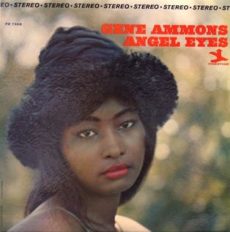
As I go about my city travels I notice how lax people are with masking and social distancing, having their self-centered need to rush to the lives they knew before the pandemic hit. This week I am selecting an album that has been a classic and one of my favorites since the day I first put on the turntable. It’s the 1965 studio recording Angel Eyes by saxophonist Gene Ammons released on the Prestige label.
The album was recorded at Van Gelder Studio in Englewood Cliffs, New Jersey. Two separate sessions compiled the album, tracks 1, 2, 4 & 5 were recorded on June 17, 1960 and tracks 3 & 6 on September 5, 1962. The September session was one of Ammons’ final ones before serving a long drug-related prison sentence.
Track List | 36:25
- Gettin’ Around (Gene Ammons) ~ 6:46
- Blue Room (Lorenz Hart, Richard Rodgers) ~ 5:34
- You Go to My Head (J. Fred Coots, Haven Gillespie) ~ 5:55
- Angel Eyes (Earl Brent, Matt Dennis) ~ 8:45
- Water Jug (Frank Wess) ~ 5:10
- It’s the Talk of the Town (Jerry Livingston, Al J. Neiburg, Marty Symes) ~ 4:15
- Gene Ammons ~ tenor saxophone
- Frank Wess ~ flute (tracks 1, 2 and 4), tenor saxophone (track 5)
- Johnny “Hammond” Smith ~ organ (tracks 1, 2, 4 & 5)
- Mal Waldron (tracks 3 & 6) ~ piano
- Doug Watkins (tracks 1, 2, 4 & 5), Wendell Marshall (tracks 3 & 6) ~ bass
- Art Taylor (tracks 1, 2, 4 & 5), Ed Thigpen (tracks 3 & 6) ~ drums
More Posts: adventure,album,club,genius,jazz,museum,music,preserving,restaurant,saxophone,travel

Daily Dose Of Jazz…
Tord Gustavsen was born on October 5, 1970 in Oslo, Norway and raised in rural Hurdal, Akershus where he grew up playing church music. He attended the University of Oslo with a degree in psychology before going to the Trondheim Musikkonsevatorium studying jazz for three years. Graduate school saw him with a degree in musicology at the University of Oslo, where he was a guest teacher of jazz piano and theory.
Signed to ECM Records, between 2003 and 2007 the Tord Gustavsen Trio released three albums and in 2005 won the Nattjazz prize. A later ensemble released the album Restored, Returned was recorded in 2009, which was awarded with Spellemannsprisen, the Norwegian Grammy. The quartet went on to release The Well, Extended Circle and play the Montreal Jazz Festival in several different configurations.
He has recorded as a session musician, and guested on friends’ albums, as well as collaborative projects. Pianist Tord Gustavsen continues to be highly interested in psychology and has written a lengthy thesis on the paradoxes of improvisation. He continues to express his music through performance and recordings.
More Posts: bandleader,educator,history,instrumental,jazz,music,piano
The Quarantined Jazz Voyager
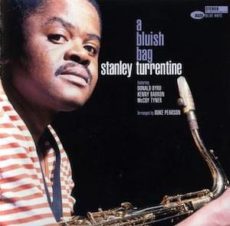
For those of us who are still practicing our social distancing and wearing our masks, this week’s selection of the shelves is A Bluish Bag. It is an album by saxophonist Stanley Turrentine consisting of two sessions recorded for the Blue Note label in 1967. and arranged by Duke Pearson, the first featuring Donald Byrd and the second McCoy Tyner, among others.
The album recording consisting of two sessions, the first February 17th, (#1-7) and June 9th, (#8-12). It was produced by Alfred Lion, arranged by Duke Pearson and engineered by Rudy Van Gelder at Van Gelder Studio, Englewood Cliffs, New Jersey. Though recorded in 1967, it was not released until June 5, 2007, forty years later.
Tracks | 62:41
- Blues For Del (Stanley Turrentine) ~ 4:14
- She’s A Carioca ( Vinicius de Moraes, Ray Gilbert, Antônio Carlos Jobim) ~ 6:31
- Manhã de Carnaval (Luiz Bonfá, Antônio Maria) ~ 5:53
- Here’s That Rainy Day (Jimmy Van Heusen, Johnny Burke) ~ 5:32
- What Now My Love (Gilbert Bécaud, Pierre Delanoë, Carl Sigman) ~ 4:38
- Samba do Avião (Antônio Carlos Jobim) ~ 5:12
- Night Song (Lee Adams, Charles Strouse) ~ 6:33
- Days of Wine and Roses (Henry Mancini, Johnny Mercer) ~ 6:05
- Come Back to Me (Burton Lane, Alan Jay Lerner) ~ 5:55
- Silver Tears (Henry Mancini) ~ 5:07
- A Bluish Bag (Henry Mancini) ~ 7:17
- With This Ring (Luther Dixon, Anthony Hester, Richard “Popcorn” Wylie) ~ 5:49
Players
Tracks 1-7
- Stanley Turrentine ~ tenor saxophone
- Donald Byrd ~ trumpet
- Julian Priester ~ trombone
- Jerry Dodgion – alto saxophone, flute, alto flute
- Joe Farrell – tenor saxophone, flute
- Pepper Adams – baritone saxophone, clarinet
- Kenny Barron – piano
- Bucky Pizzarelli – guitar
- Ron Carter – bass
- Mickey Roker – drums
Tracks 8-12
- Stanley Turrentine ~ tenor saxophone
- Blue Mitchell, Tommy Turrentine ~ trumpet
- Julian Priester ~ trombone
- Jerry Dodgion ~ alto saxophone, flute
- Al Gibbons ~ bass clarinet, tenor saxophone
- Pepper Adams ~ baritone saxophone, clarinet
- McCoy Tyner ~ piano
- Walter Booker ~ bass
- Mickey Roker ~ drums
More Posts: adventure,album,club,genius,jazz,museum,music,preserving,restaurant,saxophone,travel