

The Quarantined Jazz Voyager
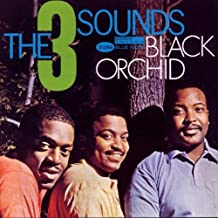
The Quarantined Jazz Voyager is pulling off the shelf for your listening pleasure comes from Black Orchid. It’s an album by jazz group The Three Sounds featuring performances recorded on March 7, 1962 (1-4, 6) and March 8, 1962 (5, 7-8) at Rudy Van Gelder Studios in Englewood Cliffs, New Jersey. It was released on the Blue Note label in 1964. The session was produced by Alfred Lion.
A 1998 reissue on compact disc added seven additional songs and as you listen to the below recording you will hear all fifteen compositions.
Track Listing | 42:37
- Black Orchid (Cal Tjader) – Erroneously credited to (Neal Hefti) – 5:25
- A Foggy Day (Gershwin, Gershwin) – 6:46
- For All We Know (Coots, Lewis) – 5:31
- Oh Well, Oh Well – 3:45
- At Last (Gordon, Warren) – 5:37
- Secret Love (Sammy Fain, Paul Francis Webster) – 5:44
- Don’t Go, Don’t Go – 5:08
- Saucer Eyes (Randy Weston) – 4:41
Personnel
- Gene Harris – piano
- Andrew Simpkins – bass
- Bill Dowdy – drums
Remain diligent my fellow voyagers in staying healthy, continue practicing social distancing, and don’t be so anxious to rush back to the new normal. It has been said that music soothes the savage beast, so listen to great music. I share that music to give you a little insight into the choices this voyager has made over the years during this sabbatical from jet setting investigations of jazz around the globe.

More Posts: adventure,bass,club,genius,jazz,museum,music,piano,preserving,restaurant,travel,voyager
Requisites
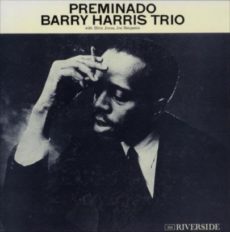
I begin this morning’s discussion with a 1961 album by The Barry Harris Trio titled Preminado (Riverside RLP 354/RLP 9354). I’ve been a fan of the pianist since hearing Barry Harris at The Jazz Workshop (1960), Listen To Barry Harris (1961), Live In Tokyo (1976), The Sidewinder (1964), and Two Trumpets (1957). My copy used in this report is the 1974 Riverside Original Recording Series Japanese Stereo reissue (Milestone SMJ-6047). Harris is joined on this date by Joe Benjamin on bass and Elvin Jones on drums.
My Heart Stood Still by Richard Rodgers and Lorenz Hart first appeared in the 1927 Broadway musical, A Connecticut Yankee. It opens the album with the trio showing tender emotions on the sentimentally nostalgic theme. Barry steps up first for a straightforward performance of poise and glamour that’s laid out beautifully. Joe strolls into the next interpretation at a relaxed tempo, then Elvin exchanges a few carefree thoughts on the song’s final reading with Barry.
The title tune is a Harris original with a march-like introduction by the pianist before the ensemble kicks up the tempo into a vibrantly spirited theme. Barry starts the soloing with a nimble statement that’s worth the price of admission. Elvin shows why he was a master timekeeper and a significant part of The John Coltrane Quartet next with infectious enthusiasm. I Should Care by Alex Stordahl, Paul Weston, and Sammy Cahn was composed in 1944 and featured in the 1945 musical, Thrill of a Romance.
Barry weaves the warmth and feeling of the lyrics into an alluring performance that’s a moment of perfect bliss. Side One ends with There’s No One But You by Austen Croom-Johnson and Redd Evans. This 1946 song was rumored to be written for the film-noir drama, Gilda, but did not appear in the film. The trio moves in a medium groove for the melody’s amorous atmosphere. Harris and Benjamin are the featured soloists dispensing affectionate love and desire on two readings.
The pianist’s One Down is an easy flowing blues that begins with an airy introduction and opening chorus. Barry turns in a charming performance on the lead solo, and Joe adds a brief comment that’s cheerfully carefree. It’s The Talk of The Town is a 1933 pop standard by Jerry Livingston, Allen J. Neiburg, and Marty Symes. The lyrics recount the breakup of a couple before their wedding and the ensuing gossip spread throughout the town in the aftermath. On the song’s only solo, Barry examines the subtlest nuances of this ballad with a quiet lament and tender lyricism that’s poignantly beautiful. Play, Carol, Play is named after Barry’s young daughter and brings the trio back to an uptempo beat. This tune opens with an effervescent introduction and melody, then Barry moves briskly on the first reading. Jones blends beautifully with Harris and Benjamin on the closing statement sharing an exuberant exchange ahead of the reprise and climax.
The finale is a popular jazz standard from The Cole Porter Songbook, What Is This Thing Called Love? It premiered in the 1929 London and Broadway musicals, Wake Up and Dream, and was also featured in the 1946 Porter biographical film, Night and Day. The trio starts the enthusiastic opening chorus briskly. Harris takes off first on this musical speedway with unbounded drive and vitality. Benjamin’s bass comes out breathing fire next, then Jones brings the solos to a rapid resolution in a brief exchange with the pianist.
Preminado was originally recorded by Ray Fowler with the mastering done by Jack Matthews. The sound quality by Victor Musical Industries is a demonstration class with a breathtaking soundstage. Every so often the jazz public is treated to a musician who’s in some way, very special. Pianist Barry Harris is just such a musician as he illustrates on this date. If you’re a fan of piano jazz, I invite you to check out Preminado by The Barry Harris Trio. It’s an album of music that’s skillfully crafted, superb musicianship that’s exemplary in every sense and one you shouldn’t miss on your next vinyl hunt!
~ Barry Harris at The Jazz Workshop (Riverside RLP 326/RLP 1177); Listen To Barry Harris (Riverside RLP 392/RLP 9392); Live In Tokyo (Xanadu 130); The Sidewinder (Blue Note BLP 4157/BST 84157); Two Trumpets (Prestige PRLP 7062) – Source: Discogs.com ~ I Should Care, It’s The Talk of The Town, My Heart Stood Still, There’s No One But You, What Is This Thing Called Love? – Source: Wikipedia.org © 2020 by Edward Thomas Carter

More Posts: bandleader,composer,history,instrumental,jazz,music,piano
Daily Dose Of Jazz…
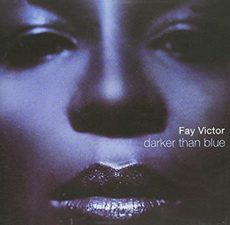
Fay Victor was born on July 26, 1965 in Brooklyn, New York City. After spending her early childhood years in New York, Zambia, and Trinidad & Tobago, her mother settled in Long Island, New York where she spent her teenage years. After her mother’s sudden death, she re-discovered music and singing, and after a three-month stint at a club in Fukui City, Japan with pianist Bertha Hope, she decided to start a career as a jazz singer.
In 1996, Fay settled in Amsterdam, The Netherlands and performed and toured through the country, as well as Spain, Germany, the UK, Sweden, Russia, and India. While living in the Netherlands, Victor branched out into blues, songwriting, and forms of improvising outside the standard jazz canon.
Returning to the States in 2003, Victor has made her home in New York City. She has worked with the likes of Randy Weston, Roswell Rudd, Anthony Braxton, Misha Mengelberg, Vijay Iyer, Tyshawn Sorey, Wadada Leo Smith, Nicole Mitchell, Marc Ribot, Martine Syms, Daniel Carter, William Parker, Darius Jones, Wolter Wierbos, Ab Baars, Joe Morris, Sam Newsome, and Reggie Nicholson.
Victor has coined the term “freesong” to describe her vocal approach. In her jazz repertoire, he has specialized in the work of Thelonious Monk, Ornette Coleman, and Herbie Nichols.
Vocalist, composer, lyricist, and educator Fay Victor, who originally sang in the traditional jazz field, has expanded her repertoire to include blues, opera, free improvising, avant-garde, modern classical music, and occasional acting, continues to perform and record.

More Posts: bandleader,composer,educator,history,instrumental,jazz,lyricist,vocal

The Quarantined Jazz Voyager
The Quarantined Jazz Voyager’s next selection from his library is the 1962 album release Lena Horne titled Lena On The Blue Side. This studio album, released by RCA Victor in stereo and monaural. The recording took place in New York City in the summer of 1961.
The album features mainly blues-inspired songs, a departure for Horne from her usual standards, and recordings from the Great American Songbook. The recordings were arranged and conducted by Marty Gold.
The album was received well by the music press and Billboard Music Week of February 1962 rated it with a four star. Charting in the Billboard 200 album chart at #102. The complete album has only been reissued on CD in Japan in 1991.
Track List | 33:39Paradise ~ 3:40; The Rules Of The Road ~ 3:36; Darn That Dream ~ 2:41; I Wanna Be Loved ~ 3:02; I Hadn’t Anyone Till You ~ 2:45; Someone To Watch Over Me ~ 3:41; It’s A Lonesome Old Town ~ 2:32; I’m Through With Love ~ 2:58; What’ll I Do ~ 1:57; It Might As Well Be Spring ~ 3:30; They Didn’t Believe Me ~ 2:15; and As You Desire Me ~ 3:02.
Personnel- Lena Horne – Vocals
- Andy Ackers – Piano
- George Duvivier – Bass
- Al Caiola – Guitar
- Osie Johnson – Drums
- Bernie Glow, Mel Davis – Trumpet
- Sy Berger, Tony Studd – Trombone
- Strings
More Posts: adventure,club,genius,jazz,museum,music,preserving,restaurant,travel,vocal,voyager
Requisites
Ahmad Jamal at The Top: Poinciana Revisited ~ Ahmad Jamal | By Eddie Carter
I first saw Ahmad Jamal live in 1995 at Spivey Hall on the campus of Clayton State University in Morrow, Georgia. I’d been a fan of his since the age of ten after hearing his 1958 album, Ahmad Jamal at The Pershing: But Not For Me. That night, the trio characterized their creative energy and gracious lyricism into a mesmerizing performance bringing the capacity crowd to its feet.
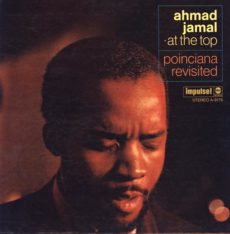
This morning’s choice from the library is a 1968 live album, Ahmad Jamal at The Top: Poinciana Revisited (Impulse!–ABC Records AS-9176). It’s one of my favorite LP’s by the renowned pianist and his bandmates are Jamil Sulieman on bass and Frank Gant on drums. My copy used in this report is the 1969 Stereo reissue and the set opens with Have You Met Miss Jones? This song by Richard Rodgers and Lorenz Hart is from the 1937 musical comedy, I’d Rather Be Right. The audience’s applause and a short solo introduction by Ahmad segue into a lively Latin-flavored theme. Jamal gives a vigorous interpretation that’s tremendously rewarding propelled by Jamil and Frank’s lively backing.
The jazz standard Poinciana by Nat Simon and Buddy Bernier was written in 1936 and is based on a Cuban folk tune, La canción del árbol (The Song of The Tree). The Glenn Miller Army Air Force Band made the first recording in 1943 and it was featured in two films, Dreamboat (1952) and The Bridges of Madison County (1995), performed by Ahmad Jamal. The trio gives an inspired interpretation showcasing the pianist on a lengthy reading running the gamut of his extraordinary range.
Lament, Jamal’s lone contribution begins with a cascading solo introduction by Ahmad that blossoms into a marvelous melody. As the song’s only soloist, the pianist ascends to a peak of pure pleasure, before descending gradually back for the rousing climax. Call Me by Tony Hatch starts Side Two and was written for Pop vocalist Petula Clark who featured it as the title tune for her 1965 album. The ensemble transforms the easy listening song into a torrid scorcher on the melody, and Jamal gives a passionately brisk solo of radiant intensity before the reprise and abrupt stop.
The pace slows down for a beautiful version of Theme From Valley of The Dolls, composed for the 1967 film by André Previn and his wife Dory. Ahmad and Jamil begin with a gentle dialogue that grows into a tender theme. The pianist infuses tender emotion, depth, and beauty into the song’s only solo with exceptional detail leading to a subtle coda. Frank’s Tune by Frank Strozier swings easily to a medium beat on the opening and closing chorus affording Ahmad, Jamil, and Frank each solo space. The 1961 Bossa Nova standard,
How Insensitive (known in Brazil as Insensatez) was written by Antônio Carlos Jobim, and Vinícius de Moraes who penned the Portuguese lyrics, and Norman Gimbel, the English lyrics. The ensemble begins the melody rapidly setting the mood for Ahmad who opens with an exhilarating reading. Jamil takes the next reading aggressively, and Frank closes with a swift, zealous statement preceding the group’s out-chorus and crowd’s show of appreciation. The sound quality of the album by engineer Carlos Olms captures the spirit of the trio’s performance exceptionally well for maximum enjoyment in your listening room.
At ninety-years young, Ahmad Jamal shows no signs of slowing down. His most recent release is a 2019 French album titled Ballades. If you’re a fan of piano jazz, or in the mood for a live album possessing an elegant and infectious groove, I submit for your consideration Ahmad Jamal at The Top: Poinciana Revisited. It’s a great introduction to his music for newcomers and an impressive showcase for seasoned fans that handsomely repays the effort to seek it out for your library!
~ Ahmad Jamal at The Pershing: But Not For Me (Argo LP-628); Ballades (Jazz Village–Jazzbook Records JV3357015758); Call Me (Pye Records NEP 24237); – Source: Discogs.com
~ Have You Met Miss Jones? – Source: JazzStandards.com
~Call Me, How Insensitive, Poinciana, Theme From The Valley of The Dolls – Source: Wikipedia.org
~© 2020 by Edward Thomas Carter
Synopsis
Ahmad Jamal at the Top: Poinciana Revisited is a live album by pianist Ahmad Jamal featuring performances recorded at The Village Gate in 1968 and released on the Impulse! label.
Track List | 42:04
- Have You Met Miss Jones (Lorenz Hart, Richard Rodgers) – 3:47
- Poinciana (Buddy Bernier, Nat Simon) – 9:19
- Lament – 8:05
- Call Me (Tony Hatch) – 4:51
- (Theme from) Valley of the Dolls (André Previn, Dory Previn) – 4:23
- Frank’s Tune (Frank Strozier) – 5:50
- How Insensitive (Antônio Carlos Jobim, Vinícius de Moraes) – 5:52
Personnel
- Ahmad Jamal – piano
- Jamil Sulieman – bass
- Frank Gant – drums
More Posts: choice,classic,collectible,collector,history,instrumental,jazz,music,piano