


Daily Dose Of Jazz…
Kiwzo Fumero was born on July 12, 1972 in Marianao, Havana, Cuba. A trumpeter from his youth, he began his professional career in 1991 with the creation of the first youth mariachi band in Cuba, of which he was its creator and director, and who is currently El Mariachi Real Jalisco De La Habana.
In 2000 Kiwzo settled in Miami, Florida. where he has participated with several orchestras and has accompanied Gilberto Sta Rosa, Huey Dumbar, Thalia, Tito Nieves, Rey Ruiz, Jose Jose, and many more. He has performed with the Willy Chirino Orchestra, La Sonora Carruseles, the tour “Embrace Me Very Strong”, Tropicana All-Stars, Celia Cruz, and Cachao.
As an educator Fumero has also had the honor of sharing a lectern with world-class musicians such as Arturo Sandoval, Paquito D’Rivera, John Fadis, Israel López Cachao, Jimmy Bosch, Andy García, Chocolate Armenteros, Patato Valdez among many others.
Winner of 2 Grammy Awards with 6 nominations, he has performed for President Bush in 2007, and has recorded nine albums. Kiwzo Fumero, one of the most recognized and influential Cuban trumpeters of his generation, continues to perform, record and tour.

More Posts: bandleader,history,instrumental,jazz,music,trumpet
Hollywood On 52nd Street
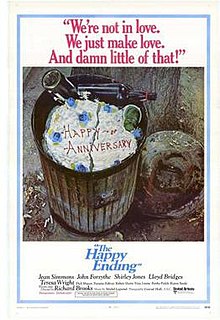
What Are You Doing the Rest of Your Life? is a song with lyrics written by Alan Bergman and Marilyn Bergman and original music written by Michel Legrand for the 1969 film The Happy Ending. The song was nominated for an Academy Award For Best Original Song but lost out to Raindrops Keep Fallin’ on My Head.
Alan Bergman would recall that after Michel Legrand had written eight melodies that were somehow not viable for the film, Marilyn Bergman suggested the opening line “What are you doing the rest of your life?”, and Legrand then completed the song’s melody based on that phrase.
Marilyn Bergman would later comment on the double meaning of the phrase “What are you doing the rest of your life?” within its parent film: as the romantic theme song’s title the question overtly references the marriage proposal Mary Spencer (played by Jean Simmons) received and accepted sixteen years earlier but, as Mary’s present-day angst becomes apparent, “What are you doing the rest of your life?” is recast as a question Mary must ask herself.
What Are You Doing the Rest of Your Life? was sung in The Happy Ending by Michael Dees whose version was included on the film’s soundtrack album. The Story
1953: Through the course of a Colorado autumn and winter, Mary Spencer (Simmons) and Fred Wilson (Forsythe) lead an idyllic existence. Mary drops out of college (with 6 months to go) to marry Fred. Their perfect wedding mirrors the happy endings of the films Mary loves. However, there are no fairytale happy endings and sixteen years later Mary is off to find her happiness, leaving behind her husband and daughter, which she eventually does despite her mother and her husband’s pleas.

Daily Dose Of Jazz…
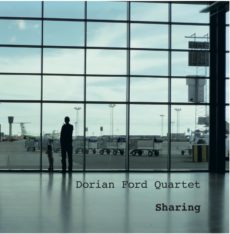
Dorian Ford was born on July 5, 1967 in London, England and started playing jazz in his early teens when he began attending weekly workshops led by trumpeter, composer, broadcaster, and music writer Ian Carr. Playing alongside many musicians who went on to form the backbone of the London jazz renaissance of the 1980s, he won a scholarship to Berklee College of Music, receiving the prestigious Chick Corea Jazz Masters Award. Piano studies were with Donald Brown, a regular in Art Blakey’s band at the time.
Dorian’s performance and recording list are a who’s who of players including but not limited to Julian Joseph, Courtney Pine, Dill Katz, Birelli Lagrene, Jeff Beck, Ingrid Laubrook, Julia Biel, Carol Grimes, Barbara Thompson, Igor Butman, Ian Carr, Colin Lazzarini, Gareth Locraine, Sebastian Rochford, Annie Whitehead, Donny McCaslin, and the list goes on.
Pianist Dorian Ford performs privately as well as publicly as he continues to compose and record.
The Quarantined Jazz Voyager
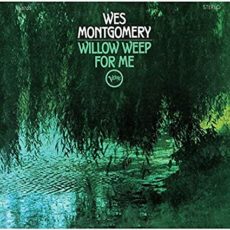
Willow Weep for Me is a jazz album recorded in 1965 by guitarist Wes Montgomery and was posthumously released in 1969. The arranger and conductor on the session was Claus Ogerman.
The album reached number 12 on the Billboard Jazz album chart in 1969. At the 1970 Grammy Awards Willow Weep for Me won the Grammy Award for Best Jazz Instrumental Album, Individual or Group.
After Montgomery’s death in 1968, Verve Records used recordings from the sessions that produced Smokin’ at the Half Note and the label hired arranger Claus Ogerman to write string and brass arrangements for “Willow Weep for Me”, “Portrait of Jennie,” “Oh! You Crazy Moon,” and “Misty.” Subsequent reissues erased the new backing arrangements.
Track Listing | 41:09- Willow Weep for Me (Ann Ronell) – 7:42
- Impressions (John Coltrane) – 5:01
- Portrait of Jenny (Burdge, Robinson) – 2:45
- The Surrey with the Fringe on Top (Rodgers, Hammerstein II) – 5:20
- Oh, You Crazy Moon (Burke, Jimmy Van Heusen) – 5:27
- Four on Six (Wes Montgomery) – 9:29
- Misty (Johnny Burke, Erroll Garner) – 6:45
- Wes Montgomery – guitar
- Wynton Kelly – piano
- Paul Chambers – bass
- Jimmy Cobb – drums

More Posts: adventure,club,genius,guitar,jazz,museum,music,preserving,restaurant,travel,voyager
The Quarantined Jazz Voyager
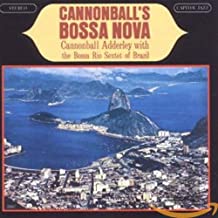
From the library of The Quarantined Jazz Voyager comes a favorite album from Julian “Cannonball” Adderley. It’s his 1962 recording titled Cannonball’s Bossa Nova that was released the following year on the Riverside label. However, the album was reissued on Capitol Records several times with different covers and titles.
Cannonball selected eight tunes composed by Durval Ferreira and Maurício Einhorn; João Donato; Antonio Carlos Jobim; Sérgio Mendes; Vinicius de Moraes and João Gilberto for a total of 34:46. The songs are Clouds, Minha Saudade, Corcovado, Batida Differente, Joyce’s Samba, Groovy Samba, O Amor Em Paz (Once I Loved), and Sambop.
The performers that were enlisted for this date were: Cannonball Adderley – alto saxophone, Sérgio Mendes – piano, Durval Ferreira – guitar, Octavio Bailly, Jr. – bass, Dom Um Romão – drums, Pedro Paulo – trumpet (#2, 4-5, 7-8) and Paulo Moura – alto saxophone (#2, 4-5, 7-8).
Remain diligent my fellow voyagers in staying healthy, continue to practice social distancing, and don’t be so anxious to rush back to the new normal. It has been said that music soothes the savage beast, so listen to great music. I share that music to give you a little insight into the choices this voyager has made over the years of collecting during this sabbatical from jet setting investigations of jazz around the globe.
More Posts: choice,classic,collectible,collector,history,instrumental,jazz,music,saxophone