

The Quarantined Jazz Voyager
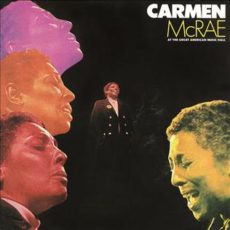
The Quarantined Jazz Voyager has pulled from his stacks his latest selection to place on the turntable is another timeless classic, At The Great American Music Hall by Carmen McRae. It is a 1976 live album recorded in San Francisco, California and released in 1977 on the Blue Note Record label.
The album was nominated for the Grammy Award for Best Jazz Vocal Album at the 19th Annual Grammy Awards for her performance on this album. The band on the date was Carmen McRae – vocals, piano, trumpeter Dizzy Gillespie, pianist Marshall Otwell, double bassist Ed Bennett, and drummer Joey Baron.
The concert was 1:20:54 and consisted of nineteen songs ~ Them There Eyes, Paint Your Pretty Picture, On Green Dolphin Street, A Song For You, On A Clear Day (You Can See Forever), Miss Otis Regrets (She’s Unable To Lunch Today), Too Close For Comfort, Old Folks, Time After Time, I’m Always Drunk In San Francisco, Don’t Misunderstand, A Beautiful Friendship, Star Eyes, Dindi, Never Let Me Go, ‘Tain’t Nobody’s Bizness If I Do, Only Women Bleed, No More Blues (Chega de Saudade), and The Folks Who Live On The Hill.
Remain diligent my fellow voyagers in staying healthy, continue to practice social distancing, and don’t be so anxious to rush back to the new normal. It has been said that music soothes the savage beast, so listen to great music. I share that music to give you a little insight into the choices this voyager has made over the years during this sabbatical from jet setting investigations of jazz around the globe.

More Posts: adventure,club,genius,jazz,museum,music,preserving,restaurant,travel,vocal,voyager
The Quarantined Jazz Voyager
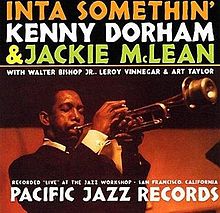
The Quarantined Jazz Voyager is pulling from the stacks the 1962 album by Kenny Dorham titled Inta Somethin’ to spin this week. Recorded at the Jazz Workshop in San Francisco, California on November 13, 1961 and released on Pacific Jazz Records. Una Mas and San Francisco Beat were composed by Dorham. Track List | 38:31
- Una Mas ~ 7:13
- It Could Happen to You (Johnny Burke, Jimmy Van Heusen) ~ 6:00
- Let’s Face the Music and Dance (Irving Berlin) ~ 6:06
- No Two People (Frank Loesser) ~ 6:59
- Lover Man (Jimmy Davis, Ram Ramirez, James Sherman) ~ 5:01
- San Francisco Beat ~ 7:12
The players on this date are Kenny Dorham – trumpet (except tracks 3 and 5), Jackie McLean – alto saxophone (except track 2), Walter Bishop Jr. – piano, Leroy Vinnegar – bass and Art Taylor – drums.
So stay diligent my fellow voyagers in being healthy, continue your social distancing, and take your time getting back to the new normal. Listen to great music and share that music to give another soul a little insight into the choices of a voyager during this sabbatical from what we once knew. The jet setting investigations of jazz around the globe will continue again.
More Posts: choice,classic,collectible,collector,history,instrumental,jazz,music
Daily Dose Of Jazz…
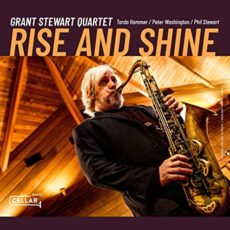
Grant Stewart was born in Toronto, Ontario, Canada on June 4, 1971. His father was a part-time jazz guitarist and at age ten, he played alto saxophone solos from saxophonists Charlie Parker, Coleman Hawkins, and Wardell Gray that had been transcribed by his father. In his early teens, he was gaining experience with such artists as Pat LaBarbera and Bob Mover. By 18 he was leading a quartet in Toronto and had a regular gig at C’est What café and pub.
A move to New York City when he was 19 saw Grant working with guitarist Peter Bernstein and saxophonist Jesse Davis. He then began playing at Smalls Jazz Club from when it opened in 1993. His younger brother, Philip, has been his drummer since 2005.
For his 2007 recording Young at Heart, Stewart chose some challenging compositions, including by Elmo Hope and Neal Hefti, as well as originals. On Around the Corner in 2010, Stewart also played soprano sax.
Saxophonist Grant Stewart continues to play steady swinging hard bop, with a current catalog of seventeen albums as a leader and has recorded with Ehud Asherie and John Swana.

More Posts: bandleader,history,instrumental,jazz,music,saxophone
Daily Dose Of Jazz…
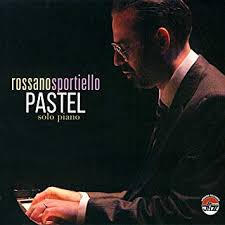
Rossano Sportiello was born in Vigevano, Italy on June 1, 1974 and began studying piano at the age of 9 under the tutelage of Italian classical pianist Carlo Villa and continued until his graduation in classical piano from the Conservatory in 1996. At 16, he was performing professionally at jazz venues in the Milan, Italy area, and in 1992, he joined one of Europe’s historic jazz bands, the Milano Jazz Gang. He toured with the group throughout Italy and West Europe until the end of 2000.
That same year, Sportiello met legendary jazz pianist and educator, Barry Harris, who became a mentor and good friend. Drawing international acclaim at the 2002 Ascona Jazz Festival in Switzerland while performing with the eight-piece, all-star American band led by Dan Barrett. In 2007, Rossano established himself in New York City and has performed with Slide Hampton, Clark Terry, Kenny Davern, Bucky Pizzarelli, Bob Wilber, Warren Vache, Bob Cranshaw, Mickey Roker, Harry Allen, Howard Alden, Joe Wilder, Eddie Locke, Joe La Barbera, Scott Hamilton, Jake Hanna, Houston Person, Bill Charlap, Dick Hyman, and the list goes on.
As an educator, Rossano has given lectures on jazz and masterclasses on piano at institutions such as the University of Toronto Jazz Studies, University of Central Florida and Claremont College in California and has lectured as a professor in residence at the Master’s Lodge of St. John’s College, Cambridge, UK.
Stride piano player Rossano Sportiello lists his influences have been Harris along with Ralph Sutton, Dave McKenna and Barry Harris, Fats Waller, Teddy Wilson, Art Tatum, Count Basie, Earl Hines, Ellis Larkins, and Bill Evans, to name a few. He continues to perform, record, and tour.
More Posts: bandleader,history,instrumental,jazz,music,piano
Requisites
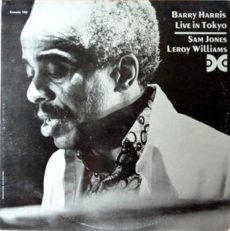
Live In Tokyo~Barry Harris | By Eddie CarterIn April 1976, Xanadu Records recorded three live albums in Japan featuring an all-star quintet including alto saxophonist, Charles McPherson, and guitarist Jimmy Raney. The tapings resulted in Charles McPherson Live In Tokyo, Jimmy Raney Live In Tokyo, and this morning’s choice from the library that was the first performance by pianist Barry Harris. Live In Tokyo (Xanadu 130) documents concerts at two locations, Yubin Chokin Hall and Nakano Sun Plaza with the ensemble’s rhythm section featuring Sam Jones on bass and Leroy Williams on drums. It was Harris’s second record for the label and my copy used in this report is the 1976 US Stereo release.
The set opener, A Soft Spot is a lively tune from Barry’s pen that leaves the ground and starts flying from the melody into a swinging solo of fire by the leader. Leroy follows with a stunning interpretation that’s right on the mark leading to a spirited finale. The trio slows the pace for Round Midnight, the timeless jazz standard by Bernie Hanighen, Thelonious Monk, and Cootie Williams. As the song’s only soloist, Harris gives a stylishly, sensuous reading that’s hauntingly moving, and stands up to other versions of Monk’s most recorded tune.
Tea For Two by Vincent Youmans and Irving Caesar was written in 1924 and introduced in the Broadway musical, No, No, Nanette, that year. Barry gives a nearly minute solo introduction before taking off on a full-speed run through the opening melody and first reading. Leroy engages in a vigorous exchange with Harris preceding the hard-hitting coda.
Bud Powell’s Dance of The Infidels is a midtempo swinger that closes the first side on an upbeat note and allows each member, solo space. Powell composed the song in 1949, and first recorded it for Blue Note Records. The trio takes a brisk approach to the tune with a splendid theme treatment. Harris kicks off the solos with a feisty opening statement possessing a carefree zest. Sam is up next with a short reading that hits its target like a sharpshooter. Barry shares the final solo with Leroy who executes a passionate exchange before the closing chorus.
I’ll Remember April is a beautiful song by Gene De Paul, Patricia Johnston, and Don Raye that was composed in 1941, making its debut in the 1942 comedy, Ride ‘Em Cowboy. The threesome brings a little sunshine to this treasured tune with an easy beat on the main theme. Harris picks up the pace with a cheerful, effervescent first statement, then Jones swings softly on a passionately conceived presentation. Barry and Williams make an indelible impression with a blissful resolution on the closing reading that arrives at a very gratifying conclusion.
Barry takes a moment to make a sincere and heartfelt Dedication In Japanese to the crowd. He follows with a beautiful solo composition also devoted to the audience titled Fukai Aijoh which means Deep Love. Harris expresses personal feelings in an elegant interpretation of tenderness and subtle finesse into a delicately gentle ending. The final selection is the 1951 jazz standard, Un Poco Loco by Bud Powell beginning with a brisk theme treatment in unison leading to Barry’s aggressive opening solo of astonishing ferocity. Leroy has the last word with a concise reading of compelling power before the pianist’s vivacious out-chorus preceding a thunderous ovation by the concert crowd.
This album and its two companions were produced by label founder Don Schlitten and recorded by Japanese sound engineer, Shinji Ohtsuka. Live In Tokyo is a sonic treat with an exceptional soundstage of the piano, bass, and drums, and though the LP length is just short of forty-three minutes, the listener will feel they’ve received their money’s worth on the strength of the performances. Now that I’ve got this album, I’ll be seeking the other two to add to my library, and if you’re a fan of piano jazz or trio jazz, I invite you to audition Live In Tokyo by pianist Barry Harris. It’s a fun listen, and a title I’m sure you’ll enjoy in your library!
~ Dance of The Infidels (Blue Note 362-1); Charles McPherson Live In Tokyo (Xanadu 131); Jimmy Raney Live In Tokyo (Xanadu 132) – Source: Discogs.com ~ I’ll Remember April, Round Midnight, Tea For Two – Source: JazzStandards.com ~ Dance of The Infidels – Source: The Complete Bud Powell Blue Note Recordings (1949-1958) Mosaic Records MR5-116 ~Un Poco Loco – Source: Wikipedia.org © 2020 by Edward Thomas CarterSynopsis
Live in Tokyo is a live album recorded on April 12 & 14, 1976 at Sun Plaza Hall in Tokyo, Japan by pianist Barry Harris and released on the Xanadu record label. The session was produced by Don Schlitten. Harris contributed two songs to this swinging, straight-ahead album, A Soft Spot and Fukai Aijoh in addition to his Dedication In Japanese.
Track Listing | 41:09- A Soft Spot – 5:46
- Round Midnight (Thelonious Monk) – 5:58
- Tea for Two (Vincent Youmans, Irving Caesar) – 4:45
- Dance of the Infidels (Bud Powell) – 5:43
- I’ll Remember April (Gene de Paul, Patricia Johnston, Don Raye) – 8:39
- Dedication in Japanese – 1:15
- Fukai Aijoh – 4:09
- Un Poco Loco (Powell) – 6:14
- Barry Harris – piano
- Sam Jones – bass
- Leroy Williams – drums

More Posts: choice,classic,collectible,collector,history,instrumental,jazz,music,piano