

Daily Dose Of Jazz…
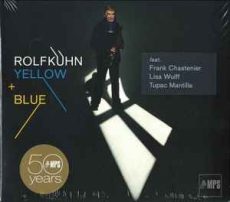
Tupac Mantilla was born October 21, 1978 in Bogotá, Columbia. Holding a Master of Music Honors Degree from the New England Conservatory, he won first prize at the Bogotá Philharmonic Orchestra’s Classical Soloist Competition in 2002.
As a scholar, Mantilla is associated with Stanford University and the Berklee College of Music. He gives workshops and lectures and runs rhythm/percussion oriented programs worldwide, through Percuaction’s Global Rhythm Institute (GRI), of which he is founder, CEO and artistic director.
Mantilla has appeared at festivals, institutions and venues and several percussion-oriented workshops and lectures for multi-national companies and organizations around the world.
Mantilla has collaborated and performed with artists including Bobby McFerrin, Bill Cosby, Esperanza Spalding, Zakir Hussain, Savion Glover, Danilo Perez, Tia Fuller, Julian Lage, Reinhard Flatischler, Kenny Werner, John Patitucci, Bob Moses, Cecil McBee, Medeski Martin & Wood, Lisa Fischer, Selene Muñoz, Jamey Haddad, Anders Koppel, and the Bogotá’s Philharmonic Orchestra, among others.
Drummer and percussionist Tupac Mantilla, who is the artistic director of the percussion group Tekeyé, continues to devote much of his time to his solo percussion project.

More Posts: bandleader,frums,history,instrumental,jazz,marimba,music,percussion

Daily Dose Of Jazz…
Herschel McWilliams was born and raised in Kansas City, Kansas on October 17, 1978. Growing up the son of musicians, a drummer father and pianist and vocalist mother, he was introduced to many musical influences at an early age.
He started learning piano at eight years old and alto saxophone at 10 years old. He joined the band in school and though he learned to play drums from his dad, saxophone became his instrument when he was in the fourth grade. In the 7th grade he stumbled upon Weather Report and Harry Connick Big Band albums. Having great teachers and musicians around him was an important influence on him throughout elementary and high school.
He started gigging the summer after he graduated high school with a community big band. They were working musicians and it was his first call he ever got before heading off to college. After college he has become a beacon of light for jazz in his hometown.
Saxophonist Herschel McWilliams serves on the Board of Directors for Kansas City Jazz Ambassadors, runs his own jazz website, and plays regular gigs in the jazz district of Kansas City as well as other venues in the area.
More Posts: bandleader,history,instrumental,jazz,music,saxophone
Daily Dose Of Jazz…
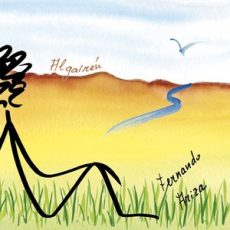
Fernando Álvarez Ariza was born in Santander, Columbia on October 6, 1977. He began his musical studies at the artistic culture department of Santander DICAS and continued his studies in harmony with Rito Mantilla and classical guitar with Silvio Martinez at the Universidad Industrial de Santander. He graduated with a Bachelor in music degree and took a workshop at Los Angeles International Christian University, strengthening his studies in electric guitar, jazz fundamentals, and production. He later received tutoring from guitarists Bruce Saunders and Pino Marrone.
He has done rock projects with the group Osmosis from Bucaramanga, Santander, with whom he recorded a single called Atrás de los Sueños with the collaboration of guitarist Mauricio Espinoza. His jazz projects include the staging of the work Santandereano by bassist José “Chepe” Ariza at the national festival Jazz al Parque in Bogotá.
He has shared the stage with Bruce Saunders, Eric Halvorson, Javier Colina, Héctor Martignon, Antonio Arnedo, Oscar Acevedo, Chepe Ariza, Gabriel Rondón, Sebastián Monsalve, Pacho Dávila, Ricardo Uribe, Oscar Serrano Prada, Lalo Ariza, Germán Sandoval, Sincopa Jazz Band, among others.
His recent album, Arquitectura Sonora, features Cuban saxophonist Leonardo Molina and trumpeter Jorge Méndez. He fuses electronic textures, improvisation, and elements of Colombian folk and urban culture. He has taught at the Gentil Montaña Foundation, Corporación Cristiana Universitaria, Los Angeles International Christian University, and is currently a professor at the Faculty of Arts and Humanities at the University of Pamplona, Colombia.
More Posts: bandleader,guitar,history,instrumental,jazz,music

Daily Dose Of Jazz…
Doug Beavers was born September 22, 1976 in Bellflower, California. He received a BA in music from California State University, East Bay, an MA in composition from the Manhattan School of Music. He is the founder of the music production company and record label, Circle 9.
As a performer Doug has worked with Eddie Palmieri, Spanish Harlem Orchestra, Mingus Big Band, Christian McBride, Paul Simon, and others. He also served as an adjunct professor at Los Medanos College and music faculty of Jazz Trombone at California State University, East Bay.
His most recent album recording,Sol, was released in 2020. In 2021, he received a New Jazz Works grant from Chamber Music America. Trombonist, arranger, composer and producer Doug Beavers, a Grammy Award-winning musician, is currently an adjunct faculty member at the College of New Jersey.

More Posts: arranger,bandleader,composer,history,instrumental,jazz,music,producer,trombone
Requisites
Stablemates ~ Jon Eardley and Al Haig | By Eddie Carter
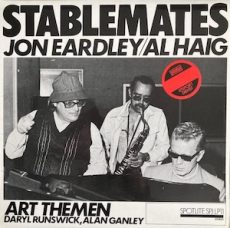
You really know your godchildren truly care and love you when they surprise you for your birthday with an album by two artists whose music you’re aware of, yet whose records have never found a place in your library. This morning’s spotlight shines on flugelhorn and trumpet player Jon Eardley, who was passing through London on a brief 1977 tour and pianist Al Haig, who was in town to visit friends. The two musicians seized the moment to head into the studio to record their only album together, Stablemates (Spotlite Records SPJ LP11). It was released two years later, and rounding out the ensemble are Art Themen on tenor sax, Daryl Runswick on bass, and Alan Ganley on drums. My copy of this album is the 1979 U.K. stereo release.
The first side opener, Tangerine by Johnny Mercer and Victor Schertzinger, begins with Al’s upbeat piano intro to Jon’s lively melody. Art kicks off the opening solo briskly, then Al flows smoothly into the following reading. Jon entersnext with a strong, assertive tone. Art and Jon share a final conversation leading back to the theme’s reprise and close. Speak Low by Ogden Nash and Kurt Weill raises the temperature with the quintet’s swinging melody. Themen opens the solos with an inspired improvisation that sets the tone. Eardley follows with plenty of bounce and effervescence on the second statement. Themen is off to the races next with impeccable precision, then Runswick and Ganley engage in a spirited exchange until the theme’s restatement fades out.
‘Round Midnight by Bernie Hanighen, Thelonious Monk and Cootie Williams is a quartet showcase that opens with Al and Daryl’s pensive introduction ahead of Jon’s tender melody. Al begins the opening solo with dreamlike softness, then the pace moves upward slightly for Jon’s elegant interpretation before the ensemble’s gentle ending. The second side gets underway with the pianist’s soothing introduction to Embraceable You by George and Ira Gershwin. Eardley states the gentle melody with Themen. In the first solo, Haig offers a tender, thoughtful statement with a soft touch of elegant beauty. Eardley truly shines in the closing reading with notes so deeply heartfelt that it’s bound to move you to tears, leading to Themen’s closing chorus and a gentle climax.
Don’t Blame Me by Dorothy Fields and Jimmy McHugh receives a gorgeous treatment by the quintet, beginning with Jon’s slow-paced theme that radiates inviting warmth, and Art’s perfectly placed inserts. Al leads off, skillfully blending composure and gentleness, before Art continues this lovely standard with a solo that truly touches the spirit. Jon delivers an exquisitely soft, poignant horn passage preceding the theme’s return. The beat moves upward on final time for Eardley’s theme to Love Walked In by George and Ira Gershwin. Themen opens the solos with an energetic drive, then Haig contributes a robust interpretation. Eardley matches the intensity with swift execution, and Ganley and Runswick meet on common ground in the closer, leading to the theme’s reprise and climax.
Tony Williams produced the album, and Steve Waldman served as the recording engineer. It delivers an exceptional soundstage, as though the ensemble is performing live in your listening room. The mix is impressively balanced, offering remarkable clarity and fidelity from your speakers. Stablemates is one of six albums Jon Eardley led as a leader, and he contributed as a sideman on ten additional records. Al Haig, meanwhile, led twenty-five albums and played as a sideman on eight more. If you haven’t yet experienced the artistry of Jon Eardley or Al Haig, I highly encourage you to seek out Stablemates on your next search for great jazz records. This outstanding album invites fresh appreciation with each play and remains as relevant today as it was over forty years ago!
~ Don’t Blame Me, Embraceable You, Love Walked In, ‘Round Midnight, Speak Low, Tangerine – Source: JazzStandards.com
© 2025 by Edward Thomas Carter
More Posts: choice,classic,collectible,collector,history,instrumental,jazz,music,piano,trumpet