


Daily Dose Of Jazz…
Chris Potter: A Jazz Journey from Chicago to the World Stage
Born on New Year’s Day 1971 in Chicago, Illinois, Chris Potter discovered his musical calling early in life. Though he spent his formative years in Columbia, South Carolina, his extraordinary talent knew no boundaries. A natural prodigy, young Chris explored multiple instruments—mastering both guitar and piano—before finding his true voice in the saxophone.
By age 13, Potter was already holding his own on professional jazz stages, captivating local audiences with his precocious gifts. His passion for the music led him to New York City, where he honed his craft at two prestigious institutions: the New School and the Manhattan School of Music.
A Distinguished Career
As a bandleader, Potter has released more than a dozen critically acclaimed albums, earning recognition from the most discerning voices in jazz. His work has landed in the top ten lists of Jazziz and Slate magazines, as well as The New York Times—a testament to his artistic vision and technical brilliance.
Equally impressive is his work as a collaborator. Potter has shared stages and recording studios with an extraordinary roster of jazz legends, including Patricia Barber, Kenny Werner, Marian McPartland, Red Rodney, Paul Motian, Adam Rogers, the Mingus Big Band, Ray Brown, Dave Holland, James Moody, and Joanne Brackeen—just to name a few.
Today, Chris Potter continues to enchant audiences worldwide as a saxophonist (both alto and tenor), multi-instrumentalist, and composer, constantly touring, performing, and recording new music that pushes the boundaries of contemporary jazz.
More Posts: bandleader,history,instrumental,jazz,music,saxophone
Daily Dose Of Jazz…
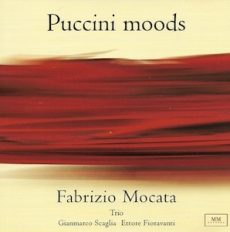
Fabrizio Mocata was born on December 8, 1977 in Sicily, Italy. He established himself as a maestro in the music business thanks to his knowledge of the primary jazz genre and proficiency in the subgenre of smooth jazz.
His music seamlessly combines the rich traditions of jazz, classical music with smooth jazz. His creativity is distinguished by his combining complex melodies and harmonies.
Mocata is a well-known talent in the jazz world and has had an enduring impression on the jazz community.
Pianist, arranger and composer Fabrizio Mocata continues to create and perform.

More Posts: arranger,bandleader,composer,history,instrumental,jazz,music,piano

Daily Dose Of Jazz…
Jon De Lucia was born on November 26, 1980 in Quincy, Massachusetts. He is predominantly a student of jazz, but also has a deep interest in the folkloric music and instruments of Cuba, Japan, Ireland and Italy. He has performed on a variety of ethnic flutes, drums and stringed instruments.
Having led his groups and played as a sideman in Boston, Massachusetts, New York City and all over Japan, he has worked with Tommy Crane, David Tronzo, Bob Moses, Bob Gullotti, John Lockwood and Thomas Morgan among others.
He leads the Jon De Lucia Group, and the baroque improvising Luce Trio. Saxophonist and composer Jon De Lucia, now based in Brooklyn, New York, continues to compose, perform and teach full time at BMCC in Tribeca, New York.

More Posts: bandleader,composer,history,instrumental,jazz,music,saxophone
Requisites
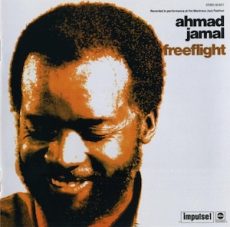
Over the past fifty years, I’ve found immense joy in listening to Ahmad Jamal’s work across his extensive catalog, including releases on Argo, Cadet, and later Impulse Records. Each time I was fortunate enough to experience his trio live in Atlanta, their performance was absolutely electrifying. Jamal and his group consistently delivered music that was both profoundly moving and impeccably polished. Today’s featured album from my collection is Freeflight (Impulse! – ABC Records AS-9217), which showcases the trio’s live set at the Montreux Jazz Festival. On this recording, Ahmad Jamal plays both the Fender Rhodes electric piano and acoustic piano, joined by Jamil Nasser on bass and Frank Gant on drums. My personal copy is the 1973 U.S. stereo reissue, which retains the original catalog number.
The set opens with a warm welcome to the musicians, setting the stage for the trio’s spirited rendition of Effendi, by McCoy Tyner. The trio dives straight into the brisk tempo, with Ahmad igniting an energetic solo on the electric piano. There’s a brief exchange between Jamil’s bass and Ahmad’s acoustic piano before Jamal returns to the electric keys. Frank contributes a concise, lively reading, and Jamil finishes with an exhilarating finale, driving the tune to a thrilling close, earning an enthusiastic response from the audience. The tempo eases as Jamal introduces Dolphin Dance by Herbie Hancock on the acoustic piano, segueing into the group's melody. Jamal’s deeply expressive playing doesn’t disappoint, leading to a vibrant conclusion and audience applause.
Side Two begins with Ahmad and Jamil engaging in a musical conversation, leading into the pianist’s Manhattan Reflections. Jamal returns to the electric piano for a buoyant mid-tempo melody, then takes off first with a spirited opening statement that captures the energy of both instruments. The piano and bass then share the spotlight briefly to revisit the theme before the trio’s closing chorus ends gently. Ahmad returns to the acoustic piano to conclude the set with his signature tune, Poinciana by Nat Simon and Buddy Bernier. A solo introduction from Jamal leads into the ensemble’s mid-tempo theme. As the only soloist, Jamal tells a captivating story with Nasser and Gang’s support until the trio reunites to conclude the song, greeted by the audience’s enthusiastic applause!
The production of Freeflight was a collaborative effort between Ahmad Jamal and Ed Michel, while Carlos Olms and Stephan Sulke handled the recording of the live performance. Overall, the recording quality is commendable, though there’s one significant flaw: the microphone was positioned too close to Jamal’s electric piano during Effendi, resulting in noticeable harshness and overmodulation. However, please don’t let that minor drawback deter you from seeking out Freeflight by Ahmad Jamal when browsing for records on your next shopping trip. Although not as well- known as his earlier live release, At The Top: Poinciana Revisited, this album still deserves consideration for your library. Even after more than five decades, the album delivers outstanding piano trio music and is highly Recommended!
~ At The Top: Poinciana Revisited (Impulse! – ABC Records AS-9176) – Source: Discogs.com
~ Poinciana – Source: Wikipedia.org
© 2025 by Edward Thomas Carter
More Posts: choice,classic,collectible,collector,history,instrumental,jazz,music,piano
Requisites
Blues-ette ~ Curtis Fuller Quintet | By Eddie Carter
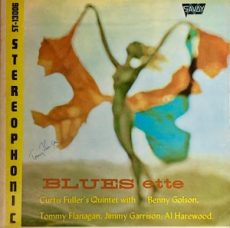
Curtis Fuller is widely regarded as one of the top jazz trombonists. A few nights ago, I enjoyed listening to this morning’s album from the library, and that’s what inspired this discussion of his 1959 release, Blues-ette (Savoy MG-12141/SST-13006). Throughout his more than 65 years in music, Fuller built an impressive catalog of recordings, both as a band leader and as a sideman, including work with Joe Henderson, Lee Morgan, Bud Powell, Wayne Shorter, Jimmy Smith, the Jazz Messengers, and the Jazztet. On this album, he’s joined by fellow Jazztet member Benny Golson on tenor saxophone, Tommy Flanagan on piano, Jimmy Garrison on bass, and Al Harewood on drums. The copy of this album I own is the 1973 U.S. stereo reissue, which shares the original catalog number.
Five Spot After Dark by Benny Golson opens the album. It’s a delightful medium-tempo tune that the front line brings to life with the melody. Curtis begins with a relaxing, welcoming solo. Benny blends each note of the following reading with a joyful energy. Tommy keeps the beat alive in the third interpretation. Jimmy joins the front line for the closing statement, leading to the ending theme and climax. Undecided by Sydney Robin and Charlie Shavers is a catchy tune that opens with the quintet laying down a gorgeous mid-tempo beat on the theme. Fuller takes center stage next with an impressive interpretation. Golson comes right behind him with an irresistible improvisation. Harewood provides a concise, impactful solo alongside both horns, building up to a lively reprise and a satisfying ending.
The title tune, Blues-ette by Curtis Fuller, wraps up the first side with Tommy’s sprightly introduction to the melody’s theme. Curtis sets the mood in the opening statement, delivering an understated and moving narrative. Benny effortlessly rises to the occasion in the following performance. Tommy follows with a dazzling display, then Jimmy caps the solos with a short walk to the ensemble’s close. Benny Golson’s Minor Vamp is anything but, as the second side unfolds, beginning with Garrison and Harewood’s introduction to the lively melody. Golson kicks off the solos, pouring his heart into each note. Fuller gives a captivating performance of lively verses next. Flanagan gets the last word with an energetic solo, ahead of the ensemble’s closing chorus and fadeout.
Love Your Spell Is Everywhere by Edmund Goulding and Elsie Janis begins with the quintet’s medium-tempo theme. Benny takes the lead with an exquisitely crafted performance. Next, Curtis gets into the groove with an exceptional reading that’s cool, smooth, and polished. Tommy executes the closing statement with meticulous execution ahead of the ensemble’s end theme and close. Garrison and Harewood open the door to the quintet’s easygoing unison melody to Curtis Fuller’s Twelve-Inch. Golson takes the stage first with a sweet and tasty reading. Fuller makes his case next with a captivating contribution. Flanagan moves sprightly along in the third solo, and Garrison puts the exclamation point on the song before the quintet comes back together to wrap things up.
“Blues-ette” was supervised by Oscar “Ozzie” Cadena, and Rudy Van Gelder managed the recording controls. The sound quality of this reissue is exemplary. The instruments deliver a vibrant soundstage that places the listener’s sweet spot in the studio with the musicians. If you’re a longtime fan of Curtis Fuller or are just discovering his discography, I invite you to check out “Blues-ette” on your next trip to your favorite record store. It’s a terrific album and is highly recommended for anyone’s library who enjoys hard-bop or lively “blowing sessions.”
~ Love Your Spell Is Everywhere – Source: Wikipedia.org © 2025 by Edward Thomas Carter
More Posts: choice,classic,collectible,collector,history,instrumental,jazz,music,trombone