

Requisites
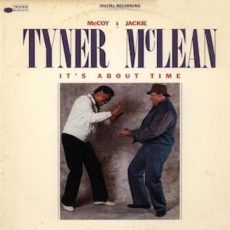
It’s About Time ~ McCoy Tyner and Jackie McLean | By Eddie Carter
This morning’s discussion brings two jazz giants together for their only collaborative album. It’s About Time (Blue Note BT 85102) is a 1985 release by pianist McCoy Tyner and alto saxophonist Jackie McLean (tracks: A1 to A3, B1) that rekindles a sixties Hard-Bop or Post-Bop date and is one of the best kept secrets in both musician’s discographies. The supporting cast is a stellar one, Jon Faddis (tracks: A1, B1) on trumpet, Ron Carter (tracks: A1, B1, B2) on acoustic bass, Marcus Miller (tracks: A2, A3, B3) on electric bass, Al Foster on drums, and Steve Thornton (tracks: A2, A3, B3) on percussion. My copy used in this report is the 1985 US Stereo Full Digital Recording.
Side One opens with the first of five tunes from Tyner’s pen, Spur of The Moment begins with a lively opening chorus in unison. Jon opens the opening solo with tremendous fire and spirit, followed by Jackie who produces some commanding choruses on the second performance. McCoy cooks confidently on the finale with inexhaustible energy into the climax. You Taught My Heart To Sing is a beautiful ballad that’s a showcase for McLean who gives the melody and first solo a warm and moving treatment. Tyner is up next with a delicately gentle reading shadowed by Miller, Foster, and Thornton who anchor both soloists with gorgeous groundwork preceding McLean’s return for the reprise and Tyner’s quiet ending.
It’s About Time begins with a tropical flavor in its blood on a delightfully, feisty midtempo theme led by Jackie who also leads the solos this time with an effective groove, then McCoy follows with a perfectly crafted closing statement. Marcus and Steve provide the spicy compliment that keeps our fingers popping and toes tapping into the group’s soft fadeout. Side Two opens with Hip Toe, a mid~tempo swinger that starts with the front-line and Tyner cruising comfortably into the infectious opening chorus. McLean is up first and comes out swinging on a peppy reading. Faddis answers him with a sharp, zesty statement that builds to a satisfying conclusion. Tyner provides the exclamation point on an extremely happy closing solo before the theme’s return and disappearance.
No Flowers Please by Ron Carter is a trio performance of tranquil beauty that the bassist introduces thoughtfully. McCoy takes the first solo and paints an intimate portrait. Ron closes with a polite, considerate reading executed with fingertip delicacy leading to a tender climax. Travelin’ invites us to take a mid~tempo trip without leaving the comfort of our sweet spot. Miller is the highlight here and demonstrates some stellar bass playing on the opening solo after Tyner’s opening chorus propelled by the rhythm section and Thornton’s percussion. Tyner makes a very personal statement on the closing reading with a grand delivery that brings us safely home after this six-song journey into a gentle culmination.
It’s About Time was produced by Jeffrey Weber and was digitally recorded by Ron Saint German. The sound quality is superb with an outstanding soundstage and excellent stereo separation matching the exceptional interaction between the musicians. The music also flows smoothly and is reminiscent of a classic Blue Note recording of the late fifties or early sixties. If you’re a fan of McCoy Tyner and Jackie McLean, I invite you to audition It’s About Time at your earliest opportunity. It’s an album of wonderful jazz music deserving further investigation for a spot in your library!
© 2021 by Edward Thomas Carter
More Posts: choice,classic,collectible,collector,history,instrumental,jazz,music,piano,saxophone
Requisites
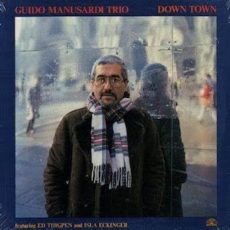
Down Town ~ Guido Manusardi Trio | By Eddie Carter
This morning’s choice from the library is Down Town (Soul Note SN 1131) by The Guido Manusardi Trio. It was released in 1986 and the album’s title comes from the restaurant in the Galleria where Manusardi plays solo piano. He’s one of the incomparable musicians whose records are consistently outstanding. Guido also played and recorded with Don Byas, Roy Eldridge, Art Farmer, Dexter Gordon, Red Mitchell, and many others over a nearly five-decade career. He’s joined here by the Swiss jazz bassist, Isla Eckinger whose catchy grooves flow smoothly whether at fast, medium, or slow tempos. The drummer is Ed Thigpen who needs no introduction to anyone owning albums by Ella Fitzgerald, Oscar Peterson, Bud Powell, Dinah Washington, and others. Thigpen could swing straight ahead with a strong, but not heavy touch on the drums and his rock-solid beat is the foundation sustaining the happy, relaxed mood of this date. I was introduced to his music on this album, and my copy used in this report is the original Italian Stereo pressing.
Downtown, the first of four tunes by the pianist starts Side One in good spirits with the trio’s mellow melody. The pace picks up on the opening chorus with the most solo space devoted to Manusardi who delivers an efficient statement. Eckinger displays his rhythmic virtuosity on the closing reading with a charming, melodic performance. Thigpen holds the song together with subtle support ahead of the finale. Guido’s very pretty ballad, Alexandra, is a stunning centerpiece for him on the song’s only solo. His presentation is elegantly graceful and tender thanks to the intimately gorgeous groundwork of his bandmates. The first side finale is the pianist’s Fairway. It’s ablaze from the pulse-quickening introduction by Thigpen into the trio’s vigorous theme. Guido dances brightly on the keys with an energetic opening statement. Isla follows with an expediently paced, uptempo reading that fuels Ed to raise the energy level higher with a brisk attack on the drums ending with a very satisfying closing chorus.
Side Two opens with the 1935 standard, My Romance by Richard Rodgers and Lorenz Hart. The ensemble introduces the melody at a medium tempo, and Manusardi permits his fingers full sway on the joyously happy lead solo. Eckinger fascinates endlessly on the next reading with incisively expressive lines, and Thigpen exchanges lively brushwork with the leader on the closer before the trio’s exit. Dino’s Mood, Manusardi’s second ballad allows the pianist another opportunity to weave a magic mist of great sensitivity as the song’s lone soloist with a soft-spoken spirit. Isla and Ed shadow Guido as he plays delicately, culminating into a tender climax. The album ends with The Meaning of The Blues by Bobby Troup and Leah Worth. It was composed in 1957 and Manusardi’s lone interpretation is delivered to perfection. He entices the listener with a performance of exquisite beauty and melancholy poetry into the ensemble’s gentle ending.
The solos throughout Down Town are enticing by the exceptional energy, interaction, and technical skill of Manusardi, Eckinger, and Thigpen. The album is also superbly recorded by engineer Giancarlo Barigozzi with an open and airy soundstage, stunning sound, and incredible definition of each instrument. If you’re unfamiliar with pianist Guido Manusardi and enjoy a solid jazz trio of piano, bass, and drums, I invite you to audition Down Town by The Guido Manusardi Trio. Your diligence in seeking the album out for your library will be rewarded with nearly thirty-seven minutes of outstanding jazz that still sounds as fresh as it did over three decades ago on a stellar album that’s highly recommended!
~ My Romance, The Meaning of The Blues – Source: JazzStandards.com © 2021 by Edward Thomas Carter
More Posts: choice,classic,collectible,collector,history,instrumental,jazz,music,piano
Requisites
View Post
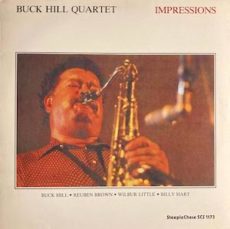
Impressions ~ Buck Hill Quartet | By Eddie Carter
The Buck Hill Quartet steps into the spotlight for this morning’s discussion with the second of two live albums from The North Sea Jazz Festival. Impressions (SteepleChase Records SCS 1173) is a 1983 release that was recorded on July 11 & 12 during the quartet’s 1981 performance. The remainder of their concert appears on Easy To Love (1982). The tenor saxophonist is working again with Reuben Brown on piano, Wilbur Little on bass, and Billy Hart on drums. Buck began his professional career in 1943 while working as a mailman in Washington D.C. He’s collaborated with Charlie Byrd, Miles Davis, Dizzy Gillespie, Shirley Horn, Alan Houser, Max Roach, Shirley Scott, and Sonny Stitt, and was also proficient on the clarinet and soprano sax. My copy used in this report is the 1983 Netherlands Stereo album sharing the Danish catalog number.
Side One begins with the jazz standard, Alone Together by Arthur Schwartz, and Howard Dietz. It was written in 1932 and began life as a show tune in the Broadway musical, Flying Colors. The quartet takes off with a brisk workout on the melody. Buck swings swiftly into the opening statement. Reuben speaks his peace next vigorously. Billy has a brief conversation with both soloists, then generates some heat on the closer into the reprise and exit. Hill makes a few announcements anchored by just the piano, then the group travels to Penn Station, a medium-paced blues by Reuben Brown. The ensemble comes into the station leisurely on the melody. Brown starts the soloing with a comfortable groove. Hill emanates a funky, down-home feeling on the second statement. Little sparkles on the third reading with a thoroughly relaxed performance into piano and tenor sharing an exchange before the closing chorus.
Side Two gets underway with Yesterdays by Jerome Kern and Otto Harbach. The trio makes a brief introduction, then Buck begins the opening chorus at midtempo. He turns the temperature up with a scintillating reading of concentrated heat. Reuben starts the next statement at a slow pace, then proceeds to an aggressive workout. Wilbur wraps up the solos with a concise comment ahead of the ensemble’s climax. John Coltrane’s Impressions ends the set on an uptempo note with the foursome swinging from the opening notes of the high-spirited melody. Buck and Reuben are the featured soloists and Brown energetically prances through the first solo with authority. Hill delivers the final word with an intense interpretation of astonishing voracity and electrically charged passion leading to the quartet’s exit and crowd’s ovation.
Impressions was produced by Nils Winther and Ronald Prent was the recording engineer on this album and its companion, Easy To Love. The sound is stunning throughout the album and the record is quiet until the music starts. Buck Hill was a tremendous talent on the tenor sax that could swing hard in an uptempo setting but could also show his tender side with a gorgeous tone on a ballad or standard. A tribute mural of him playing his sax in his mailman uniform by artist Joe Pagac resides at 1925 14th Street, NW in Washington, D.C. He passed away at age ninety on March 20, 2017. If you’re just discovering the music of Buck Hill and enjoy the tenor sax, I invite you to check out Impressions by The Buck Hill Quartet. It’s an album that’s sure to make you smile and if you’re already a fan should make a welcome addition to your jazz library!
>~ Easy To Love (SteepleChase Records SCS-1160) – Source: Discogs.com
~ Alone Together, Yesterdays – Source: JazzStandards.com
~ Impressions – Source: Wikipedia.org
© 2021 by Edward Thomas Carter
More Posts: choice,classic,collectible,collector,history,instrumental,jazz,music,saxophone
Requisites
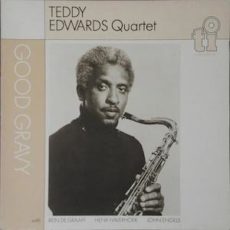
Good Gravy ~ Teddy Edwards Quartet | By Eddie Carter
I’ve been a fan of Teddy Edwards for many years, and he’s become one of my favorite tenor saxophonists. This morning’s choice from the library is a recent acquisition taking us to The Bimhuis Concert Hall in Amsterdam for a live performance to enjoy some Good Gravy (Timeless SJP 139) by The Teddy Edwards Quartet. Teddy was born in Jackson, Mississippi, and began playing the alto sax and clarinet at an early age, before taking up the tenor sax. He first played with trombonist Ernie Fields, and his first recording was a 1947 date with Dexter Gordon. Teddy also played and recorded with some of the greatest musicians in jazz, resulting in an extensive discography as a leader and sideman. The supporting cast is a marvelous Dutch trio, Rein De Graaff on piano, Henk Haverhoek on bass, and John Engels on drums. My copy used in this report is the 1984 Netherlands Stereo album.
Lady Be Good aka Oh, Lady Be Good by George and Ira Gershwin is from the Broadway musical of the same name. The trio opens Side One with a pleasant introduction, segueing into a collective bluesy theme that swings soulfully. Teddy takes the first spot at an easy speed then turns the tempo up for some down-home country cooking. Rein heightens the excitement on the second reading with cat-like precision. Teddy makes a few final comments before the group’s closing theme and enthusiastic ovation from the crowd. Oleo by Sonny Rollins begins with a brief dialogue between the tenor sax and piano, then accelerates quickly into the ensemble’s melody. Edwards takes flight first with an aggressive lead solo. De Graaff dispenses an elevated level of energy next, and Engels shares a vigorous exchange with Edwards before having a moment in the spotlight.
Georgia aka Georgia on My Mind is a classic standard by Hoagy Carmichael and Stuart Gorrell. It became the official state song after Ray Charles’ indelible rendition. A brief trio introduction opens the way for Teddy’s delicately gentle melody. He then delivers a beautiful opening solo that’s warm, full-toned, and sensuous. Rein speaks softly and reflectively on the next statement, then Teddy restates the melody with a touch of romantic lyricism into the smartly executed ending. Good Gravy, a mid tempo blues by Edwards was first heard on his 1961 album, and the ensemble starts the opening chorus leisurely. Edwards kicks off the first interpretation cheerfully. De Graaff steps into the second statement with a relaxing reading. Haverhoek makes a profound impression on his first solo ahead of the reprise, introductions of the group, and a few humorous announcements by Edwards.
Good Gravy was produced by Timeless Records founder, Wim Wigt, and recorded by Henk Elzinga. I was extremely impressed with the sound quality of this live recording. It has an exquisite soundstage that’s clear as fine crystal, and this record is silent until the music starts. You’re not just listening to the musicians playing, you’re in the Bimhuis audience watching the quartet’s performance, and they swing on all the cuts. If you’re a fan of Teddy Edwards, I invite you to check out Good Gravy on your next hunt for vinyl treasure. It’s an enjoyable live session that knocks it out of the park and deserves to be better known!
~ Good Gravy (Contemporary Records M 3592/S 7592); The Foremost! (Onyx #201) – Source: Discogs.com >~ Oh, Lady Be Good, Oleo, Georgia on My Mind – Source: JazzStandards.com © 2021 by Edward Thomas Carter
More Posts: choice,classic,collectible,collector,history,instrumental,jazz,music,saxophone
Requisites
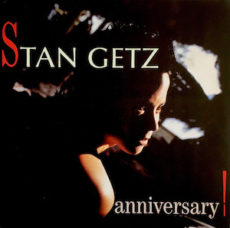
Anniversary ~ Stan Getz | By Eddie Carter
There’s nothing I enjoy more than watching jazz music performed live. Since the pandemic, the next best thing is being transported to a particular location when listening to an album on the turntable. This morning’s album was recorded on July 6, 1987, at one of the best European jazz venues, Café Montmartre, and is titled Anniversary (The EmArcy Jazz Series 838 769-1) by Stan Getz. Stan had turned sixty earlier in the year, and he was celebrating year forty-four of his illustrious career. His sound on the tenor sax was warm, lyrical, and immediately identifiable and his resume of great musicians and vocalists he’s played and recorded with reads like the Encyclopedia Britannica of jazz. Getz played many times at Montmartre, and on this album, he’s joined by Kenny Barron on piano, Rufus Reid on bass, and Victor Lewis on drums. The copy used in this report is a friend’s Phonogram France Stereo pressing by Polygram Classics.
Side One opens with an original tune by Johnny Mandel, El Cahon. The song’s title is an anagram for tenor man, Al Cohn, one of The Four Brothers in Woody Herman’s Thundering Herd. Stan starts with a brief solo introduction before moving the tempo upward for the first reading. Kenny offers some light-hearted entertainment on the next statement. Rufus plays just as imaginatively on the third solo and Victor shares the finale with Stan before the closing chorus. I Can’t Get Started by Ira Gershwin and Vernon Duke is a timeless evergreen from The Great American Songbook. Getz begins the song, not at the beginning, but the bridge with a haunting introduction and melody. He also performed the song this way in concert during the late eighties. The melody moves upward for Getz’s opening solo before ending with notes of voluptuous warmth. Drew embodies the spirit of the song on the closing chorus with a compelling performance complementing the gentle response of Reid and Lewis.
Side Two starts with a second staple in the Songbook, Stella By Starlight by Ned Washington, and Victor Young. The ensemble begins at a livelier tempo with Stan asserting his skill with a bright, lively, and cheerful melody and lead solo. Kenny comes in next for an exciting and intriguing reading. Rufus provides the next exquisite statement with an improvised bass line that’s undeniably attractive. Stan adds a few vigorous closing remarks ahead of the ending and the crowd’s approval. The closer is Stan’s Blues by Gigi Gryce allowing everyone a solo opportunity. The leader sets the tone with a relaxed attitude on the opening chorus. Reid is up first with a delightful reading that starts slowly but builds to a soulful climax. Getz blows with authority on the second statement. Drew compliments him with an air of assurance on the third reading, and Lewis gives a concise comment. Getz takes the ensemble into the finale, receiving an enthusiastic ovation from the Montmartre audience.
Anniversary was produced by Ib Skovgaard for broadcast on Denmark Radio and the man behind the dials is engineer, Johnnie Hjerting. The result of their efforts is a beautiful recording with a stunning soundstage. The record is silent until the music starts, and the listener is transported to the Café Montmartre audience to enjoy Stan Getz at his best. Two years after Anniversary was released, Getz passed away on June 6, 1991, at age sixty-four. Sadly, there was only one pressing of the LP and it may be hard to find (I know because I’m still looking for a copy). But should you come across it on your next vinyl search, it’s the perfect music to chill to after a long day or week or to enjoy during or after a romantic dinner with that special someone. If you’re a fan of Cool or Modal Jazz, Anniversary by Stan Getz is sure to please newcomers to his music as well as seasoned fans and is highly recommended for your library!
~ I Can’t Get Started, Stella By Starlight – Source: Discogs.com © 2021 by Edward Thomas Carter
More Posts: choice,classic,collectible,collector,history,instrumental,jazz,music,saxophone