

On The Bookshelf
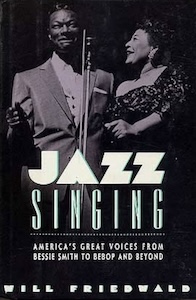
JAZZ SINGING | WILL FRIEDWALD
America’s Great Voices From Bessie Smith To Bebop and Beyond
Jazz Singing is a biographical guide for those who desire to be knowledgeable about those voices that made the 20th century a great time in the creation of music. This treatise of 832 pages covers 210 singers from Ella Fitzgerald, Sarah Vaughan, Louis Armstrong and Frank Sinatra to Elvis Presley, Johnny Mathis and Patti Page, to lesser known Jackie Paris, David Allyn, Edythe Wright, Irene Reid and everyone in between.
This book is not meant to be read from covers to cover. One should take a sip, uncovering nugget by nugget of information and insight on the classic blues stylists of the 1920s who laid the foundation on which the two greatest singers in our history, Louis Armstrong and Bing Crosby, built a tradition.
Jazz Singing reveals how the master jazz and pop singers created, what made them great, and why their music has the power to touch us so profoundly.


Daily Dose Of Jazz…
John Troy was born on June 3, 1989 in Buffalo, New York. He began playing the saxophone at age twelve. After showing exceptional ability in the classical realm throughout middle school, with the tutelage of William Eicher, his attention gradually turned toward the study of Jazz Saxophone. He honed his skills with lead alto saxophone for Concert and Jazz All-County Ensembles, and New York All-State Bands as well.
John played both lead alto and tenor in the Fredonia Jazz Ensemble, student big band. He can be heard on the 2009 release of the FJE’s, Still Kickin’ and his debut album All Ahead Flank. He led his own small groups, Jazz Quintessential, and an organ trio, the JT Trio both with significant success.
He has performed and/or studied with the likes of Eric Alexander, Grant Stewart, Ralph Lalama, Todd Coolman, Tim Armacost, Chris Potter, Tom Harrell, Stacy Dillard, Hal Galper, Arturo O’ Farrell, and Pete Malinverni, among others.
Tenor saxophonist John Troy continues to find his musical way through performance and recording in the hard bop genre..

More Posts: bandleader,history,instrumental,jazz,music,saxophone
Requisites
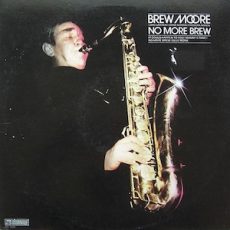
No More Brew ~ Brew Moore | By Eddie Carter
This morning’s album offered for your consideration is a live performance by Brew Moore. No More Brew (StoryvilleSLP-4019) was his final album, released eight years after his passing. Brew was born in Indianola, Mississippi and began playing the trombone at age twelve, later graduating to the clarinet and eventually the tenor saxophone. His professional journey took him from a Texas territorial band before attending college, to New Orleans, Memphis, and New York, to further his craft. He’s joined on stage by Lars Sjösten on piano, Sture Nordin on bass, and Fredrik Noren on drums. My copy is the 1981 U.S. Stereo release.
The set begins with Jimmy Van Heusen and Johnny Burke’s It Could Happen To You. Lars opens with a swinging introduction, setting up the quartet’s theme. Brew launches into a sizzling solo. Lars comes in energetically next. Sture illustrates he’s an effective soloist in a polished reading. Brew and Frednik exchange a brief dialogue, leading to the theme’s return and closure. Moore addresses the audience, then Sjösten’s introduction leads into the ensemble’s lively melody of Manny’s Tune by John Marabuto. Moore takes off first quickly. Sjösten responds with an impressive reading. Moore and Noren wrap things up with a concise conversation ahead of the closing chorus and abrupt finish.
Brew’s contribution to the set, No More Brew begins Side Two with the foursome’s joyful introduction and melody. Moore opens with energetically captivating phrases, then Lars’s vigorous reading flows through the rhythm section like ephemeral shadows. Brew and Fredrik fuel the finale with a concise comment preceding the theme’s return and a short announcement by Moore that concludes with Blue Monk by Thelonious Monk. The quartet begins with a soulful, blues-inspired melody that sets the stage for Moore to accelerate into an extended, captivating solo. Sjösten mines a rich vein of sentimentality next until the tempo slows again for the melody’s reprise and exit.
Rune Öfwerman produced the album, although it’s unknown who recorded it. However, the album’s sound quality is excellent, with a soundstage placing the listener in the club audience as the musicians are performing. Brew Moore, known for his irresistibly appealing tone that could either stir excitement or touch the heart, recorded twelve albums as a band leader and contributed to seven more as a sideman. Tragically, he passed away on August 19, 1973, at age forty-nine after a fatal fall down a flight of stairs. If you’re a fan of swing and bop and also enjoy the tenor sax, I highly recommend exploring No More Brew by Brew Moore on your next record store visit. This exceptional album showcases a talented young musician whose promising career was sadly cut short!
~ Blue Monk – Source: JazzStandards.com
~ It Could Happen To You – Source: Wikipedia.org
© 2025 by Edward Thomas Carter
More Posts: choice,classic,collectible,collector,history,instrumental,jazz,music,saxophone
Requisites
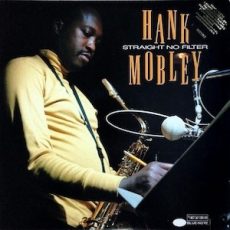
Straight No Filter ~ Hank Mobley | By Eddie Carter 5.4.25
This morning’s album from the library is one of my favorites by tenor man Hank Mobley. Straight No Filter (BlueNote BST 84435) is a 1986 release of previously unreleased tracks culled from three sessions in 1963, 1965, and 1966. Hank composed all the tracks on this album. He’s joined by Donald Byrd (track: B3), Freddie Hubbard (B1,B2), and Lee Morgan (A1 to A3) on trumpet, Herbie Hancock (B3), Barry Harris (B1, B2), and McCoy Tyner (A1 to A3), Paul Chambers (B1, B2), Bob Cranshaw (A1 to A3), and Butch Warren (B3) on bass, Billy Higgins (A1 to B2), and Philly Joe Jones (B3) on drums. My copy is the U.S. Direct Metal Mastering stereo release.
The title track, Straight No Filter, kicks off the album with the rhythm section’s lively introduction to the ensemble’s melody. Hank launches into the opening statement. Lee maintains the spirited groove in the following solo, and then McCoy takes the energy to a new level. Hank and Lee exchange a few choruses, leading back to the theme and climax. Chain Reaction starts swiftly from the trio’s introduction into the front line’s uptempo theme. Tyner leads the way with an infectiously energetic solo. Morgan swings into the second solo with considerable zest and a bright tone, then Mobley soars briskly through the finale into the theme’s restatement and a slow fade.
Soft Impressions opens with the rhythm section setting a soothing mood for the quintet’s theme. Hank establishes a smooth and easy groove in the opening statement. Lee adds to the relaxing atmosphere in the second interpretation, and then McCoy’s closing solo is as refreshing as an oasis in the desert until the theme’s reprise and climax. Third Time Around begins the second side with Chambers’s introduction ahead of the group’s medium melody. Mobley gets right down to business in the lead solo, then Hubbard provides a beautifully executed statement. Harris provides a pleasantly relaxing reading next, and Chambers walks with a bluesy bounce before the closing ensemble exits.
Hank’s Waltz is a catchy blues that Barry introduces ahead of the ensemble’s entrance. Hank breaks the ice with an infectious swing, then Lee adds a spicy touch in the second solo. Barry further elevates the mood in the final statement, before the theme is revisited and the rhythm section gently fades out. The group serves up a delicious plate of Syrup and Biscuits for the album’s finale. After the engaging theme is established, Mobley fires up the joyful energy in the opening solo. Byrd maintains a cheerful vibe in the following performance. Both horns engage in a vibrant exchange preceding the closing chorus.
Alfred Lion produced the original sessions, and Michael Cuscuna produced this release. Rudy Van Gelder was behind the dials on each date. The album boasts an excellent soundstage, transporting the musicians to the sweet spot in your listening room. Mobley was one of the best tenor men in jazz, with an outstanding discography as both leader and sideman. If you enjoy hard bop, consider adding Straight No Filter by Hank Mobley to your list on your next vinyl hunt. It’s a delightful surprise featuring some excellent playing by Hank and his bandmates across three stellar sessions, making it a highly recommended addition to any jazz library!
© 2025 by Edward Thomas Carter
More Posts: choice,classic,collectible,collector,history,instrumental,jazz,music,saxophone
Requisites
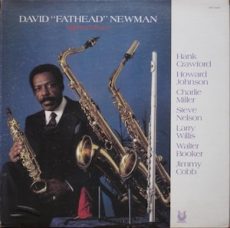
Still Hard Times ~ David “Fathead” Newman | By Eddie Carter
David “Fathead” Newman, a versatile multi-instrumentalist, enters this morning’s spotlight with his vastly underrated album, Still Hard Times (Muse Records MR 5283). This musical feast delights any jazz aficionado, offering a satisfying blend of David’s proficiency on the alto sax (track: B2), flute (B1, B3), soprano sax (A3), and tenor sax (A1, A2, B1). On his second Muse Records date, he joins forces with an talented ensemble of musicians: Charlie Miller on trumpet (A1, A2, B1, B2), Hank Crawford on alto sax (A1, A2, B1 to B3), Howard Johnson on baritone sax (A1, A2, B1, B2), Steve Nelson on vibraphone (A3, B3), Larry Willis on piano, Walter Booker on bass, and Jimmy Cobb on drums. My copy is the 1982 U.S. Stereo release.
The album opens with the septet’s introduction to Shana by David Newman, segueing into a mid-tempo melody that sets the mood. David indulges in delightful fun on a vibrant performance with playful energy and a lively tone. Larry adds an extra layer of excitement with a vibrant solo before the ensemble wraps up the song. Blisters by Hank Crawford opens with the rhythm section’s bluesy introduction, irresistibly getting your fingers snapping and your foot tapping. The theme starts as the front line launches this musical meal. Newman’s easygoing first course whets the appetite; then it’s on to Crawford, who delivers a splendid main course. Willis unfolds the perfect ending in a delicious treat for dessert, leading to the song’s conclusion.
Newman’s switch to the soprano sax for One For My Baby by Harold Arlen and Johnny Mercer is a moment of profound emotion. Larry introduces the jazz standard, ascending to David’s deeply poignant theme. He continues telling the melancholic story delicately. In the following tender presentation, Steve reveals the song’s melodic beauty, which precedes David’s serene fadeout. To Love Again is a beautiful ballad by Hank Crawford featuring “Fathead” in a heartfelt flute and tenor sax performance. Side Two opens with Newman’s flute introduction, followed by his gentle melody on the tenor sax with the ensemble in the background. In the song’s only solo, “Fathead” conveys heartwarming and precious thoughts in every note until the group returns for the gentle closing chorus.
The album’s title track, Still Hard Times by David Newman, places the leader on alto sax as the septet’s soulful theme begins. David leads off with an easy-flowing interpretation as enjoyable as something comfortable to wear. Larry brings a cheerful spontaneity to the second statement, complimenting David’s performance preceding the ending theme, which fades out gently. Percy Mayfield’s blues ballad, Please Send Me Someone To Love, receives a regal treatment by the sextet with Newman’s return to the flute, accompanied by Nelson’s vibes complementing the rhythm section as “Fathead” unveils the melody. The highlight is Crawford’s funky down-home performance until the group’s theme reprise and finale!
Still Hard Times was produced by Michael Cuscuna. Vince Traina was behind the dials of the recording, and Joe Brescio mastered the album. It has superb sound quality, with a rich soundstage transporting the listener to the studio as the musicians perform. David “Fathead” Newman’s versatility is remarkable, and the rhythm section’s steady foundation enhances the front line’s performance throughout each track. Whether you’re a soul jazz fan or discovering his music, I highly recommend checking out Still Hard Times by David “Fathead” Newman on your next record hunt. It’s a perfect album for a relaxing evening with friends or when enjoying the quiet, listening alone. It’s become a cherished part of my library, and I hope that after you hear it, it will become a treasured part of yours!
One For My Baby, Please Send Me Someone To Love – Source: Wikipedia.org
© 2025 by Edward Thomas Carter
More Posts: choice,classic,collectible,collector,history,instrumental,jazz,music,saxophone