


Daily Dose Of Jazz…
Hilde Hefte was born on September 1, 1956 in Kristiansand, Norway and received much of her musical education from the Barratt Due Institute of Music in Oslo, Norway with piano as primary and vocals as secondary instruments. She played saxophone and clarinet for ten years when she was young, apprenticing with her father who was saxophone teacher and musician. She also trained as an actor, landing numerous roles.
During a period of years she taught music at Agder musikkonservatorium before she started as a full-time musician. She released her debut solo album Round Chet’s Midnight in 1999 to great reviews, from song others Down Beat Magazine. Hefte went on to quickly release five more albums under her own name, and has written lyrics and composed music to both her own albums and for a host of other artists.
Never far from acting, Hilde continues her leading roles at the theatre, among others, the main role as Edith Piaf. She has written and arranged music for various local theatre productions. To date she has recorded eight solo albums as a leader highlighting the music of Chet Baker, Bill Evans and bossa nova, as well as an album with the Prague Philharmonic Orchestra and inclusion in the Putamayo compilation Brazil Around The World.
With already ten collaborative albums under her belt with no sign of stopping, vocalist Hilde Hefte founded and runs Norsk Jazzforlag in 2003 and the record label Ponca Jazz Records the following year.
Bestow upon an inquiring mind a dose of a Kristiansand vocalist to motivate the perusal of the genius of jazz musicians worldwide whose gifts contribute to the canon…

More Posts: bandleader,history,instrumental,jazz,music,vocal
Daily Dose Of Jazz…
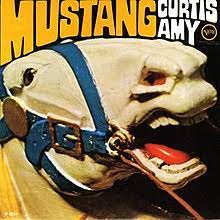
Leroy “Hog” Cooper ws born on August 31, 1928 in Dallas, Texas and by age twenty, fom 1948 to 1951, he toured with the Ernie Fields territory band. A childhood friend of David Fathead Newman, in 1954 the two played together in the sax section backing Lowell Fulson on his first single for Chess Records, Reconsider Baby.
In 1957, upon the Newman recommendation of Cooper to Ray Charles, who joined Charles’ band the same summer as bassist Edgar Willis, both musicians stayed on with Charles for some twenty years.
Leroy also played, recorded and/or toured with Lightnin’ Hopkins, Clarence “Gatemouth” Brown, The Righteous Brothers, Dr. John, Del Shannon, Bobby Short, and Joe Cocker.
Performing locally in Orlando, Florida with the Smokin’ Torpedoes & Josh Miller Blues Band till the time of his death, baritone saxophonist Leroy Cooper, who was affectionately known as Hog in the industry, transitioned on January 15, 2009.
Bestow upon an inquiring mind a dose of a Dallas saxophonist to motivate the perusal of the genius of jazz musicians worldwide whose gifts contribute to the canon…

More Posts: history,instrumental,jazz,music,saxophone
Three Wishes
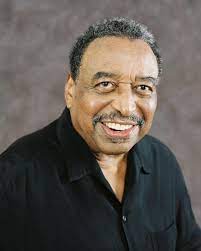
When the curious Pannonica posed the question of three wishes to Chico Hamilton he came back with the following answers:
- “Well, I think the first wish would be I want everything wonderful for my wife and my family , because they have sacrificed.”
- “I don’t know. I wish that this God-given talent I have ~ someone will get some good out of it..”
- “I wish I never lose my sense of humor.”
*Excerpt from Three Wishes: An Intimate Look at Jazz Greats ~ Compiled and Photographed by Pannonica de Koenigswarter
More Posts: baroness,drums,history,instrumental,jazz,music,pannonica,three,wishes
Daily Dose Of Jazz…
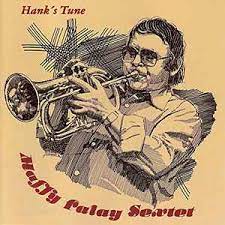
Muvaffak “Maffy” Falay was born on August 30, 1930 in Karşıyaka, Turkey and moved later with his family to Kuşadası,Turkey. In 1942 he heard that a teacher would be arriving in Kuşadası to establish a municipal band team and ast the age of 12 started his career in music in Kuşadası Municipality Band. He learned to read music and to play the trumpet with excellent skills with 5 hours of practice per day in just 3 months.
He studied trumpet and piano in Ankara Conservatory and in 1960, he joined the radio orchestra of Kurt Edelhagen in Cologne, Germany. After departing from Edelhagen he toured Europe with the Kenny Clarke/Francy Boland Big Band and played on six of the band’s albums.
Maffy’s next gigs were playing in orchestras led by Benny Bailey, Åke Persson, Phil Woods, Sixten Eriksson and Quincy Jones. By 1965 he decided to move to Sweden where he played for the radio jazz orchestra, and toured around the Americas at the same time. 1970 saw him playing in the Dizzy Gillespie Reunion Orchestra, and he also played with Dexter Gordon, Stan Getz, and Elvin Jones.
In 1971, he formed the band Sevda, featuring Bernt Rosengren, Okay Temiz, Gunnar Bergsten, Ove Gustafsson and Salih Baysal. In 2005, he received the Lifetime Achievement Award at the Istanbul Jazz Festival. Trumpeter Maffy Falay transitioned on February 22, 2022 at the age of 91.
Bestow upon an inquiring mind a dose of a Karşıyaka trumpeter to motivate the perusal of the genius of jazz musicians worldwide whose gifts contribute to the canon…
More Posts: bandleader,history,instrumental,jazz,music,trumpet
Daily Dose Of Jazz…
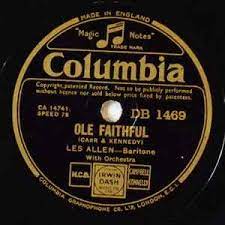
Leslie Allen was born on August 29, 1902 in Ealing, London, England and at the age of 3, he and his family moved to Canada. As a child, he played clarinet alongside his father in the Queen’s Own Rifles Band and later learned to play the saxophone. He performed with the dance bands of Burton Till and Luigi Romanelli and in 1922 worked briefly in New York City before travelling to England in 1924 as part of a band of fellow Canadians recruited by Hal Swain. Intending his band to play at the Rector’s Club in London, once there, he found it closed.
The band found a residency at the New Prince’s restaurant in Piccadilly and became The New Princes Toronto Band. Under this name, they recorded for Columbia Records for eighteen months with Allen serving as alto saxophonist and occasional vocalist. Between 1926 and 1927, Allen joined several of his NPTB colleagues on a European tour where they performed as Dave Caplin’s Toronto Band under the leadership of banjoist Caplin.
After returning to England in 1927, Allen spent the next five years playing and singing with several leading British dance orchestras, including those of Carroll Gibbons, George Melachrino and Geraldo and making a number of freelance recordings, with duets with Al Bowlly.
In 1932, he joined Henry Hall’s BBC Dance Orchestra as a featured vocalist and enjoyed national hits with The Sun Has Got His Hat On and Auf Wiedersehen My Dear. Parting ways with Hall in 1934, he began a solo career, scoring hits with Tell Me Tonight, Love Is The Sweetest and the children’s ballad, Little Man You’ve Had A Busy Day on which his wife Anne and son Norman had speaking parts.
In 1935, he starred in the musical comedy Heat Wave, subsequently formed his own bands, the Les Allen Melody Four and the male voice singing group, Les Allen & His Canadian Bachelors, with fellow countrymen lead singer Jack Curtis, tenor Herbie King, and baritone and arranger Cy Mack.
During World War II, Les travelled and entertained Canadian troops. After the war, he played the juvenile lead in the 1945 revival of Miss Hook of Holland before returning to Toronto, Canada in 1948, where he started a second career in the office supply trade. Retiring in 1971, alto saxophonist and vocalist Les Allen transitioned in Toronto on June 25, 1996.
More Posts: bandleader,history,instrumental,jazz,music,saxophone,vocal