

Daily Dose Of Jazz…
Archie “Skip” Hall was born in Portsmouth, Virginia on September 27, 1909 and studied piano under his father. From the age of eight he lived in New York City and in the late 1920s he relocated to Cleveland, Ohio where he led his own band for most of the 1930s.
He worked as an arranger on contract and arranged for Jay McShann from 1940 to 1944 and during World War II played with Don Redman. In 1943 he entered military service and played in a band while stationed in England. Around 1945 Skip worked with Hot Lips Page and then joined the Sy Oliver band, who was his brother-in-law. Following this he worked with Wynonie Harris, Thelma Houston, and Jimmy Rushing before joining Buddy Tate’s group in 1948.
Hall went on to work with Tate for twenty years both as a performer and arranger. He also played in the 1950s and 1960s with Dicky Wells, Emmett Berry, and George James, as well as solo and with his own small groups. Arranger, pianist, and organist Skip Hall, who never recorded as a leader, passed away in November 1980 in Ottawa, Canada.

More Posts: arranger,bandleader,history,instrumental,jazz,music,piano
Requisites
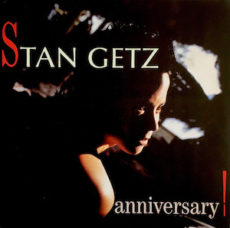
Anniversary ~ Stan Getz | By Eddie Carter
There’s nothing I enjoy more than watching jazz music performed live. Since the pandemic, the next best thing is being transported to a particular location when listening to an album on the turntable. This morning’s album was recorded on July 6, 1987, at one of the best European jazz venues, Café Montmartre, and is titled Anniversary (The EmArcy Jazz Series 838 769-1) by Stan Getz. Stan had turned sixty earlier in the year, and he was celebrating year forty-four of his illustrious career. His sound on the tenor sax was warm, lyrical, and immediately identifiable and his resume of great musicians and vocalists he’s played and recorded with reads like the Encyclopedia Britannica of jazz. Getz played many times at Montmartre, and on this album, he’s joined by Kenny Barron on piano, Rufus Reid on bass, and Victor Lewis on drums. The copy used in this report is a friend’s Phonogram France Stereo pressing by Polygram Classics.
Side One opens with an original tune by Johnny Mandel, El Cahon. The song’s title is an anagram for tenor man, Al Cohn, one of The Four Brothers in Woody Herman’s Thundering Herd. Stan starts with a brief solo introduction before moving the tempo upward for the first reading. Kenny offers some light-hearted entertainment on the next statement. Rufus plays just as imaginatively on the third solo and Victor shares the finale with Stan before the closing chorus. I Can’t Get Started by Ira Gershwin and Vernon Duke is a timeless evergreen from The Great American Songbook. Getz begins the song, not at the beginning, but the bridge with a haunting introduction and melody. He also performed the song this way in concert during the late eighties. The melody moves upward for Getz’s opening solo before ending with notes of voluptuous warmth. Drew embodies the spirit of the song on the closing chorus with a compelling performance complementing the gentle response of Reid and Lewis.
Side Two starts with a second staple in the Songbook, Stella By Starlight by Ned Washington, and Victor Young. The ensemble begins at a livelier tempo with Stan asserting his skill with a bright, lively, and cheerful melody and lead solo. Kenny comes in next for an exciting and intriguing reading. Rufus provides the next exquisite statement with an improvised bass line that’s undeniably attractive. Stan adds a few vigorous closing remarks ahead of the ending and the crowd’s approval. The closer is Stan’s Blues by Gigi Gryce allowing everyone a solo opportunity. The leader sets the tone with a relaxed attitude on the opening chorus. Reid is up first with a delightful reading that starts slowly but builds to a soulful climax. Getz blows with authority on the second statement. Drew compliments him with an air of assurance on the third reading, and Lewis gives a concise comment. Getz takes the ensemble into the finale, receiving an enthusiastic ovation from the Montmartre audience.
Anniversary was produced by Ib Skovgaard for broadcast on Denmark Radio and the man behind the dials is engineer, Johnnie Hjerting. The result of their efforts is a beautiful recording with a stunning soundstage. The record is silent until the music starts, and the listener is transported to the Café Montmartre audience to enjoy Stan Getz at his best. Two years after Anniversary was released, Getz passed away on June 6, 1991, at age sixty-four. Sadly, there was only one pressing of the LP and it may be hard to find (I know because I’m still looking for a copy). But should you come across it on your next vinyl search, it’s the perfect music to chill to after a long day or week or to enjoy during or after a romantic dinner with that special someone. If you’re a fan of Cool or Modal Jazz, Anniversary by Stan Getz is sure to please newcomers to his music as well as seasoned fans and is highly recommended for your library!
~ I Can’t Get Started, Stella By Starlight – Source: Discogs.com © 2021 by Edward Thomas Carter

More Posts: choice,classic,collectible,collector,history,instrumental,jazz,music,saxophone
Daily Dose Of Jazz…
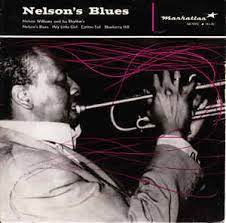
Nelson “Cadillac” Williams was born on September 26, 1917 in Montgomery, Alabama and began playing piano at age 13, however, he settled on the trumpet soon afterwards. It has been speculated that while still a teenager he may have played with blues pianist/singer Cow Cow Davenport.
In the 1930s, he played in the territory bands Trianon Crackerjacks and Brown Skin Models, and acted as musical director for the Dixie Rhythm Girls. Around 1940, he left Alabama for Philadelphia, Pennsylvania where he played with Tiny Bradshaw’s band before joining the U.S. Army during World War II.
After the war, Billy Eckstine hired Williams, before working with John Kirby and pianist Billy Kyle. In 1949, he began the first of several stints with Duke Ellington, who bestowed upon him the nickname “Cadillac”.
In 1951, he left Ellington’s employ and moving to Paris, France he led his own bands and recorded for French labels. He returned to Ellington in 1956, and played with him again in 1969 on a tour of Europe. Trumpeter Nelson “Cadillac” Williams settled in the Netherlands and passed away in 1973 in Voorburg.
More Posts: bandleader,history,instrumental,jazz,music,trumpet
Daily Dose Of Jazz…
Charlie Allen was born in Jackson, Mississippi on September 25, 1908 and grew up in Chicago, Illinois. He began playing in the early 1920s just out of high school and through the decade worked as a member of the bands of Hugh Swift, Dave Peyton, Doc Cook, Clifford King, and Johnny Long.
Allen worked with Earl Hines from 1931 to 1934, then did a short stint in Duke Ellington’s orchestra in 1935, though he never recorded any solos with Ellington. He played with Fletcher Butler in 1936 and then returned to play with Hines again in 1937.
He played in various groups in Chicago in the 1940s and 1950s. Later in his life he became a music educator, worked in the Chicago Musicians’ Union, and designed custom trumpet mouthpieces, used by Cat Anderson, among others.
Trumpeter Charlie Allen passed away on November 19, 1972 in Chicago.
More Posts: history,instrumental,jazz,music,trumpet
Daily Dose Of Jazz…
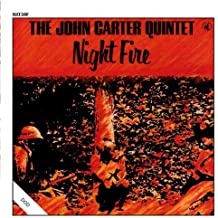
John Wallace Carter was born on September 24, 1929 in Fort Worth, Texas and attended I.M. Terrell High School, and played music with schoolmates Ornette Coleman and Charles Moffett in the 1940s. Earning a Bachelor of Arts from Lincoln University in Jefferson, Missouri in 1949 and a Master of Arts from the University of Colorado in 1956. He also studied at the North Texas State and University of California at Los Angeles, California.
From 1961, Carter was based mainly on the West Coast. There he met Bobby Bradford in 1965, with whom he subsequently worked on a number of projects, notably the New Jazz Art Ensemble. He also played with Hampton Hawes and Harold Land. In the 1970s Carter became well known on the basis of his solo concerts.
At the New Jazz Festival Moers in 1979, he and the German clarinet player Theo Jörgensmann performed for three days. Carter received complimentary reviews and wide recognition from around the world. He and Jörgensmann met again in 1984, and played the Berlin JazzFest, both as a soloist and in duo.
Between 1982 and 1990, John composed and recorded Roots and Folklore: Episodes in the Development of American Folk Music. It was a five album set that focused on African Americans and their history, and was acclaimed by jazz critics as containing some of the best releases of the 1980s.
He recorded seventeen albums as a leader and thirteen albums with Tim Berne, Clarinet Summit, Vinny Golia, Richard Grossman, John Lindberg, James Newton and Horace Tapscott. Carter planned a clarinet quartet with Perry Robinson, Jörgensmann and Eckard Koltermann was planned for 1991, but it never came to fruition.
Clarinetist, saxophonist, and flutist John Carter passed away from a non-malignant tumor on March 31, 1991. Later that year he was inducted into the Down Beat Jazz Hall of Fame.
More Posts: clarinet,flute,history,instrumental,jazz,music,saxophone