
Daily Dose Of Jazz…
Rudy Powell was born in New York City on October 28, 1907 and learned piano and violin while young before taking on the clarinet and saxophone. In the late 1920s, he played with June Clark, Gene Rodgers’s Revellers, and Cliff Jackson’s Krazy Kats.
Rudy worked extensively as a sideman throughout his career. Among his credits in the 1930s are Elmer Snowden, Dave Nelson, Sam Wooding, Kaiser Marshall, Rex Stewart, Fats Waller, Edgar Hayes, and Claude Hopkins. The Forties saw him playing with Teddy Wilson, Andy Kirk, Fletcher Henderson, Eddie South, Don Redman, Chris Columbus, Cab Calloway, Lucky Millinder and Hopkins again.
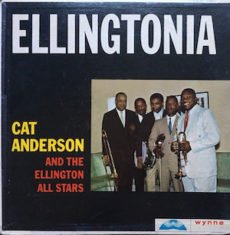
By the 1950s and through the Sixties Powell was with Jimmy Rushing, Buddy Tate, Benton Heath, Ray Charles, and Buddy Johnson. Never recording as a leader, he did record with Cat Anderson, Al Casey, Duke Ellington, Cliff Jackson, Jo Jones, Lucky Millinder, Jimmy Rushing, and Saints & Sinners. He continued playing intermittently into the 1970s and was a part of the photo A Great Day In Harlem.
Clarinetist and saxophonist Rudy Powell, who later changed his name to Musheed Karweem when he joined the Ahmadiyya Muslim Community, passed away at age 69 on October 30, 1976.

More Posts: clarinet,history,instrumental,jazz,music,saxophone
Daily Dose Of Jazz…
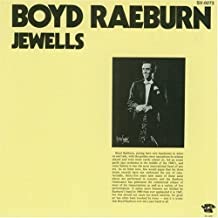
Boyd Albert Raeburn was born in Faith, South Dakota on October 27, 1913 and attended the University of Chicago, where he led a campus band. Gaining his earliest experience as a commercial bandleader at 1933~1934 Chicago’s World Fair, for the rest of the decade, he worked in and often led dance bands.
In the Forties the group passed through swing before becoming identified with the bop school. He went on to start a big band, which was active from 1944 to 1947, performing arrangements comprable to those used by Woody Herman and the progressive jazz of Stan Kenton during the same period. The compositions arranged by George Handy were the most contemporary, and after Handy’s departure Johnny Richards joined in 1947 and for the next year he wrote 50 compositions.
He composed Rip Van Winkle for his second wife, singer Ginny Powell, who sang with her husband’s group, as well as with Harry James and Gene Krupa. Boyd left music in the mid-1950s and they moved to Nassau, Bahamas where his wife transitioned.
Settling in New Orleans, Louisiana for a time, he ran a furniture store. Bass saxophonist and bandleader Boyd Raeburn passed away of a heart attack at age 52 on August 2, 1966 in Lafayette, Indiana.
More Posts: bandleader,history,instrumental,jazz,music,saxophone
Three Wishes
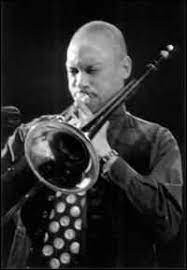
Nica’s request of Julian Priester led him to answering the question of three wishes with:
-
- “The first one is a government~sponsored music program.”
- “I’d like to play with Monk.”
- “A change in this country’s economic system.”

More Posts: baroness,euphonium,history,instrumental,jazz,music,pannonica,three,trombone,wishes
Daily Dose Of Jazz…
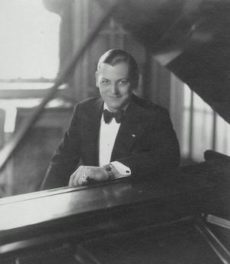
Joseph L. Sanders was born on October 26, 1896 in Thayer, Kansas. Best known for co-leading the Coon-Sanders’ Nighthawks along with Carleton Coon, the pair formed the group in 1920 in Kansas City under the name Coon-Sanders Novelty Orchestra.
Their broadcast for the first time on radio the following year, they became simply known as the Nighthawks because of their frequent appearances on late night radio. They recorded in Chicago, Illinois in 1924 and held a residency at the Blackhawk club in that city from 1926. The ensemble toured as a Midwestern territory band, and after Coon’s death, Joe continued to lead the band under his own name.
During the 1940s Sanders worked mostly in Hollywood studios, and occasionally led performances at the Blackhawk once again. He was a vocalist for the Kansas City Opera in the 1950s.
Pianist, singer, and bandleader Joe Sanders, associated with Kansas City jazz for most of his career, passed away in Kansas City, Missouri on May 14, 1965.
More Posts: bandleader,history,instrumental,jazz,music,piano,vocal

Requisites
Up at Minton’s, Volume 1 ~ Stanley Turrentine | By Eddie Carter
My introduction to tenor saxophonist Stanley Turrentine began in 1963 with two albums by Jimmy Smith, Midnight Special (1961), and Back at The Chicken Shack (1963). Anyone who’s listened to either record knows Turrentine possessed some serious Soul-Jazz chops. He impressed me so much that I wanted to hear more from him. Up At Minton’s, Volume 1 (Blue Note BLP 4069/BST 84069) follows his debut, Look Out (1960), and documents his first live performances at Minton’s Playhouse. Sharing the stage with Turrentine are Horace Parlan on piano, Grant Green on guitar, George Tucker on bass, and Al Harewood on drums. My copy used in this report is the 2011 Analogue Productions 45-rpm two-record Stereo audiophile reissue (AP-84069/BST-84069).
Record One opens with But Not For Me by George, and Ira Gershwin. It first appeared in the musical Girl Crazy, and the quintet’s rendition is exciting from the opening chorus. Stanley is sincere and warm as he begins the first solo but quickly evolves into a rhythmic romp of fire and fury. Grant is equally spirited on the second statement and Horace dispels plenty of energy on a few heated choruses, showing he can swing as hard as his bandmates. Stanley’s Time, an original by the saxophonist starts Side Two at a medium tempo. The rhythm section begins a brief dialogue on the introduction before Turrentine emerges with a relaxing melody. Green is up first with a crisply constructed solo, then the leader explores some interesting avenues on the next reading. Tucker follows with the first of two statements that swing with ease. Parlan provides a remarkable interpretation next, and Stanley adds a brisk footnote on the finale preceding the close.
Record Two begins with a trip to Broadway by Wilbur H. Bird, Teddy McRae, and Henri Woode. The quintet turns the heat up on this swinger with a lively theme. Grant takes the first spot with aggressive fierceness. Stanley steps in next with an enthusiastic performance that receives a well-deserved round of applause from the crowd at its conclusion. Horace makes the piano sizzle next with a hard-hitting attack by his fingers. Stanley and Grant take turns in a vigorous exchange with Al who sparkles like a gem into the ensemble’s ending. The finale is Yesterdays by Jerome Kern and Otto Harbach. The trio starts with a brief introduction, then Stanley’s melody and opening solo are silky smooth. Grant weaves an unforgettable spell of inspiration on the next interpretation and Horace counters with a blissful reading that swings easy. George steps into the spotlight last for a beautifully relaxed performance ahead of Stanley reprising the melody into a calm, serene ending.
Rudy Van Gelder made the original recording, and this reissue was remastered by Kevin Gray and Steve Hoffman of AcousTech Mastering. Both records produce an incredible soundstage with amazing clarity that brings the instruments alive and places the listener in the Minton Playhouse crowd. You not only hear the musicians but the crowd as well and a few glasses tinkling during each song. The music on all four sides is superb and with this lineup, how could it not be? The cover is glossy, but not a gatefold; both records reside in the same opening. The one issue that concerns me is the sleeve doesn’t appear to be sturdy enough to manage the records behind the album cover in outer sleeves to reduce wear to the opening, seams, and spine. If you’re a fan of live jazz and are looking for an album that’s beautifully recorded and engineered, I submit for your consideration, Up at Minton’s, Volume 1 by Stanley Turrentine. It’s a great introduction to his music and a splendid listening experience that not only leaves the crowd satisfied but the listener as well!
~ Back at The Chicken Shack (Blue Note BLP 4117/BST 84117), Look Out (Blue Note BLP 4039/BST 84039), Midnight Special (Blue Note BLP 4078/BST 84078) – Source: Discogs.com ~ But Not For Me, Yesterdays – Source: JazzStandards.com ~ Broadway – Source: Wikipedia.org © 2021 by Edward Thomas Carter