

Daily Dose Of Jazz…
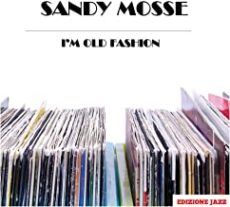
Sandy Mosse was born on May 29, 1929 in Detroit, Michigan and learned clarinet and alto saxophone early in life, but switched to tenor saxophone at the beginning of the 1950s. Based out of Chicago, Illinois during the decade, he made several forays abroad, playing in Paris with Wallace Bishop in 1951. On his 1953 tour of Europe he performed with Django Reinhardt and Woody Herman.
Upon returning to Chicago in 1955 he played with Bill Russo, Chubby Jackson, James Moody, and Cy Touff. Mosse and Touff also co-led an octet called Pieces of Eight late in the 1950s into the early 1960s, featuring trumpeter John Howell. He received awards from Down Beat and Playboy late in the 1950s.
The 1960s saw him playing with Buddy Rich, Maynard Ferguson, and Dave Remington. During this time Sandy formed a band with flugelhornist Warren Kime called Pieces of Eight. Unfortunately, that same decade he was diagnosed with cancer.
Marrying a Dutch woman Clara, he moved to Amsterdam in the 1970s, playing on national radio and teaching at the Royal Dutch Conservatory. Recording less, he occasionally toured the U.S. with Zoot Sims and Al Cohn. In the Netherlands, he played with an ensemble called Volume Two, with Irvin Rochlin, Klaus Flenter, Evert Hekkema, Ben Gerritsen, and Lex Cohen.
Tenor saxophonist Sandy Mosse, influenced by Lester Young, passed away on July 1, 1983 in Amsterdam, Netherlands.

More Posts: bandleader,history,instrumental,jazz,music,saxophone
Daily Dose Of Jazz…
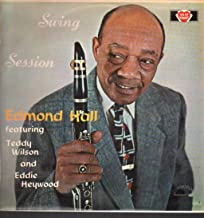
Arthur “Traps” Trappier was born on May 28, 1910 in Georgetown, South Carolina and played with Charlie Skeets and Blanche Calloway in the late 1920s. After working steadily through the 1930s, he joined Fats Waller in 1941-42 before serving in the military during World War II.
He led his own trio in various hotels in New York City in the 1950s, and played as a sideman into the 1970s. Among those he played with are Josh White, Wilbur De Paris, Edmond Hall, Sy Oliver, Hot Lips Page, Buddy Johnson, Wingy Manone, Sidney Bechet, Benny Goodman, and Red Allen.
He recorded with Waller, Hall, Conrad Janis, Punch Miller, Mutt Carey, Tony Prenti, Willie “The Lion” Smith, and Rex Stewart. Drummer Arthur Trappier passed away on May 17, 1975 in New York City.
More Posts: drums,history,instrumental,jazz,music
The Quarantined Jazz Voyager
TUESDAYS IN CHINATOWN | ANDY BEYPolitics, business and society are taking another foreboding step towards the past normal by allowing people who have been vaccinated to move unmasked. Ther are, however, no checks and balances as no one is checking these people as they come into stores. Thinking this is too early, I remain safe and comfortable in my home.
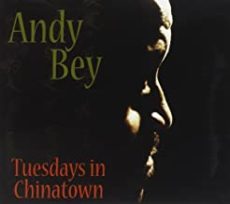
On that note, this week I am listening to another favorite of mine, male baritone vocalist by the name of Andy Bey and I have chosen his 2001 Tuesdays In Chinatown release. The horns were arranged by Geri Allen, engineered and mixed by Dave Kowalski, mastered by Ron McMaster, and produced by Herb Jordan. The photography was taken by Frank Stewart.
Track Listing | 63:01- Tuesdays In Chinatown ~ 6:52
- Fragile (Sting) ~ 4:50
- Bridges (Milton Nascimento) ~ 4:58
- Saidas E. Bandeiras (Fernando Brant / Milton Nascimento) ~ 5:36
- In A Mist (Bix Beiderbecke) ~ 7:06
- I’ll Remeber April (Gene DePaul / Pat Johnston / Patricia Johnston / Don Raye) ~ 5:35
- Invitation (Bronislaw Kaper / Paul Francis Webster) ~ 7:01
- Little Girl Blue (Lorenz Hart / Richard Rodgers) ~ 6:17
- Just Friends (John Klenner / Sam M. Lewis) ~ 2:40
- Feelin’ Lowdown (Big Bill Broonzy) ~ 6:18
- Andy Bey ~ piano, vocal
- Peter Washington, Ron Carter ~ Bass
- Peter Sanders ~ Cello (2)
- Marty Ehrlich ~ Clarinet, Bass Clarinet, Alto Flute
- Victor Lewis ~ Drums
- Earl Gardner, John Sneider ~ Flugelhorn, Trumpet
- Paul Meyers ~ Guitar
- Mino Cinelu ~ Percussion
- Steve Turre ~ Trombone
- Barry Finclair ~ Viola
- Andy Stein ~ Violin, String Arrangements
- Laura Seaton ~ Violin

More Posts: adventure,album,club,genius,jazz,museum,music,preserving,restaurant,travel,vocal
Daily Dose Of Jazz…
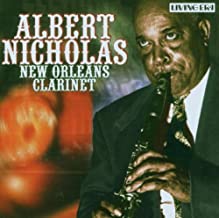
Albert Nicholas was born on May 27, 1900 in New Orleans, Louisiana and his primary instrument was the clarinet, which he studied with Lorenzo Tio in his hometown of New Orleans. Late in the 1910s he played with Buddy Petit, King Oliver, and Manuel Perez.
Spending three years in the Merchant Marines, he then joined Oliver in Chicago, Illinois from 1925 to 1927. After time in East Asia and Egypt, he returned to New York City in 1928 and played with Luis Russell until 1933. During this time in the city Albert played with Red Allen, Charlie Holmes, and J. C. Higginbotham. He would later play with Chick Webb, and Louis Armstrong with Russell and Jelly Roll Morton.
The Dixieland jazz revival of the late 1940s reinvigorated his career, playing with Art Hodes, Bunk Johnson, and Kid Ory. Nicholas had a regular gig with Ralph Sutton in 1948. In 1953 he moved to France and except for recording sessions in the U.S. in 1959-60, he remained there for the rest of his life.
Clarinetist Albert Nicholas, who was active from his teen years until his death, passed away on September 3, 1973 in Base, Switzerland.
More Posts: clarinet,history,intrumental,jazz,music
Daily Dose Of Jazz…
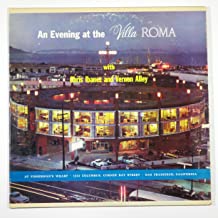
Vernon Alley was born on May 26, 1915 in Winnemucca, Nevada and played football in high school and college. His brother Eddie was a drummer and they played together often. He played with Wes People in 1937 and with the interracial Saunders King band until the end of the decade. He briefly led his own band in 1940.
Around 1940, while in Lionel Hampton’s band, Alley switched from double bass to electric upright bass, one of the first musicians to do so. In 1942 he moved to Count Basie’s ensemble, where he played only for a few months and appeared in the film Reveille with Beverly.
Enlisting in the Navy as a musician in 1942, after training at Camp Robert Smalls, he was assigned as part of a 45-piece regimental band to the Navy’s PreFlight School located at St. Mary’s College, in Moraga, California. Others who served in this band included Ernie and Marshal Royal, Jackie Kelso, Wilbert Baranco, Earl Watkins, and Buddy Collette.
After returning to civilian life, Alley put together an ensemble in San Francisco, California. He continued to play there and was an active member on local radio and in civic arts into the 1990s. Bassist Vernon Alley passed away on October 3, 2004 having become the most distinguished jazz musician in San Francisco history.
More Posts: bass,instrumental,jazz,music