

Requisites
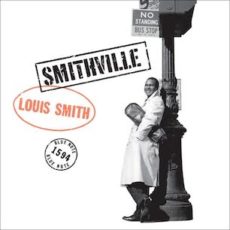
Louis Smith steps into the spotlight for this morning’s discussion with his second 1958 record for Blue Note following Here Comes Louis Smith. Born in Memphis, Tennessee, he began playing the trumpet as a teenager and his first recording was Swingin’ by Kenny Burrell, a 1980 Japanese album combining three sessions in 1956, 1958, and 1959. Smith took a job as a music director of Booker T. Washington High School in Atlanta, Georgia rather than becoming a full-time musician. After leaving school, he became the Director of the Jazz Ensemble at the University of Michigan and a teacher in Ann Arbor. Louis was also an excellent composer. On Smithville (Blue Note BLP 1594), he’s working with an elite quartet, Charlie Rouse on tenor sax, Sonny Clark on piano, Paul Chambers on bass, and Art Taylor on drums. The LP used in this report is a friend’s copy of the 2010 Music Matters Jazz 45-rpm Mono reissue (MMBLP-1594).
Record One starts with us arriving at Smithville, a slow-tempo blues by Louis inhabiting the first side. Everyone takes it easy from the introduction by Paul and Louis into a laid-back ensemble opening chorus. Charlie opens with a casualness and relaxed attitude on the lead solo. Louis takes over for a mellow, very personal presentation, then Sonny wraps up the song with a delightful showcase that’s handsomely constructed. Wetu, also by Smith occupies Side Two, commencing with the tempo way up and the quintet playing like the wind on the melody. Rouse takes off first with exhilarating speed. Smith also travels fast on the next interpretation. Taylor sets up a ferocious beat for Clark’s fingers to fly fiercely over the keys in an incandescent performance, and Chambers is especially productive on the final spot ahead of the ending theme.
Record Two begins with Embraceable You by George and Ira Gershwin. Louis is the main horn here and approaches the melody and opening statement with a softer voice, summoning affectionate warmth from his trumpet. Sonny shows his sentimental side on a hauntingly beautiful interpretation before Louis and Charlie connect on a pleasantly sweet reprise and climax. There Will Never Be Another You by Harry Warren and Mack Gordon was first heard in the 1942 film, Iceland. It opens with a brief introduction by Clark preceding an invigorating theme. Rouse opens the lead solo swinging immensely, then takes the next chorus one octave higher. Smith unwinds a lively series of scintillating choruses. Clark responds to both horns with enthusiastic virtuosity. Chambers steps into the spotlight last with strong, bass lines soaring back to the soft conclusion.
The finale is Later, a quick original by the leader flying at a speedy clip. Louis meets the challenge with a skyrocketing first solo. Charlie comes next with an adrenaline-charged reading. Sonny follows with a high-voltage power supply. Art brings the song home with some dynamic drumming into the quintet’s cooking reprise and sudden stop ending. If you’ve read any of the other MMJ reissues I’ve discussed, you already know the quality and care that goes into each title is well-known among audiophiles and jazz lovers. For those who haven’t heard them before, they’re mastered from the original analog tapes and pressed on 180-gram audiophile vinyl at RTI (Record Technology Incorporated) in Camarillo, California. Inside the gatefold are extremely beautiful photos from the session by Francis Woolf that could be proudly displayed on your listening room wall.
After listening to both records, I pulled out my 1991 Toshiba-EMI Limited Japanese 33 1/3 Mono reissue to compare the sound with the MMJ LP. The Toshiba reissue has an exceptional soundstage throughout the highs, midrange, and low end. The instruments come to life through your speakers as if you’re at Mr. Van Gelder’s home alongside the musicians during the recording. However, the sound quality of the MMJ Mono reissue is significantly elevated with superb mastering that’s very detailed making an already great-sounding album, that much better. I listened intently to both reissues becoming completely engrossed in the music and while my system isn’t high-end, it still made an enduring impression, and I could hear the difference.
It would be another thirty-seven years before Louis Smith returned to the studio to record an album as a leader. In 2006, Louis suffered a stroke ending his professional career, but he continued to enjoy live jazz in the Detroit-Ann Arbor area until his passing on August 20, 2016, at age eighty-five. To me, Smithville is a shining example of first-rate, no-frills Hard-Bop capturing the driving energy of the musicians at their best. On your next search for vinyl treasure, I invite you to take a trip to Smithville. There you will find an outstanding session of amazing music by Louis Smith that’s highly recommended for your library!
~Here Comes Louis Smith (Blue Note BLP 1584), Smithville (Blue Note BLP 1594-BN 1594), Swingin’ (Blue Note GXF 3070) – Source: Discogs.com ~Embraceable You, There Will Never Be Another You – Source: JazzStandards.com ~Booker Little, Louis Smith – Source: Wikipedia.org © 2021 by Edward Thomas Carter

More Posts: choice,classic,collectible,collector,history,instrumental,jazz,music
Daily Dose Of Jazz…
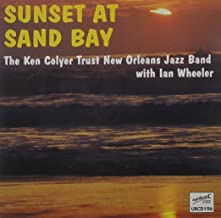
Kenneth Colyer was born on April 18, 1928 in Great Yarmouth, Norfolk, England, but grew up in Soho, London, and served as a member of his church choir. Listening to his elder brother’s jazz records which influenced him. He joined the Merchant Navy at 17, travelled around the world and heard famous jazz musicians in New Orleans, Louisiana.
In the UK, Colyer played with various bands and joined the Crane River Jazz Band in 1949 with Ben Marshall, Sonny Morris, Pat Hawes, John R. T. Davies, Julian Davies, Ron Bowden and Monty Sunshine. Rejoining the Merchant Navy, and jumping ship in Mobile, Alabama, he travelled to New Orleans, where he played with his idols in George Lewis’ band. Though offered the job of lead trumpeter on a tour, he was caught by the authorities, detained and deported.
Ken went on to join the Chris Barber Band and made their first recordings on the Storyville in 1953. Parting company the following year, then briefly joined a band in the mid-1950s with clarinetist Acker Bilk and trombonist Ed O’Donnell.
Then he put together his own band with Mac Duncan, Ian Wheeler, Johnny Bastable, Ron Ward, Colin Bowden and Ray Foxley. This band played together until the early 1960s before incorporating a new lineup.
After a bout with stomach cancer in 1972 he stopped being a bandleader but continued to work, occasionally associated with Chris Blount’s New Orleans Jazz Band. A biography, Goin’ Home, was compiled by Mike Pointon and Ray Smith. Trumpeter and cornetist Ken Colyer, who was known for skiffle interludes and devoted to New Orleans jazz, passed away on March 8, 1988.
More Posts: bandleader,cornet,history,instrumental,jazz,music,trumpet
Daily Dose Of Jazz…
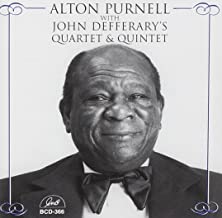
Alton Purnell was born in New Orleans, Louisiana on April 16, 1911. He sang before playing piano professionally, beginning to do so locally in New Orleans in 1928. He played in the 1930s with Isaiah Morgan, Alphonse Picou, Big Eye Louis Nelson, Sidney Desvigne, and Cousin Joe, and with Bunk Johnson in the middle of the 1940s.
Purnell joined George Lewis’s band after Johnson’s broke up in 1946, and remained there well into the 1950s, including for international tours. In 1957 Purnell relocated to Los Angeles. There he worked with Teddy Buckner, Young Men from New Orleans, Joe Darensbourg, Kid Ory, Barney Bigard, and Ben Pollack. He also recorded extensively as a leader, including for Warner Bros. Records, GHB, and Alligator Jazz. He toured internationally as a guest soloist from 1964.
He sang before playing piano professionally, beginning to do so locally in New Orleans in 1928. He played in the 1930s with Isaiah Morgan, Alphonse Picou, Big Eye Louis Nelson, Sidney Desvigne, and Cousin Joe, and with Bunk Johnson in the middle of the 1940s. Purnell joined George Lewis’s band after Johnson’s broke up in 1946, and remained there well into the 1950s, including for international tours.
Pianist Alton Purnell, who was a longtime Dixieland performer, passed away January 14, 1987 in Inglewood, California.
More Posts: bandleader,history,instrumental,jazz,music,piano
The Quarantined Jazz Voyager
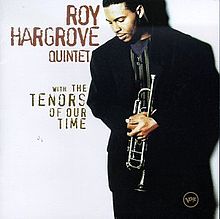
Having completely adapted to a new modus operandi for living this glorious life, I remain vigilant in my social distancing and reminding myself of music I haven’t listened to in a long time. This week I’m pulling out the late great Roy Hargrove who had the vision to record With The Tenors of Our Time. It’s a 1994 release on the Polygram Record label that was recorded at Teatro Mancinelli and Giani Grascinelli Sound Service with executive producer Richard Seidel. The album’s art direction and design is by David Lau, photography by James Minchin, liner notes by Jimmy Katz.
>Others in the team contributing to the production of this album were Larry Clothier ~ production, engineering, mixing; Ed Rak ~ engineering, mastering, mixing; Robert Friedrich ~ assistant engineering; Troy Halderson ~ mastering; Camille Tominaro ~ production coordination; and Nelly Muganda ~ make-up and hair stylist.
Track Listing | 72:56- Soppin’ the Biscuit (composer Roy Hargrove, featuring Stanley Turrentine) ~ 7:59
- When We Were One (composer Johnny Griffin, featuring Johnny Griffin) ~ 5:59
- Valse Hot (composer Sonny Rollins, featuring Branford Marsalis, Ron Blake) ~ 6:57
- Once Forgotten (composer Pamela Watson, featuring Ron Blake on tenor and soprano saxophone) ~ 5:45
- Shade of Jade (composer Joe Henderson, featuring Joe Henderson) ~ 5:24
- Greens at the Chicken Shack (composer Cyrus Chestnut, featuring Johnny Griffin) ~ 5:45
- Never Let Me Go (composer Jay Livingston and Ray Evans, featuring Rodney Whitaker) ~ 5:36
- Serenity (composer Joe Henderson, featuring Joe Henderson) ~ 5:35
- Across the Pond (composer Roy Hargrove, featuring Joshua Redman) ~ 6:47
- Wild Is Love (composer Robert Mickens and G. Brown, featuring Stanley Turrentine) ~ 6:50
- Mental Phrasing (composer Roy Hargrove, featuring Ron Blake, Joshua Redman) ~ 6:25
- April’s Fool (composer Ron Blake) ~ 3:54
- Roy Hargrove – trumpet, flugelhorn (2,4,7,10), production
- Cyrus Chestnut – piano
- Rodney Whitaker – bass
- Gregory Hutchinson – drums
- Ron Blake – soprano, tenor saxophone
- Johnny Griffin – tenor saxophone
- Joe Henderson – tenor saxophone
- Branford Marsalis – tenor saxophone
- Joshua Redman – tenor saxophone
- Stanley Turrentine – tenor saxophone

More Posts: adventure,album,club,genius,jazz,museum,music,preserving,restaurant,saxophone,travel,trumpet
Daily Dose Of Jazz…
Theodore “Wingy” Carpenter was born on April 15, 1898 in St. Louis, Missour. Losing his left arm as the result of an accident during his early teens, the amputation was performed by a noted surgeon who was an uncle of jazz musician Doc Cheatham. Sometime later, he took up the trumpet and by 1920 he was working in traveling carnival shows. In 1921 he toured with Herbert’s Minstrel Band.
By 1926 he had settled in Cincinnati, Ohio, where he worked with Wes Helvey, Clarence Paige, Zack Whyte, and Speed Webb. In 1927, he played in Buffalo, New York, with Eugene Primus. Off and on from late 1926 through 1928, he was featured on the Whitman Sisters’ Show with pianist Troy Snapp’s band.
During the early 1930s, Wingy was featured with Smiling Boy Steward’s Celery City Serenaders and another Florida band led by Bill Lacey. In the mid-1930s, he began regular touring with bandleaders including Jack Ellis, Dick Bunch, and Jesse Stone. In the late 1930s, he settled in New York City, where he worked with Skeets Tolbert and Fitz Weston.
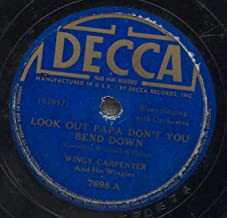
From 1939 on working as the leader of his own band, Carpenter had periods at well-known clubs such as The Black Cat, The New Capitol, Tony Pastor’s The Yeah Man, and other venues. He continued to lead his band through the 1960s, playing occasional dance dates. Several of his works are still accessible as MP3 downloads, including Look Out Papa Don’t You Bend Down, Preachin’ Trumpet Blues, Put Me Back in the Alley, Rhythm of The Dishes and Pans, and Team Up.
Trumpeter, vocalist and bandleader Wingy Carpenter, one of several one-armed trumpeters who worked in the music business, passed away on July 21, 1975, in New York City.
More Posts: bandleader,history,instrumental,jazz,music,trumpet,vocal