

Daily Dose Of Jazz…
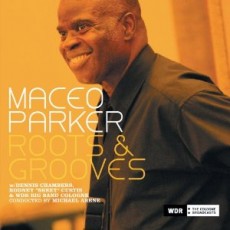
Maceo Parker was born February 14, 1943 in Kinston, North Carolina and was exposed to music early in life within his family and learned to play the saxophone. He and his brother Melvin, who played drums, joined James Brown in 1964 a relationship that lasted for six year before he left with Melvin and a few other Brown band members to form Maceo & All The King’s Men in 1970.
By ’74 he was back with Brown, charted a party single with Maceo & The Macks, joined Parliament-Funkadelic in the late 70s into the 89s, and then returned once again to James Brown for four years late in the decade. In the 1990s, Parker began his successful solo career releasing ten albums and performing 100 to 150 dates a year.
He has guest appeared on a variety of group’s albums and concerts and turning to jazz recorded “Roots & Grooves” with the WDR Big Band to critical acclaim as a tribute to Ray Charles. The album won a Jammie for best Jazz Album in 2009.
In October 2011 soul jazz saxophonist Maceo Parker was inducted into the North Carolina Music Hall of Fame. He continues touring throughout the world, headlining the major Jazz Festivals in Europe where his following is at its strongest.
More Posts: saxophone
Daily Dose Of Jazz…
Ron Jefferson was born on February 13, 1926 in New York City and began as a tap dancer before taking up the drums. He quickly became a fixture on the postwar bop scene collaborating, touring and/or recording with Lester Young, Coleman Hawkins, Charles Mingus, Freddie Redd, Teddy Edwards and Roy Eldridge to name a few.
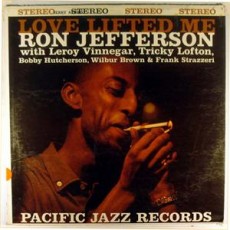
He also spent a number of years as a sideman with Oscar Pettiford, and working with Charlie Rouse and Julius Watkins forming the Jazz Modes in 1957. After two years the trio split up and Ron signed on with Les McCann prior to moving to Los Angeles in 1962. It was there he cut his debut album as a leader titled “Love Lifted Me” on the Pacifica label.
In addition to playing behind Groove Holmes, Zoot Sims, Carmell Jones and Joe Castro, Ron also toured with Roland Kirk’s “Jazz and People’s Movement”, spent a number of years in Paris working with Hazel Scott, taught music for the U.S. Embassy and in 1976 he cut “Vout Etes Swing!” for the Catalyst label.
Upon returning to New York, Jefferson hosted the cable TV series Miles Ahead with fellow musician John Lewis. Despite a steady work schedule, he never attained the visibility or renown of many of his contemporaries, and after a brief illness drummer Ron Jefferson died in Richmond, Virginia on May 7, 2007.
More Posts: drums

Daily Dose Of Jazz…
Juini Booth was born Arthur Edward Booth on February 12, 1948 in Buffalo, New York. He began playing piano at about age eight, and switched to bass at 12. He worked with Chuck Mangione in his hometown before moving to New York City around 1966, where he played with Eddie Harris, Art Blakey, Sonny Simmons, Marzette Watts, Freddie Hubbard and Shelley Manne out in Hollywood through the end of the decade.
In the 70s Juini performed with Erroll Garner, Gary Bartz, Charles Brown, Tony Williams and McCoy Tyner and recorded with Larry Young, and with Takehiro Honda and Masabumi Kikuchi during a 1974 tour of Tokyo. He would spend a short period with Hamiett Bluiett, then resettle in Buffalo but worked with Chico Hamilton in Los Angeles and Junior Cook in New York. By the late 70s he played with Elvin Jones and Charles Tolliver.
From 1980 on, he played with Ernie Krivda in Cleveland, as well as locally in Buffalo. He recorded freelance with Beaver Harris, Steve Grossman, Joe Chambers, and Sun Ra among others and currently lives and works in New York City.
Double and electric bassist Juini Booth died on July 11, 2021 at the age of 73.
More Posts: bass

Daily Dose Of Jazz…
Sérgio Santos Mendes was born in Niteroi, Rio de Janiero, Brazil on February 11, 1941. S a child he attended the local conservancy with hopes of becoming a classical pianist. As his interest in jazz grew, he started playing in nightclubs in the late-1950s just as the jazz-inflected derivative of samba known as bossa nova emerged.
Mendes formed the Sexteto Bossa Rio, recorded Dance Moderna in 1961, toured Europe and the U.S., recorded with Cannonball Adderley and Herbie Mann, played Carnegie Hall and then moved to the States in 1964, cutting two albums for Capitol and Atlantic Records.
Sergio would join the Musicians Union, Create Brasil 65, change the name later to Sergio Mendes and Brasil 66, opt not to record Tito Puente’s “Oye Como Va” which would become a hit for Carlos Santana, release “Mas Que Nada” that would take them platinum. He would record “Look Around” and their fourth album “Fool On A Hill”.
His breakout success was with the performance of Burt Bacharach’s “The Look of Love” at the 1968 Academy Awards telecast, ultimately becoming the biggest Brazilian star in the world at the time. He would go on to record for Elektra, Bell, A&M and Concord record labels, collaborate with Stevie Wonder, reunite with Lani Hall on the Bond “Never Say Never Again” soundtrack, record with will.i.am and The Black Eyed Peas, Jill Scott, India Arie and others on his Timeless project, win several Grammys over the course of his fifty-five releases and be twice nominated for an Academy Award for the Look of Love and his contributions to the 2011 film “Rio”.
Bandleader, pianist, composer, arranger and songwriter Sergio Mendes died on September 5, 2024 in Los Angeles, California. He was 83.
More Posts: bandleader,piano,vocal
Daily Dose Of Jazz…
Roberta Flack was born February 10, 1937 in Black Mountain, North Carolina but raised in Arlington, Virginia, first discovering the work of Black music when she heard Mahalia Jackson and Sam Cooke sing in church. During her early teens excelling at classical piano Howard University gave her a full scholarship and she entered at 15. She changed her major from piano to voice and became an assistant conductor of the university choir.
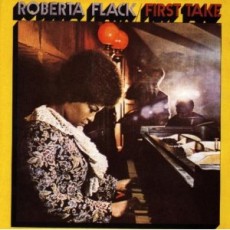
Graduating from Howard at 19, she began graduate studies in music, but with the sudden death of her father she took a teaching job, which lasted for years in the Washington, DC school system and private lessons from her home. Soon she was performing around town accompanying herself on piano but her star didn’t begin to shine until her voice teacher suggested she turn to pop music. With a performance space built in a Capitol Hill club called Mr. Henry’s it only took the ears of Les McCann to arrange an audition with Atlantic Records. After only 10 hours in the studio, Roberta’s debut album “First Take” was recorded and released.
Flack’s Atlantic recordings did not sell particularly well, until Clint Eastwood chose a song from First Take, “The First Time Ever I Saw Your Face” for the sound track of Play Misty For Me and it became the biggest hit of 1972. Spending six consecutive weeks at #1 the song earned her first gold record and Record Of The Year Grammy in 1973.
Roberta would go on to record with Donny Hathaway, Peabo Bryson and Maxi Priest; write for television and film, going on to gather more Grammys and hit songs and albums over the course of her career and earned a star on the Hollywood Walk of Fame.
Vocalist and pianist Robera Flack died on February 24, 2025 in Manhattan, New York.