

Daily Dose Of Jazz…
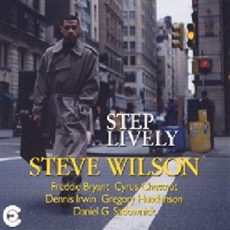
Steve Wilson was born February 9, 1961 in Hampton, Virginia. As a teenager, Wilson played in various R&B and funk bands and after a year of playing with Stephanie Mills he attended Virginia Commonwealth University. By 1987 he moved to New York, where he established himself as a sideman performing with American Jazz Orchestra, the Mingus Big Band and the Smithsonian Jazz Orchestra among others.
Wilson toured Europe in 1988 with Lionel Hampton and was a member of “Out Of The Blue”, an ensemble featuring young Blue Note musicians. An accomplished flautist and alto and soprano saxophonist, he also plays the clarinet and piccolo and has played and recorded with the Dave Holland Quintet, the Chick Corea Origin Sextet, with Japanese composer Yoko Kanno, has been a member of the Seatbelt’s New York Musicians, the Blue Note 7 and has performed as a soloist for Queen Elizabeth II and Prince Philip.
In 1997 he formed the Steve Wilson Quartet and has performed together for over a decade and produced two CDs. He also heads a larger ensemble, Generations, which performs jazz classic and original compositions.
He has held teaching positions in several schools and Universities, as well as holding jazz clinics, notably at the Manhattan School of Music, SUNY at Purchase, Columbia University, has been artist-in-residence at Hamilton College, Old Dominion and University of North Carolina and continues to maintain a busy career as a session musician both in studio and on tour.
Requisites
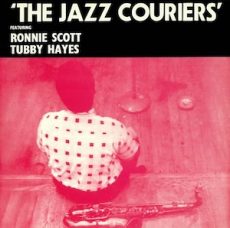
Tubby Hayes and The Jazz Couriers Featuring Ronnie Scott | By Eddie Carter
This morning’s album from the library is Tubby Hayes and The Jazz Couriers (Tempo TP 15), a 1958 release by a British quintet inspired by Art Blakey and The Jazz Messengers. The group lasted only two years, but in that time, they produced some of the best hard-bop jazz in the United Kingdom. The ensemble on this date consists of Jimmy Deuchar (tracks A1, B3) on trumpet; Tubby Hayes on tenor saxophone and vibraphone (tracks A2 to A4, B3); Ronnie Scott on tenor saxophone; Terry Shannon on piano; Phil Bates on bass; and Bill Eyden on drums. The copy I own is a 1982 U.K. mono reissue (Jasmine JASM 2004).
The album kicks off and wraps up with a quick burst of Sonny Stitt’s The Theme, driven by both saxes and ends as quickly as it starts. The opener is “Through The Night Roared The Overland Express,” by Tubby Hayes. A happy original that opens with a steady beat and splendid work by the ensemble during the melody. Tubby is up first and gives an enthusiastic lead solo, then Jimmy takes a robust turn. Ronnie brings a rush of excitement to the third reading, and Terry swings joyfully before the sextet reunites for the closing chorus. The quintet introduces On A Misty Night, by Tadd Dameron, with a gentle melody. Ronnie embraces the opening solo warmly, then Tubby radiates heartfelt sincerity with his vibes. Terry and Phil share a thoughtful reading of refined elegance that gently leads to a loving finish.
“Plebus, by Tubby Hayes, is dedicated to Tony Hall and shifts the beat to a medium groove, allowing the front line to state the melody. Ronnie takes the lead this time, cruising at a comfortable speed. Tubby’s vibraphone flows effortlessly through the second reading next. Terry keeps the infectious beat going with finesse, followed by Tubby on tenor sax, who has a short say, then both horns engage in a brief exchange ahead of the close. Hank Mobley’s Reunion sets the beat to an uptempo pace for the quintet’s brisk theme, with Hayes on vibes during the opening melody and the out-chorus. Ronnie charges into the lead solo first; next, Tubby delivers a torrent of electrifying notes. Terry follows his colleague with feisty agility, and Bill has a spirited exchange with both horns ahead of the reprise and close.
Oh, My! by Allan Ganley opens Side Two with a lively ensemble theme that conveys the joy and pleasure the horns feel as it unfolds. Tubby launches into the opening solo vigorously. Terry comes right behind him with a spirited performance. Ronnie next takes center stage with a series of fiery verses, then both saxophonists share a vibrant finale, leading to the closing chorus. A Foggy Day, by George and Ira Gershwin, begins with a tender melody led by the front line. Tubby strolls into the opening solo with a beautifully sincere performance, then Ronnie builds the following statement gently. Terry evokes a warm glow of elegant sincerity next, and Phil takes a delicately intimate walk before the alluring theme returns.
Tubby Hayes’ Royal Ascot takes its name from Ascot Racecourse, and brings back Jimmy Deuchar to the group with Hayes, back on vibes. The infectiously charming tune begins with the ensemble’s lively opening chorus. Tubby is up first with an energetic bounce, then Jimmy responds with an invigorating reading that is sadly over before you know it. Ronnie takes the next spot with a brisk statement, and Terry follows with a swift chorus ahead of the theme’s return. Cheek To Cheek by Irving Berlin takes off at breakneck speed from the ensemble’s melody. Tubby leads off with passionate intensity. Ronnie then delivers a dazzling, high-octane solo. Bill wraps up this exhilarating ride with a fiery conversation between both saxophones, leading to a powerful finish with The Theme’s reprise.
Tony Hall supervised the initial session, and Bert Steffans and Cyril Windobanks are the talented individuals at the recording console. The sound quality is crisp with an impressive soundstage emerging from your speakers with stunning fidelity. The album recaptures the spirit of hard bop at its best by two of Britain’s top saxophonists, Tubby Hayes and Ronnie Scott, alongside the excellent rhythm section. My only issue with this reissue is Jasmine’s choice to apply a pink filter to the original black-and-white photo of Hayes sitting at the bandstand that Tempo used for the original release. That issue aside, “Tubby Hayes and The Jazz Couriers” is an album that still stands up over six decades later and is well worth adding to your jazz library!
~ A Foggy Day, Cheek To Cheek – Source: JazzStandards.com © 2026 by Edward Thomas Carter

More Posts: choice,classic,collectible,collector,history,instrumental,jazz,music,saxophone

Daily Dose Of Jazz…
Alonzo “Lonnie” Johnson was born on February 8, 1899 in New Orleans, Louisiana into a musical family. He studied violin, piano and guitar as a child, and learned to play various other instruments including the mandolin, but concentrated on the guitar throughout his professional career. By his late teens, he played guitar and violin in his father’s family band and with trumpeter Punch Miller in the Storyville clubs.
In 1917, Johnson joined a revue that toured England, returning home two years later to find that all of his family, except his brother James, had died in the 1918 influenza epidemic. Settling in St. Lois with his brother James the two embarked on a duo performance, though Lonnie also worked the riverboats in the orchestras of Charlie Creath and Fate Marable.
Johnson would go on to enter a blues contest in 1925 winning a recording contract with Okeh Records, record in New York with Victoria Spivey and tour with Bessie Smith’s T.O.B.A. show. By 1927, he recorded in Chicago as a guest artist with Louis Armstrong and His Hot Five, and in 1928 he was in the studio recording with Duke Ellington and with the group The Chocolate Dandies playing 12 string guitar solos on many these early recordings.
With the temporary demise of the recording industry in the Great Depression, Johnson went to work in the steel mills. However, post WWII he revived his career and would record for Decca, top the Billboard “Race Records” charts, tour England, move to Philadelphia, and record for Prestige Records. He settled in Toronto, Canada until he was sidelined when hit by a car, injuries from which he never fully recovered.
Lonnie is credited with pioneering the role of jazz guitar and is recognized as the first to play single-string guitar solos and who influenced such guitarists as Charlie Christian and Django Reinhardt. Guitarist, songwriter, jazz and blues singer Lonnie Johnson passed away on June 16, 1970.
More Posts: guitar
Daily Dose Of Jazz…
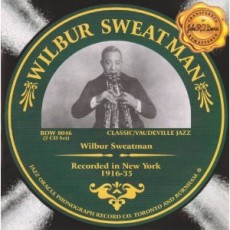
Wilbur C. Sweatman was born in Brunswick, Missouri on February 7, 1882 and started playing violin but took up clarinet. He toured with circus bands in the late 1890s, briefly played with the bands of W.C. Handy and Mahara’s Minstrels before organizing his own dance band in Minneapolis, Minnesota by late 1902.
It was there that Sweatman made his first recordings on phonograph cylinders in 1903 for a local music store. These included what is reputed to have been the first recorded version of Scott Joplin’s “Maple Leaf Rag”; however, no copies of these are known to exist today. By 1908, Sweatman was in Chicago as bandleader at the Grand Theater where he attracted notice and in a 1910 article was referred to his nickname, “Sensational Swet.”
By 1911, he had moved to the vaudeville circuit full-time, developing a successful act of playing three clarinets at once, went on to write a number of rags including his most famous “Down Home Rag”. He would move back to New York, tour major vaudeville circuits, befriend Scott Joplin and become his executor, record for Emerson Records, and the first Black to make recordings as Jazz or “Jass” as it was known then and one of the first to join ASCAP, and several notable musicians passed through his band, including Duke Ellington, Coleman Hawkins and Cozy Cole.
Wilbur Sweatman, ragtime and Dixieland jazz composer, bandleader and clarinetist who continue to record for Gennett, Edison, Grey Gull and Victor record labels, passed away in New York City on March 9, 1961.
More Posts: clarinet
Daily Dose Of Jazz…
Thomas S. McIntosh was born February 6, 1927 in Baltimore, Maryland and studied at the Peabody Conservatory. During his time in the Army band he played trombone, followed by a move to New York in 1956 where he played with Lee Morgan, Roland Kirk, James Moody, Art Farmer and Benny Golson. During this period he also graduated from Julliard.
By 1961 he was composing “The Day After” for trumpeter Howard McGhee and two years later for Dizzy Gillespie’s “Something Old, Something New” album. The following year his composition “Whose Child Are You?” was performed by the New York Jazz Sextet, of which he was a member.
Working with Thad Jones and Mel Lewis in the late Sixties, as a leader McIntosh recorded Manhattan Serenade and worked with earl Coleman, Jerome Richardson, Billy Taylor, Frank Foster, Eddie Williams, Gene Bertoncini, Bobby Thomas and Reggie Workman. He arrange for Bobby Timmons and Milt Jackson, working as a sideman with the later and also Oliver Nelson and Shirley Scott.
Tom gave up jazz and moved to Los Angeles and began a long and successful career composing for film and television writing music for such films as The Learning Tree, Soul Soldier, Shaft’s Big Score, Slither, A Hero Ain’t Nothin’ But A Sandwich and John Handy. In 2008 he was honored by the National Endowment for the Arts as a Jazz Master. Trombonist and composer Tom McIntosh passed away in his sleep at age 84 on July 26, 2017.
More Posts: trombone